
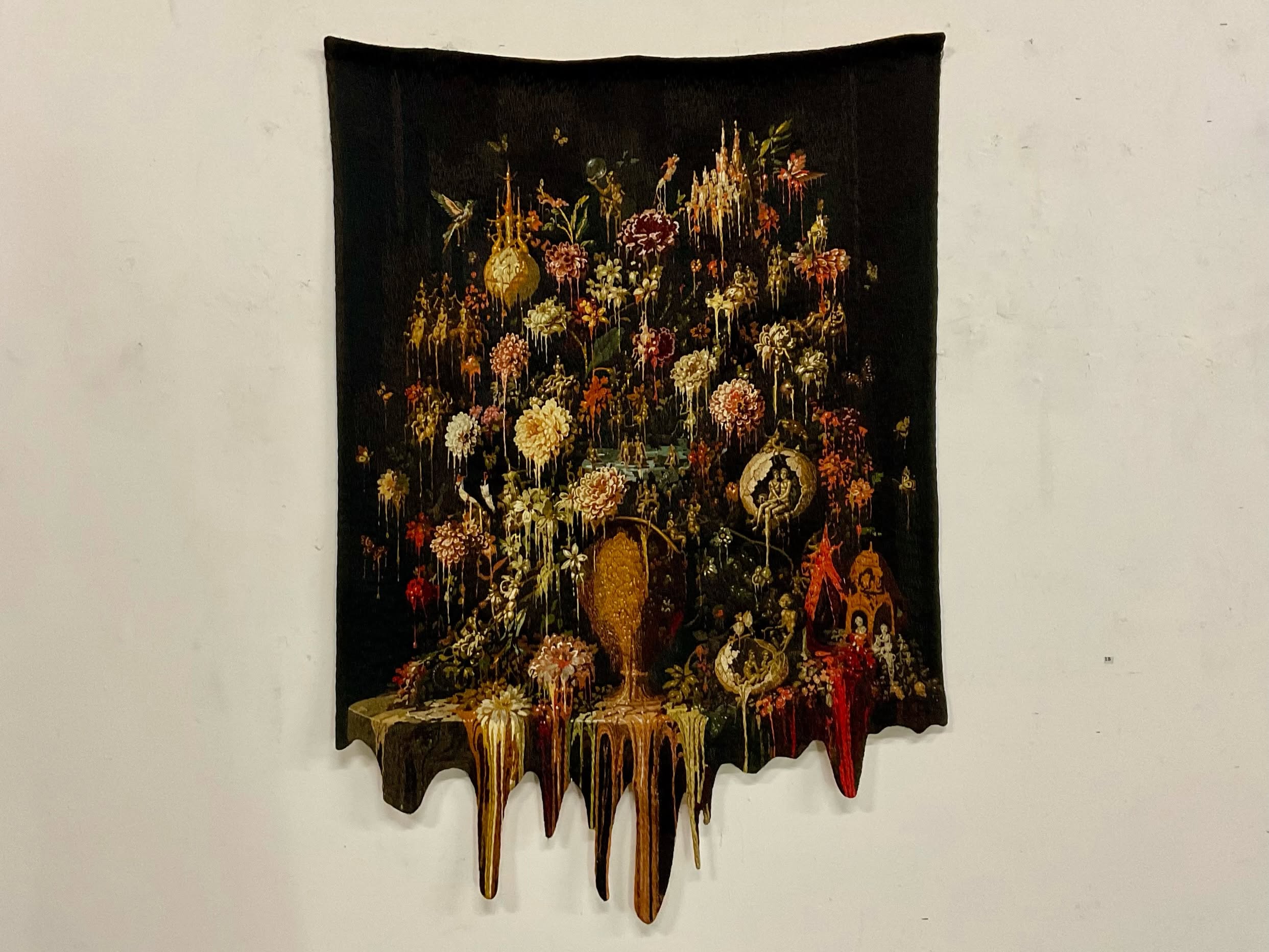
A group show of ten Pakistani figurative artists, curated by Scheherezade Junejo, opened on 6 August. It brings together painters, a sculptor, two trained miniaturists, and an artist working in textiles, all circling one subject: the human body, unclothed and looked at closely. The title does double duty. It can read as tenderness, an instruction to look gently. It can also read as a warning, the kind of label put on something breakable, or something people would rather keep out of public view. Both meanings sit inside the show at once.
Junejo’s note makes a clear argument: the nude has mostly been shown to us through male eyes, from antiquity through the Renaissance and into modern art. The ten artists here, evenly split between men and women, are meant to push back against that history. It is a familiar starting point for a group show about the body, but this particular group gives it weight. Farhat Ali, Madiha Hyder, Maria Khan, Marium Agha, Misha Japanwala, Muhammad Zeeshan, R.M. Naeem, Waseem Ahmed, Zahid Mayo, and Zahra Mansoor all arrive at the figure through different hands and materials, and those differences matter as much as the subject they share.
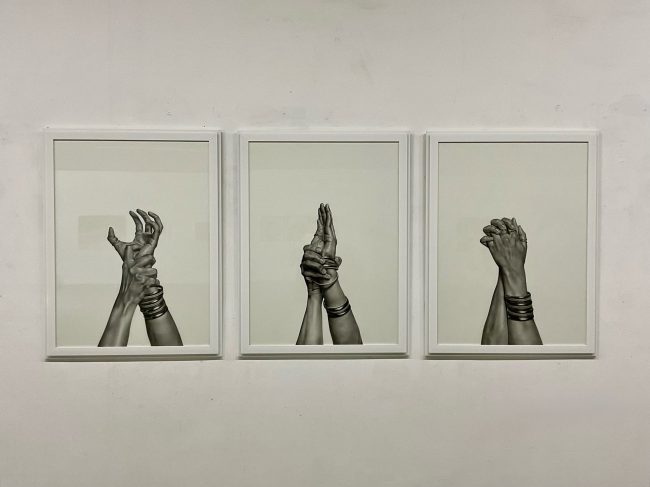
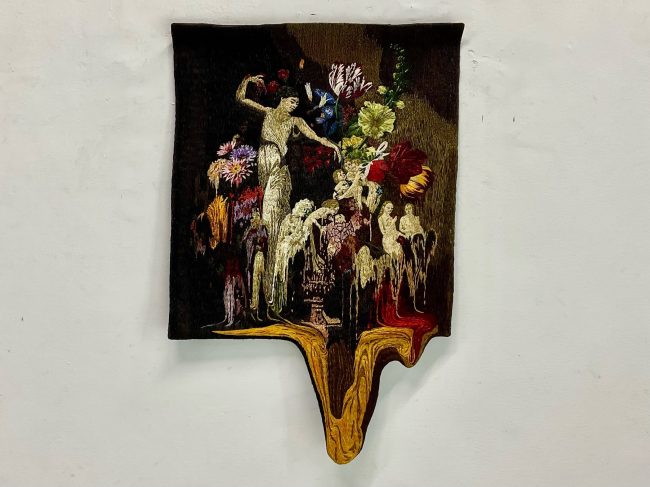
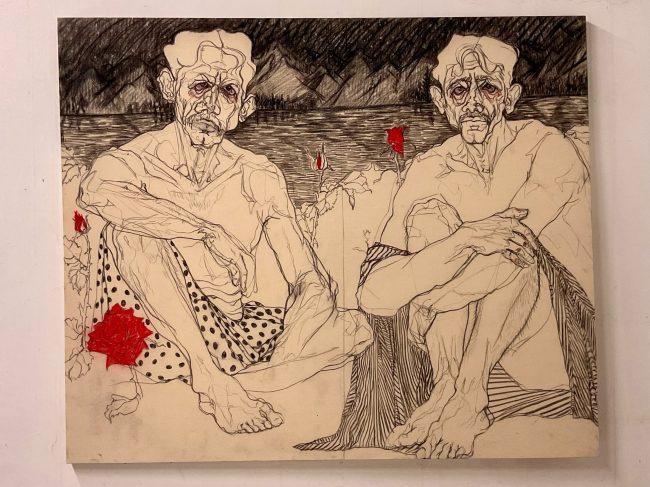
Look at the two trained miniaturists, Zeeshan and Waseem Ahmed. Both studied at the National College of Arts in Lahore, where miniature painting is taught as a strict, old craft built on gouache paint, tea-stained wasli paper, and gold leaf. Zeeshan once worked painting cinema billboards, crossing out exposed skin with black ink for state censors, a history that sits behind a practice now built around the nude body. Waseem Ahmed uses that same jewel-like miniature style to paint burqa-clad women and gentle-looking mullahs, smuggling violence and desire into a devotional format. Then there is Misha Japanwala, whose work is not painted but cast. Silicone is pressed onto a person’s skin, left to set, and peeled away in layers, then rebuilt in resin and bronze. A single cast can take hours, with the sitter held still the whole time, so her sculptures are, in the most literal sense, about handling a body with care. R.M. Naeem and Maria Khan work in paint and charcoal but land in different places. Naeem paints nudes with careful, almost photographic detail. Khan draws older, heavier women without any softening, in the same unflinching spirit as painters like Lucian Freud and Paula Rego. Marium Agha works in textile and thread, adding another kind of touch: a body suggested through cloth rather than painted onto a flat surface.
This is where a real curatorial question comes up. The note tells this history mostly through a Western lens: antiquity, the Renaissance, modernism, the same sequence taught in most art history classes. But miniature painting carries its own, separate history of the body. Mughal and Rajput courts had their own detailed traditions for painting intimacy, veiling, and desire, long before the European academy and quite apart from it. Two of the ten artists here work directly inside that older tradition. Does the note’s framing reduce the miniature to just another technique used to make a general point, rather than treating it as its own body of knowledge about desire and power? A show this alert to whose hands have held the brush might have said more about whose eyes, in the workshops of Lahore as much as the studios of Florence, were doing the looking.
None of this takes away from what Handle With Care is trying to do. Ten different ways of working with the body, cast resin, tea-stained paper, oil paint, charcoal, thread, are all pointed at one question: who gets to touch a body, draw it, and be allowed to look at it. The title’s warning label cuts both ways, and it is worth being specific about why. Pakistan’s penal code still carries a colonial-era law, Section 292, making it an offence to publicly exhibit a drawing, painting, or figure judged obscene. The law never defines obscenity, so the decision is left to whoever is doing the judging, whether that is a court, a censor, or an anonymous crowd online. Misha Japanwala has already lived this. Her earlier body-cast work drew waves of online abuse simply for showing stretch marks and scars without shame. So some of what hangs in this show is fragile in the ordinary sense, delicate paper, thin resin, charcoal that smudges. Some of it is fragile in a heavier sense too, work that exists at all only because its makers decided the risk was worth taking.