
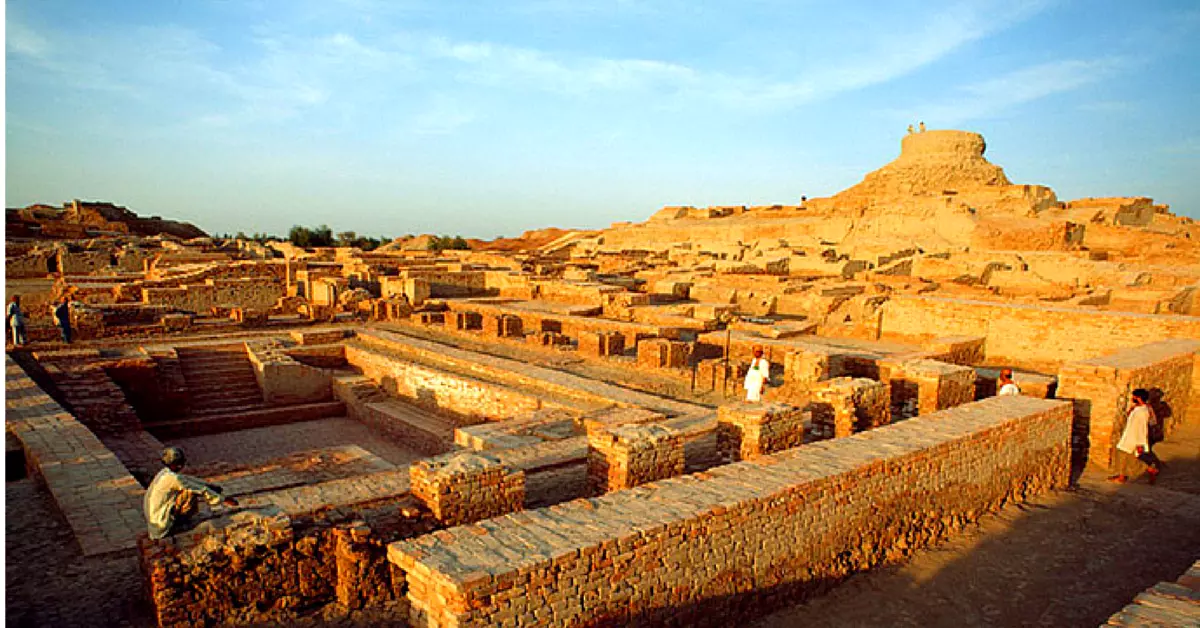
For nearly a century, our collective visual imagination of Mohenjo-daro has been anchored in the formidable architectural remains unveiled by early 20th-century excavations. However, recent breakthroughs under the multi-season Documentation and Conservation Program (2025–2026) have fundamentally shifted our understanding of this World Heritage site. Spearheaded by a collaborative force comprising the Directorate of Archaeology and Museums (Government of Sindh), SEAS Pakistan, and international scholars—led by Dr. Asma Ibrahim, Prof. Dr. Jonathan Mark Kenoyer, and Ali Lashari—the initiative seamlessly bridges scientific rigor with cultural stewardship.
Rewriting the Urban Horizon
The centerpiece of these recent field investigations focuses on the western flank of the Stupa (Citadel) Mound. Re-examining the deep “REM” trench first cut by Sir Mortimer Wheeler in 1950, the research team resolved a long-standing debate. What Wheeler initially designated as a simple “bund” has now been conclusively identified as a massive, continuous mud-brick perimeter city wall enclosing the western edge of the citadel.
Through systematic trenching, hand-coring with Loyang spades, and deep tubewell sampling down to the water table, the team recovered charcoal and Kot Diji Phase ceramics embedded within the lowest structural courses. Radiocarbon dating yielded decisive chronological benchmarks: charcoal from inside the earliest mud-brick cores dates to approximately 2708–2576 cal BCE, while upper street levels date between 2460 and 2280 cal BCE. This provides the first concrete empirical evidence that Mohenjo-daro’s defensive urban perimeter was conceived and erected during the Early Harappan period, significantly predating earlier estimates of its urban expansion.
Materiality, Metallurgy, and Conservation
Parallel to fieldwork on the mound, the team executed essential conservation and analytical programs inside the Mohenjo-daro Museum. Fragile copper and faience artifacts underwent non-destructive testing, micro-cleansing, and desalination to mitigate salt infestation. Scanning Electron Microscopy (SEM) at Jamshoro University uncovered organic fiber impressions preserved on metal fragments, throwing light on early textile technologies. Furthermore, lead isotope studies led by Lucas Wirick suggest that ancient copper sources extended to southern Baluchistan, alongside traditional networks across Rajasthan, Gujarat, and Oman.
Public Memory and the Digital Frontier
To preserve this heritage for future generations, the project employed cutting-edge documentation methods alongside tactile public interpretation. Archaeologist Danish Ahmed conducted comprehensive 3D drone mapping across all active trenches before they were backfilled for structural preservation. To aid public engagement without compromising the ancient fabric, the team produced replica mud bricks mirroring ancient dimensions (10 × 20 × 40 cm) and constructed a demonstration section of the ancient city wall using traditional mortars.
By blending deep-time material science with thoughtful public presentation, the 2025–2026 program does not merely preserve raw mud bricks; it resurrects the living history of the Indus Valley, ensuring Mohenjo-daro’s story continues to resonate globally.
Acknowledgements: The author acknowledges the support of the Director General, Curator Ahsan Ali Abbasi, and the staff at Mohenjo-daro Museum and Guesthouse, alongside contributions from team members across SEAS Pakistan, SALU, and international institutions.