
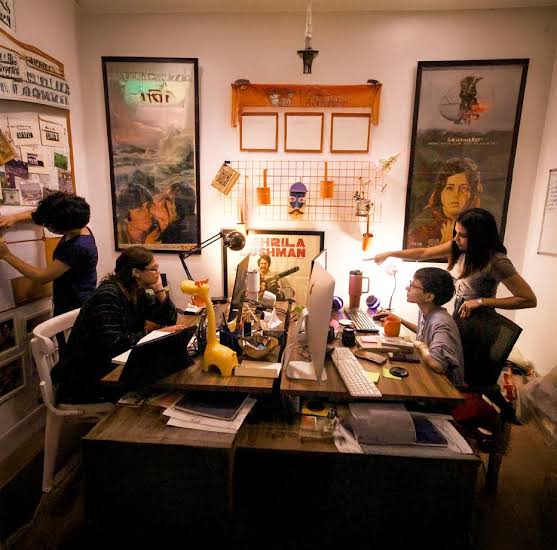
Karachi-based artist Hasnain Ali Noonari has just started a six-month residency at Vasl Artists’ Association, and right now, he is using it to slow down and ask questions before making anything new.
Noonari is known for a very particular kind of art: buildings carved out of graphite, some small enough to hold in one hand. But his story starts even smaller than that — with a pencil.”My practice began with carving graphite pencils,” he says. It started on the wooden body of the pencil, then moved to something much harder: carving directly into the graphite core itself, cutting tiny portraits and details into a strip of pencil lead. “That challenge was exactly what drew me to the process,” he says.
He traces this back to childhood, when he liked playing with size. “I would enlarge tiny stickers into large drawings, and at the same time, try to reduce large subjects into very small formats,” he explains. Turning something big into something small, or the other way round, has stayed with him ever since.There’s a practical side to this story too. When Noonari moved from Hyderabad to Karachi for his studies, he had no studio and no space for large sculpture. So he set up a small board, covered it in cloth, and began carving pencils in a corner of his room. “That limited space unexpectedly became the beginning of a new artistic journey,” he says. Years of practice at that small scale eventually gave him the skill to move into full-size sculpture.
That larger work still carries the same spirit. Noonari builds imagined buildings — arches, balconies, domes, facades — inspired by the architecture of Karachi and Hyderabad, but not copies of any real address. Pieces like Wafa Manzil, Roshan Mehal, and Khuwab Gah sit somewhere between memory and imagination. “Graphite embodies both fragility and permanence,” he says, and that’s part of why he keeps returning to it, even at a larger scale.He has also worked on bigger, collaborative projects — including Tombstones/Katbay, an installation at the 2017 Karachi Biennale made with fellow artists Adeel uz Zafar and Noman Siddiqui, built from photographs taken across 182 graveyards in the city.
Vasl Artists’ Association, has been running residencies and workshops in Karachi since 2001, and has hosted more than 700 artists so far. It’s known for giving artists time, studio space, and room to think — which is exactly how Noonari describes this early stage of his residency.
“Right now, I am in the process of conducting research, meeting different people, and having conversations with them about their work, experiences, and ideas,” he says. He’s also looking inward, thinking about what he can push further in his own practice, and what might happen if he steps outside it. He doesn’t have a fixed plan yet, and he isn’t in a hurry to find one. “Any clear direction or decision will naturally take shape over time,” he says.So far, the people have been the best part. “One of the most rewarding aspects has been meeting so many people and engaging in conversations about their work and creative practices,” Noonari says. Those exchanges are turning into a growing pile of research and documentation — notes, ideas, and conversations he plans to draw from once he starts making new work.
What he does already have is a clear sense of what he’s chasing, whatever shape it takes. Across his miniatures and his larger sculptures alike, Noonari says he wants viewers to stop and ask, “How was this carved?” Six months at Vasl is his time to work out what he wants to carve next.