
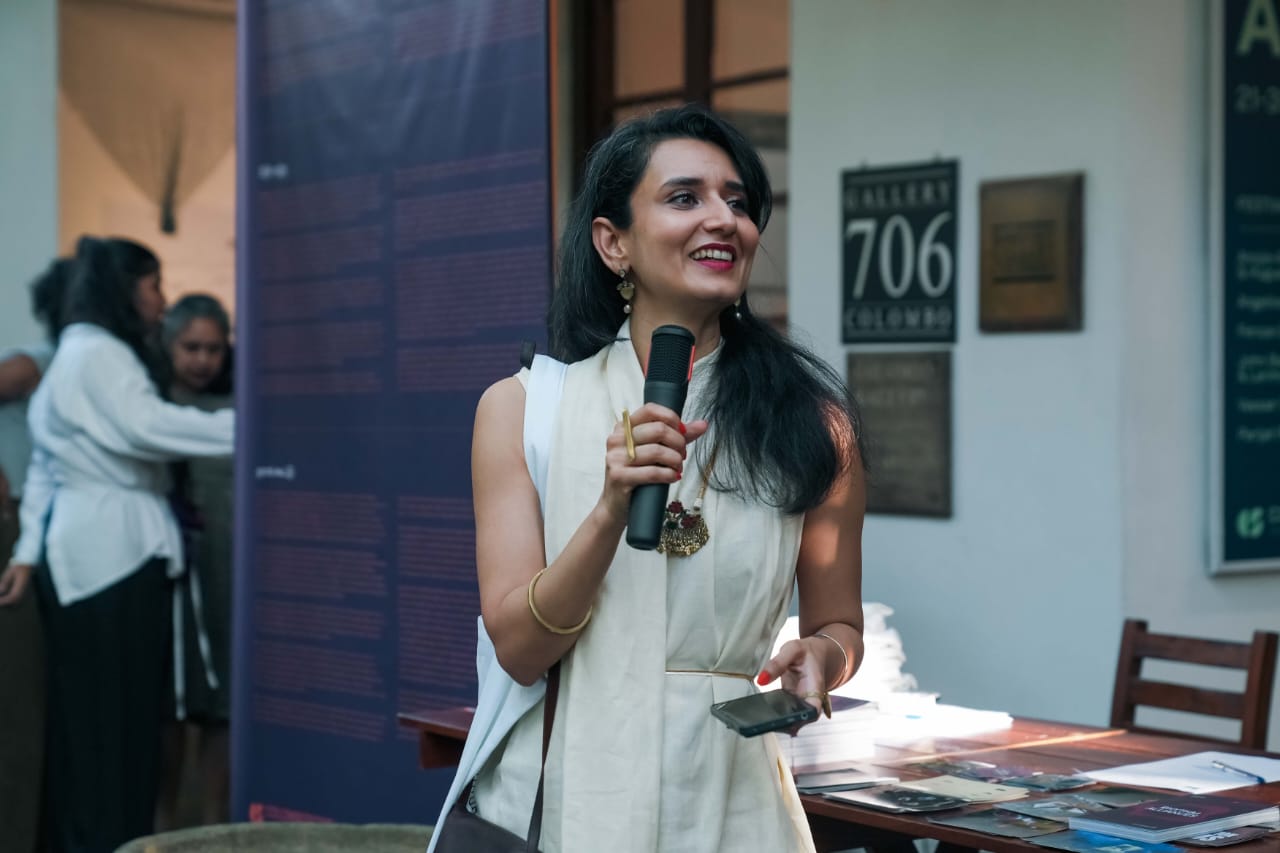
Apart from economic value and generating art discourse, global and international art festivals have the potential to help revitalize city spaces. From site-specific artworks to group exhibitions, visitors have the opportunity to explore the city as a dynamic site of history, culture, and heritage. Regardless of whether they are Biennales, triennials, or periodic festivals, such events help foster cultural dialogue by bringing local, regional cultural practices into conversation with international artists. Launched in 2013 in Sri Lanka, Colomboscope has garnered significant interest over the years for similar reasons but with an emphasis on multi-access participation, inclusivity and generation of trans regional dialogues in art and culture. Helmed by Natasha Ginwala, who joined as Artistic Director in 2019, Colomboscope has continued to focus on local and international art production. This year’s theme for Colomboscope IX 2026, “Rhythm Alliances” (January 21–31, 2026) has generated a significant amount of buzz with guest curator Hajra Haider Karrar invited to helm the latest iteration of the festival.
Karrar’s previous curatorial and collaborative projects have been featured at cultural institutions and biennales including Tate Research Centre: Asia, London 2018; Moscow Museum of Modern Art, Moscow 2014; Centre Pompidou, Paris 2017; Manchester Art Gallery, Manchester 2016-2017; Yarat Contemporary Art Space, Baku 2012; Akademie der Künst, Berlin; Lahore Biennale 02, IV Moscow Biennale for Young Art, 5th International Biennale of Contemporary Art Azerbaijan, and Kochi – Muziris Biennale 2022.
Focused and meticulous both in thought and reflection, Hajra and I sat down to discuss her expansive vision for “Rhythm Alliances.”
ZM: How were artists selected for “Rhythm Alliances”? Could you elaborate on the parameters and considerations?
HHK: There are several factors that were crucial in this process. To begin with, it is important to understand the platform itself, its ethos, and the kind of opportunity, exchanges, and learning that can be meaningfully generated through it. Colomboscope has long been committed to cultivating regional and international dialogue emerging from Sri Lanka, hence the festival has a significant focus on artists from across the island, followed by a strong South Asian presence and key international voices. I intended to create a space where intergenerational and transregional exchange becomes possible and generative, bringing together visual and sound artists, poets, musicians, filmmakers, scholars, and scientific thinkers.
A central consideration has been on artist trajectories and how their practice can deepen and expand the thematic premise of Rhythm Alliances. I concentrated on practitioners who can meaningfully contribute to the discourse while also allowing the encounter to inform their own work. Being a mentoring and commissioning platform, Colomboscope offers the opportunity of working closely in conversation and curatorial collaboration with emerging artists at formative stages to support practitioners engaged in long-term research.
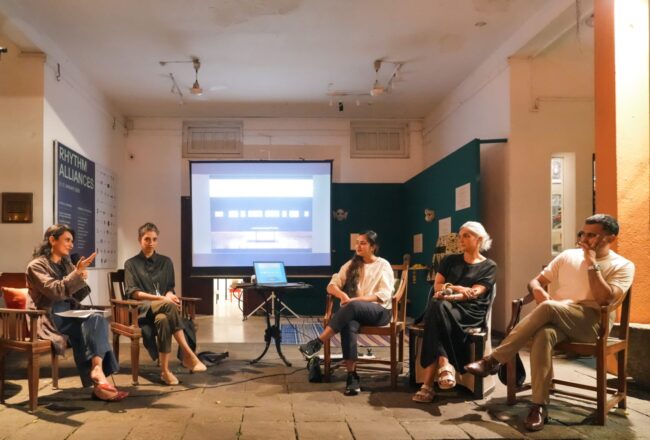
For Rhythm Alliances, we had more than 100 practitioners, with 50 participating artists and 30 new commissions. This scale created space for a wide spectrum of practices and material explorations to enrich and layer the conversations. It also enabled new connections within a region that is politically fractured. The latter is a motivation within my practice, also in alignment with Colomboscope to create opportunities for artists to build and strengthen relationships across South Asia and beyond, allowing the festival to operate as a catalyst for resonant, sustained exchange.
ZM: How do you differentiate yourself from other biennales, art festivals etc. This is also important because you mentioned you have raised funds yourself for Colomboscope. Where do you position yourself this year?
HHK: I have witnessed the journey of Colomboscope over the years and have always valued it for its grounded engagement. Stepping into the closer role of the guest curator, the observations and experiences that I have gathered throughout this time have only deepened my respect for the dedication and commitment that sustain it.
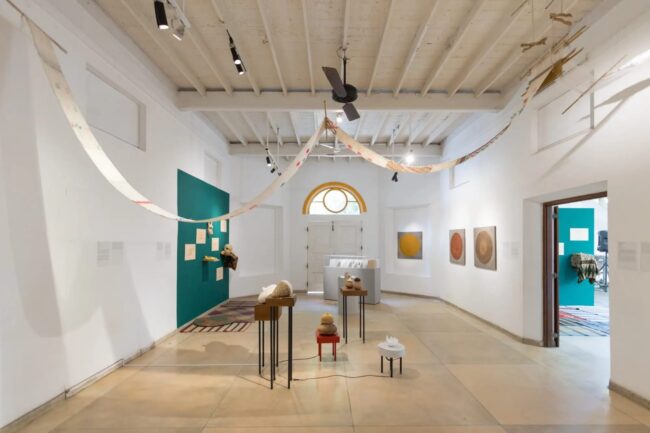
Grassroot initiatives such as Colomboscope often emerge in response and conjunction to the local cultural context, especially in places where formal infrastructure for the art sector remains lacking. If you trace the trajectory of the festival, you will notice that it has continually adapted to shifts within the local landscape. New commissions, while ambitious, become significant for a consistent, deep engagement with artists. The latter remains rare on many other commissioning platforms where artists often feel neglected. The impact of such an event often becomes visible over time through the continued development of artistic trajectories, some of whom presented their first major projects at the festival and are now exhibiting at leading international platforms and galleries. But beyond these individual successes, Colomboscope contributes to the ecosystem in less visible yet equally crucial ways.
Producing an event on this scale requires a wide spectrum of skills: exhibition design, production, installation, technical and fabrication expertise, event management, and the ability to navigate complex bureaucratic terrain. Colomboscope is invested in building capacities and working creatively within limited resources to sustain something that has regional significance. It has initiated collaborations with architects, designers, and craftspeople to strengthen the wider ecology between festival cycles and has also started working towards prioritizing sustainable modes of production, ensuring that materials in the aftermath of the festival edition are repurposed or upcycled rather than discarded.
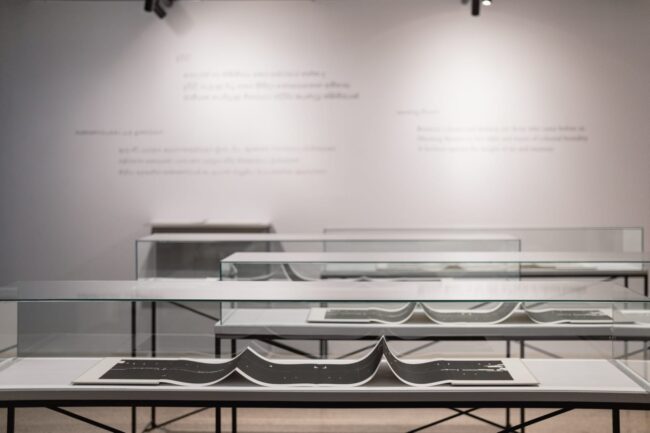
Colomboscope is an independent nonprofit, non-commercial entity and is not supported by state infrastructure unlike many other international Biennales. There is a strong initiative in forging institutional partnerships and collaborations to co-produce projects that activate wider networks and build collective relationships. This has led to a few long-term regional projects. Fundraising is a demanding process, something that becomes more challenging each year with the shift in global politics and priorities. For the ninth edition, I was involved in the process together with the team.
ZM: Can you elaborate more on other activities such as workshops etc.?
HHK: Interactive and participatory modes of engagement spark curiosity, shared learning, and creating opportunities for deeper encounters. With the thematic premise of this edition and the nature of invited artistic practices, there was a natural overlap and flow across mediums from exhibition into program. The festival program was designed to support the exhibitions and extend artistic projects by facilitating intergenerational dialogue and activities between artists and audiences across ages, abilities, and cultural backgrounds. This unfolded across the city through performances, concerts, listening sessions, workshops, lecture performances, artist talks, multilingual curated walks, school tours and a dedicated cinema program.
A special session was the children’s workshop led by Tissa De Alwis, a prominent Sri Lankan artist and chronicler of coastal histories through miniature terracotta and plasticine sculptures. He guided children in sculpting endangered ocean species inhabiting Sri Lankan waters with plasticine. The accompanying parents, by default and by interest, become an active part of the workshop as well.
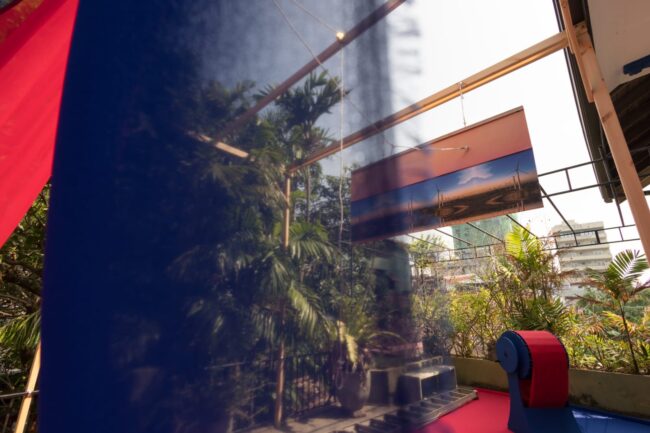
Another workshop, led collaboratively by Chamindika Abeysinghe and Mahesha Kariyapperuma, invited teenagers and young adults to explore storytelling through analogue and digital game design. Rooted in their independent artistic vocabularies, the session introduced new forms of expression through a maker-driven approach grounded in culture and the everyday.
One of the highlights was the performance by Sarah Kazmi, Mariama Ndure and Nuwan Gunawardhana, a Pakistani, Norwegian Gambian and Sri Lankan collaboration. The sonic performance wove together celestial metaphors, generational culinary recipes, shared physical and spiritual rituals and oral traditions stemming from each artists’ cultural origins using utensils, and traditional instruments, such as the conch shell and the calabash.
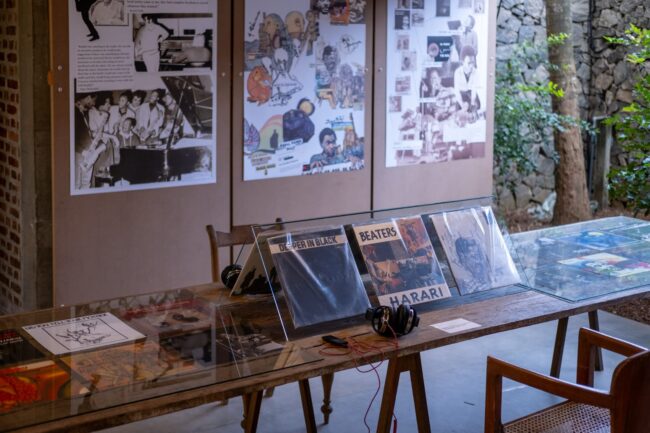
The listening session by KMRU, a Kenyan sound artist was a meditative session tracing waterway through field recordings from islands and coastlines including recordings from Lamu, Fiji and wetlands of Colombo.
Another memorable occasion was a concert performed by NooN, a Sri Lankan group that expands on the music genre of Papare that is a confluence of South Indian, Dutch Portugese and British marching band music. Their performance layered jazz and folk sensibilities into the genre, highlighting the continuous evolution and adaptation of musical forms.
ZM: Whether it is biennials or art festivals, the city and its public/private spaces often play an important role in framing a viewer’s experience of artworks. Can you elaborate on how Rhythmic Alliances built these ideas?
HHK: I had been thinking about how sites transform over time and how they become emblematic of moments of remembrance and renewal. This sentiment was echoed as we searched for and finalized the venues. The process itself became a reflection of these ideas. The festival chapters and events unfolded across nine venues in the city. Each is layered with its own timelines and histories, shifts in ownership and social functions.
The intention did not revolve around making an exhibition, rather activating the multiple histories embodied by the city in dialogue with works that evoke other geographies, events and temporalities including those within the island itself.
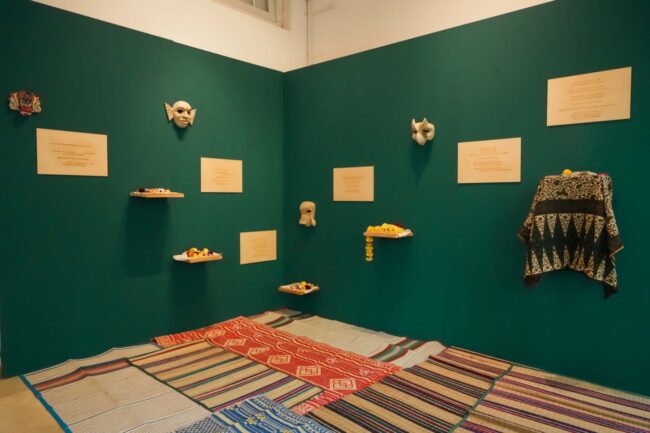
Rio Cinema, a historical marker of architectural ambition, cinematic innovation, and political trauma. It was burned during the Black July pogrom in 1983, ceasing its functions as a public cinema and hotel. Yet, in the past decade it has been revived periodically through cultural events, including a few previous editions of Colomboscope as a space of gathering, community building and neighourhood histories as the landscape shifts with rapid urban developments. Each event creates a new association while acknowledging its layered past- reaffirming its presence and allowing new visual and sonic experiences to reshape its meaning. The works presented here echoed disappearing infrastructures, forgotten materialities, encoded memory, and speculative futures thinking through rhythms inherited, ruptured, and carried forward.
Another venue was within Colombo Fort, at the De Mel Building. Built in 1921 by Henry De Mel as an administrative hub for his agricultural ventures, the site sits at the heart of the island’s maritime and commercial histories. A section of it is now home to Radicle Gallery, as a hospitality and arts venue. It’s proximity to the sea and maritime histories made it a potent site where oceanic entanglements were revisited, and new vocabularies acknowledged.
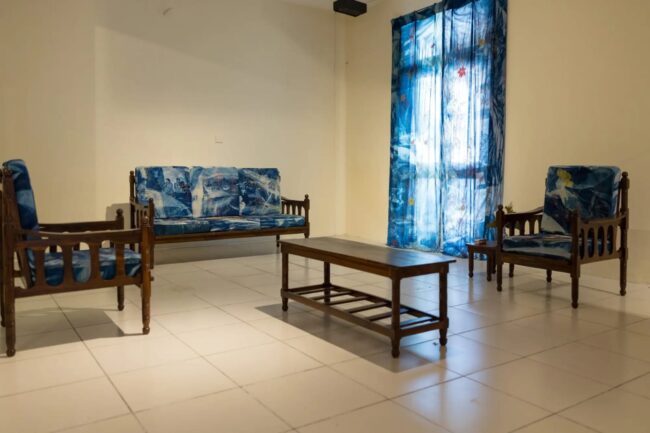
The Colpetty Townhouse, the largest venue of this edition, offered a different kind of resonance. Once home to three generations of a family, it later shifted into mixed use as the neighbourhood densified into a blend of residential and commercial areas. It was one of the first instances for me and Colomboscope that we worked with this kind of domestic space. It’s quiet traces of habitation made it a powerful setting for the exhibition chapter “Frequencies of Passage,” which explored kinship, embodied memory, fractured belonging, and the idea of homecoming. The site amplified reflections on transition, anchoring artworks that carried the textures of movement across time and geography.
Through these sites, Rhythmic Alliances became not just a festival mapped onto a city, but a dialogue with its architecture, its buried histories, and its evolving futures. Each venue acted as a tuning device, amplifying the festival’s questions while reanimating the city’s own frequencies.
ZM: There were a lot of Pakistani artists that were featured in Colomboscope this time. Could you elaborate on how you feel they aligned with or gelled in spatially with the ideas that epitomize “Rhythm Alliances”?
HHK: The were several registers introduced by these artistic practices that interacted meaningfully with the festival’s spatial and conceptual framework.
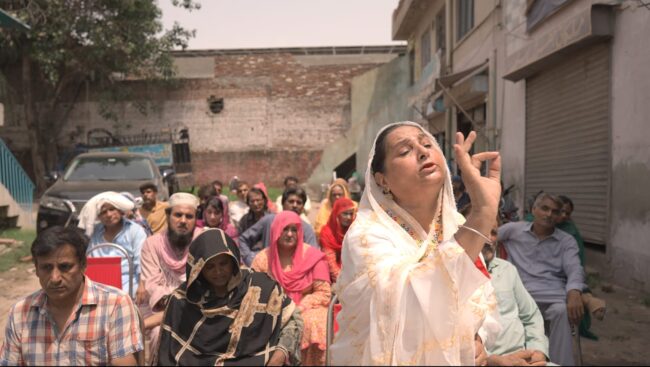
A prime example was the new video commission by Basir Mahmood, For A Body Bleeds More than It Contains, exhibited at the Rio Cinema. Basir’s practice unfolds between memory and re-enactment, and this work meditates on how ritual and embodied knowledge persists against erasure. The history of the exhibition site and the one addressed in the work, from two different geographies, came together in deep resonance here.
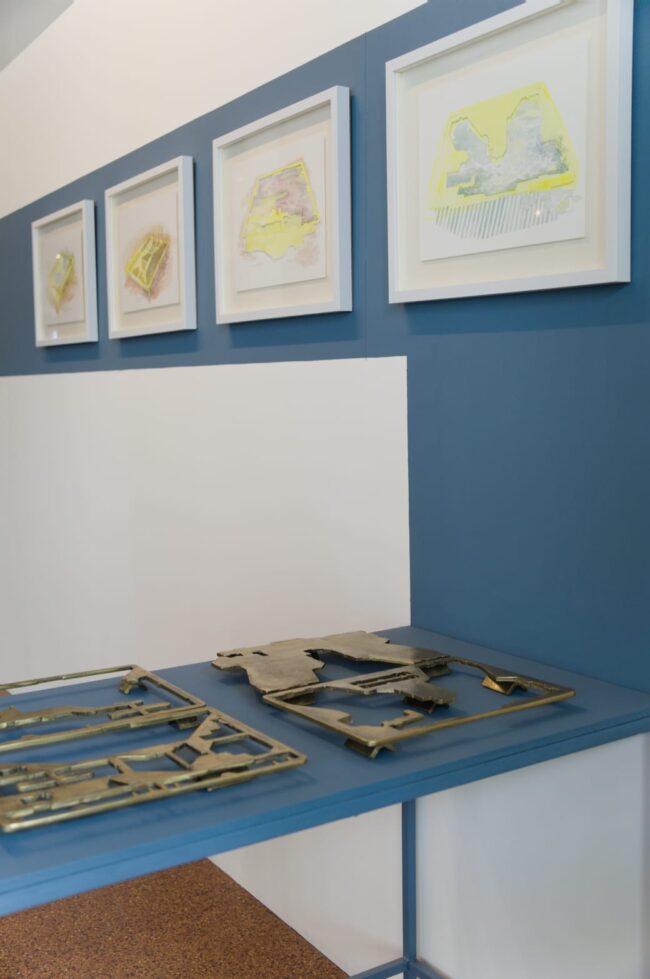
Similarly, the sculptural and watercolor works of Naiza Khan brought another temporal and material sensibility into the festival. Her brass flatpacks and aqueous drawings, referencing colonial-era infrastructures such as bridges and aqueducts, became portals into memory, transformation, and the rupture of imposed order. The shadows cast by the brass relics, and the unruly seep of yellow pigment refused containment, mirroring nature’s quiet rebellions against control. Her newly commissioned soundscape Durbeen, part of her ongoing project Walking in Common, held frequencies of collective resistance and remembrance, stitching together sonic and spatial pathways.
Housed at the Colpetty Townhouse, Jovita Alvares, recreated her grandmother’s living room. Using upholstery created with cyanotypes made from family photographs, embroidered motifs from her grandmother’s patterns of drawings, and sound recordings of her aunt recounting fragments of oral history shaped the installation. Rooted in her family’s Goan lineage and her grandmother’s migration from Bardez to Karachi, the installation held an incomplete history marked by rupture, dispersal, and the sea as both witness and archive. Within the domestic site, her work became a meditation on how memory is re-membered, while sustaining ties to ancestral lineages and distant geographies.
ZM: Any unique projects with respect to landscape, history that you felt offered an immersive experience, and that allied closely with the idea of Rhythm and movement?
HHK: There were a few such instances but one that became quite popular and stood out for its uniqueness was the presence and performance of Arka Kinari.
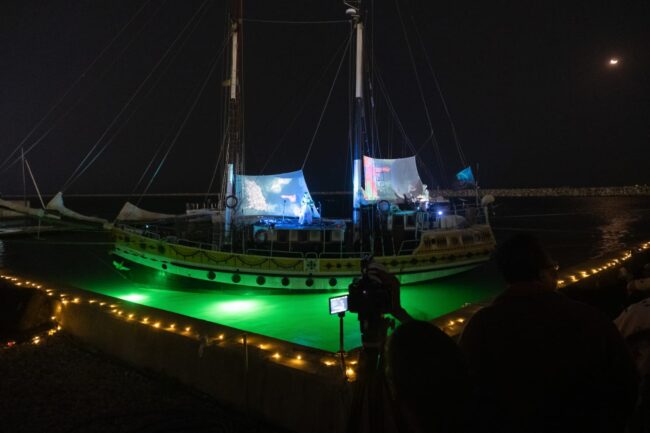
This seventy-ton sailing ship, powered by solar and wind energy, has been transformed into a sustainable home, touring vessel, and performance platform by musicians and activists Grey Filastine and Nova Ruth to mitigate climate change and reconnect with the ocean. Arka, meaning vessel and Kinari, a half-human, half bird musician, and guardian of the tree of life, anchoring the project into layered mythologies. Their practice merges sound, film and live performance. As audiences gathered along the shore, its sails lit up with projections documenting the human and ecological consequences of climate change documented on its journeys, framed by Javanese melodies and contemporary electronic rhythms performed live by the duo. Docked at the newly constructed harbor within Port City Colombo, a Chinese-owned development, the performance subtly foregrounded the entanglement of climate disruption with trade routes and geopolitical power.
This was Arka Kinari’s first performance in South Asia and drew a crowd of around 700 people, eager to experience it. Alongside the performance, they hosted onboard sessions “Laboratory of Sustainability,” where the crew shared the vessels’ ecological design, it’s various journeys and their vision for communal futures with the sea.