
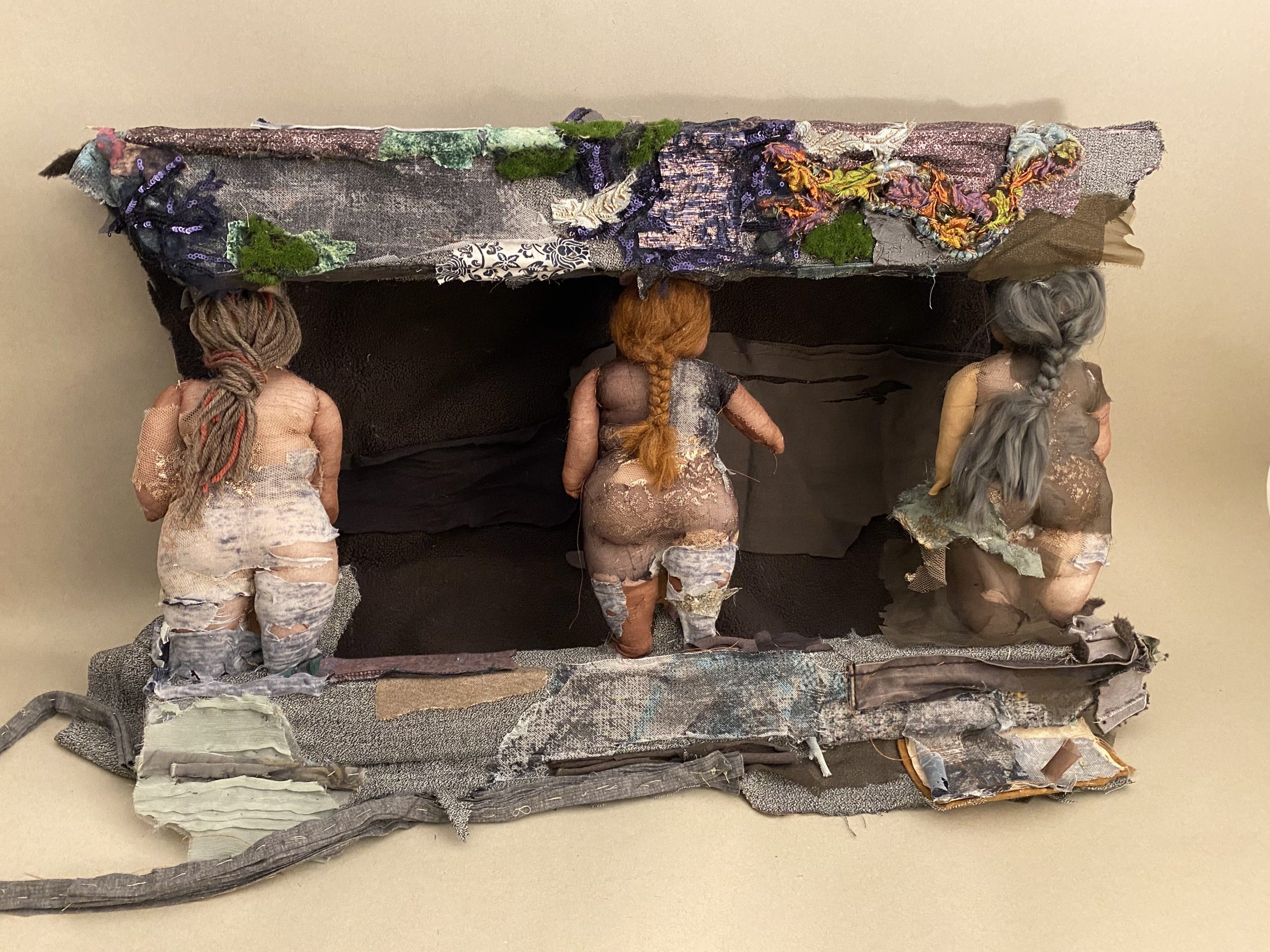
Recently Canvas Gallery, Karachi hosted a group showcase of artists whose practice delights in emotional, expressive and texture laden narratives. The group show titled The Geography of Memory featured four artists – Mustafa Mohsin, Noormah Jamal, Ruby Chishti and Usaydh Agha.
This exhibition was focused on the themes of displacement, memory, nostalgia and the power of observation as an outsider looking inwards, with each artist approaching the subject matter with intimacy and vulnerability. As a third-generation refugee, I’ve been accustomed to being an outsider looking in; sometimes even in my own life. Only when I read “The Outsider” by Albert Camus, the Nobel Prize-winning writer and philosopher, credited for his theory of absurdity, did I realize these feelings I’ve become accustomed to, of being removed from my surroundings, are alienating and haunting. Similar are my feelings to the works presented in this exhibition; they reveal an inner turmoil that has been embedded deeply, almost genetically and has become a part of the mundane for someone who has been uprooted, whether willingly or not. The artists achieve this intimacy through playful brushwork, portrayal of unique subjects, layering and material choices that creates windows into their unique perspectives.
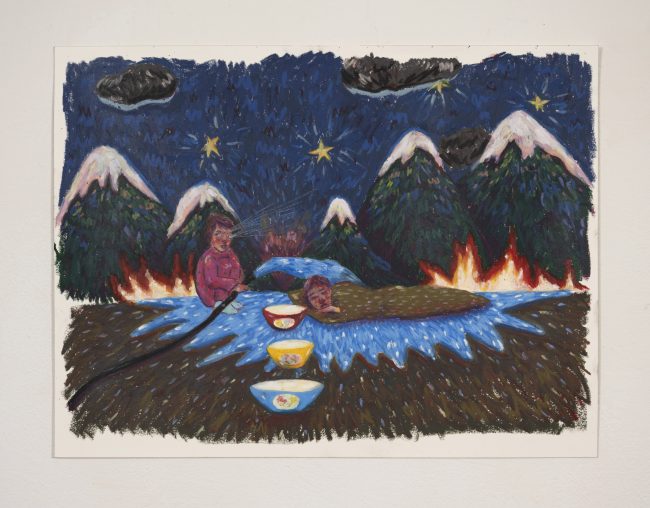
Noormah Jamal’s drawing at first glance appear like child-like crayon animations but carry unique characters and esoteric symbolism. There’s a headless body with a lily floating above like a halo and children with bruised bodies standing upon a winner’s podium. This playfulness is important because it reveals an absurd reality of human life. The rough clothing of Noormah’s subjects seems to refer to poverty but also to saintliness and disconnection from the material world and a presence with the spiritual. Having followed Noormah’s practice for quite some years, I have become familiar with her alienated characters through her very cohesive visual language and narration of an imaginary universe. Through the use of mystical and folkloric language, there remains a weak distinction between what is personal and what is collective in memory.
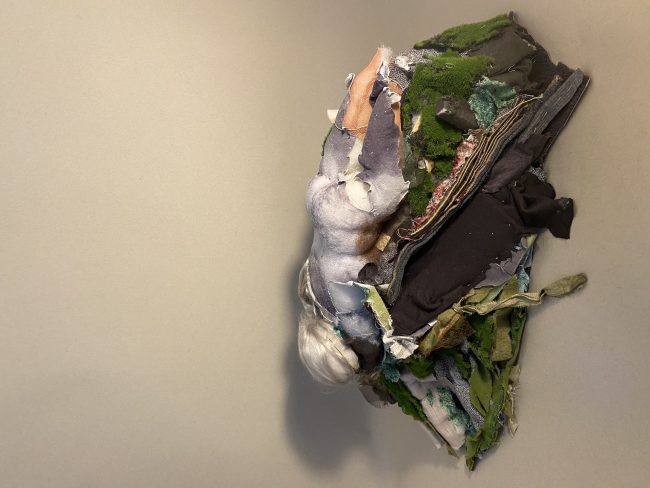
Ruby Chisti’s sculptures also belong to an alienated universe and collective memory, one which is occupied by bodies of fabric dolls, erasure and textures of discarded clothing. Out of the four artists, her work is most materially grounded. Her subject is less about emotional detachment from surrounding and more about historical and narrative displacement, how easy or difficult it is to forget what once existed. The use of discarded textiles highlights the forgotten body and unpolished fabric sculptures reveal something that has collapsed. She describes her identity less figures as “unmonumental”, contrary to how sculptures have been perceived historically, highlighting a certain personality or event. The only remembrance is the labour and care that goes into doll-making and acts of stitching. She uses the doll-making traditions of Punjab, an ancestral lineage, placing them among architectural ruins. Her sculptures don’t depict any particular memory, rather, they seem reminiscent of what is left behind at ruined sites, where people have been forced to evacuate their homes or they have been brutally targeted while engaged in domestic activities, play or rest at home. Hence, her work produces shivers in the body and triggers the feelings of grief and abandonment from collective memory.
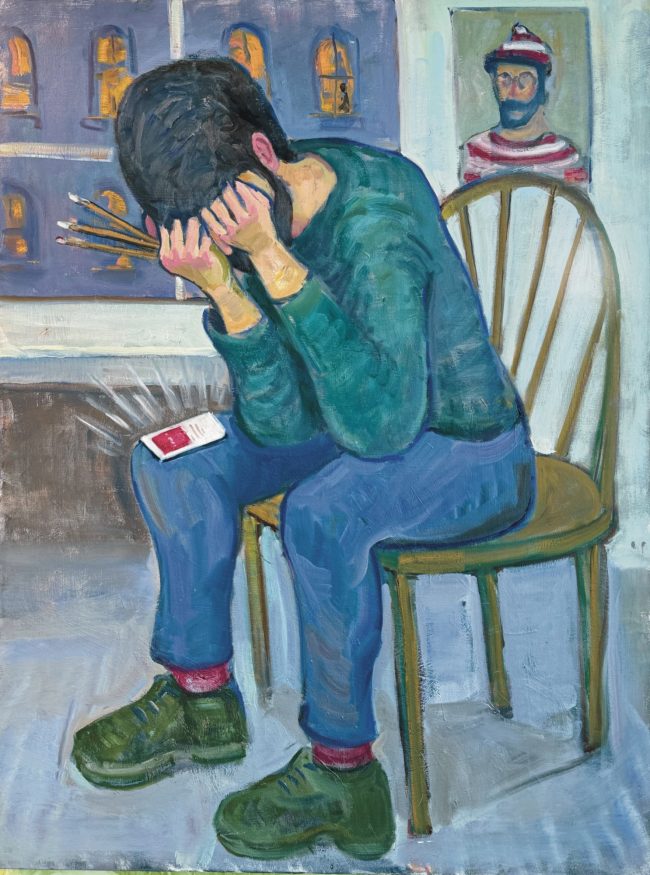
While Noormah’s paintings and Ruby’s sculptures teleport us elsewhere. Mohsin brings us closer to the mundane suffering of the visible daily life. His portrayal of memory is rather direct and representational, where the artist has positioned himself in scenes appearing distraught from life. As Van Gogh painted the world outside, as it appeared to him from inside a rehab, Mohsin has painted his life for the outsiders to witness. In his painting titled “Haram” he stares at bacon being fried on the stove, a discomforting dilemma struck between religious sin and social acceptance. In Camus’ words from The Stranger, “Everything was happening without my participation,” the subject in Mohsin’s paintings seems to be disconnected from control and choice. He lays at the precipice of participation and observation.
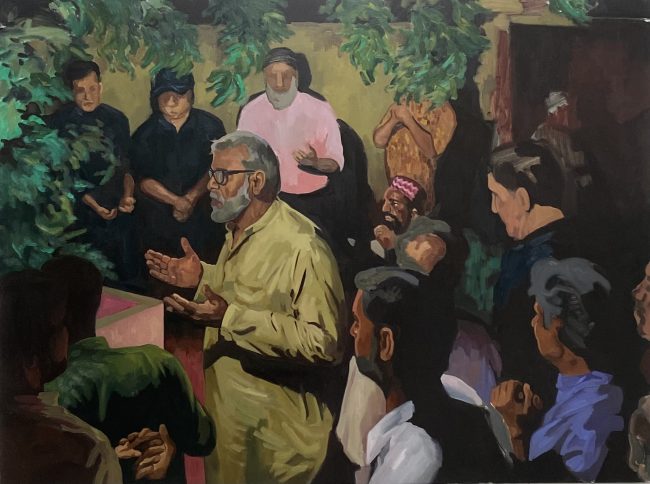
Usaydh Agha’s vision of memory is focused on place and context. He has painted very specific scenes depicting disturbance that may have been etched in memory. Painted in a realistic style, is as they offer us a glimpse inside the artist’s photographic memory. There’s a gathering for prayer, a funeral congregation and a fighting scene in the fields where one of the men holds a gun; all three events depict a loss of one’s control over circumstances. However, the artist is quite passive and doesn’t make an attempt to assert his emotions, as there is no drama or exaggeration of colour, form or focus. These paintings offer the viewer a window to partake in the culture the artist belongs to as well as a chance at self-inquiry.In the dominant understanding, works illustrating political and patriotic moments or obscene violence appear serious and thus, more important, especially when themes concerning migration and displacement are involved. On the opposite spectrum, constructed narratives, myth and storytelling of belonging by these artists offer philosophically moving perspectives. They remind us that softer narratives, connection and whimsy can coexist with seriousness and politics in image-making.
“The Geography of Memory” ran from for May 5th, 2026 to May 14, 2026 at Canvas Gallery in Karachi.
Images provided courtesy of Canvas Gallery