
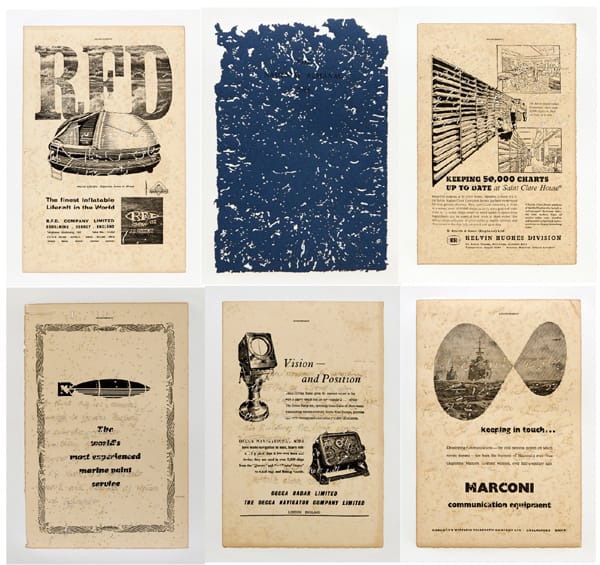
Extending the Life of an Exhibition Through Publication
While exhibitions exist within a limited moment in time, publications allow their ideas, research, and artistic contributions to continue beyond the gallery space. The publications accompanying Karachi Cartographies perform exactly this function. The main catalogue and the illustrated children’s guidebook ensure that the exhibition remains accessible as a resource for future audiences, encouraging continued engagement with Karachi’s artistic, historical, and cultural landscapes.
The main catalogue is not simply a record of the artworks and exhibitions. It functions as an important archive that captures a particular moment in Karachi’s contemporary art scene and preserves the many conversations that emerged through the project. Bringing together artworks, research materials, and critical texts, it creates a valuable resource for artists, students, researchers, and anyone interested in the city’s relationship with memory, archives, and artistic practice.
As Karachi Cartographies explored the city through themes of maps, personal histories, urban transformations, and speculative narratives, the catalogue extends these ideas beyond the walls of the exhibition. It allows readers to revisit the artists’ approaches and understand how creative practices can become methods of recording, questioning, and imagining the city. In a context where documentation of contemporary Pakistani art and exhibition histories remains limited, such publications become significant references for future generations.
The catalogue is accompanied by essays by architect Marvi Mazhar, curator Zarmeene Shah, and Dr Furqan, whose contributions provide different perspectives on the city, its histories, and the importance of artistic and archival practices. Together, these texts expand the publication beyond traditional exhibition documentation and place it within broader discussions around Karachi’s changing identity and the ways in which the city can be interpreted through multiple disciplines.
Perhaps the most important contribution of the catalogue is its role as a future resource. For emerging artists and art students, it offers an insight into how archives, historical records, personal memories, and everyday observations can be transformed into artistic inquiry. It demonstrates that cities are not only understood through official histories and urban planning but also through the stories, emotions, and experiences of those who inhabit them.
Alongside the main publication, Karachi Cartographies also includes an illustrated children’s guidebook created by Karachi-based artist Sophia Balagamwala. The decision to create a publication for younger audiences reflects an understanding that conversations about art, history, and the city should begin early and remain accessible to people beyond academic and artistic circles.
Balagamwala’s practice explores the intersection of historical events, personal memories, and fiction. Drawing from archives, histories, and children’s books, she works across animation, drawing, sculpture, painting, and publications to create narratives that move between the real and the imagined. These concerns are thoughtfully translated into the guidebook’s visual language, making the exhibition’s themes approachable and engaging for children.
Through illustrations, and interactive storytelling, the guidebook encourages young readers to observe their surroundings and recognise the many stories hidden within their city. Rather than treating art as something distant or confined to galleries, it presents artistic practice as a way of exploring everyday spaces, memories, objects, and communities.
The children’s guidebook plays an important role in building future audiences for contemporary art by making complex ideas accessible without reducing their depth. It invites children to become active participants in understanding their environment and introduces them to the idea that cities can be mapped not only through streets and buildings but also through imagination, memory, and personal experiences.
Together, the two publications demonstrate the wider vision of Karachi Cartographies. They transform the exhibition from a temporary event into a lasting educational and archival resource. While the catalogue preserves the intellectual and artistic conversations of the exhibition for students, artists, and researchers, Balagamwala’s guidebook opens these conversations to younger generations, ensuring that the process of discovering and interpreting Karachi continues well beyond the duration of the exhibition.