
The importance of drawing is essential and ever-present in the artistic creation process, and that’s why it is rather hard to define it. In his 1953 essay, ‘Drawing is Discovery’, John Berger wrote, “Drawing is discovery; drawing is a way of seeing what is hiding under the surface.” He further establishes that what we draw is not only the subject observed but also what we already know about it. In fact, the past experience of the subject affects the way we draw it. The sculptors, the painters and the architects constantly draw to study, to remember or to clarify their own ideas.
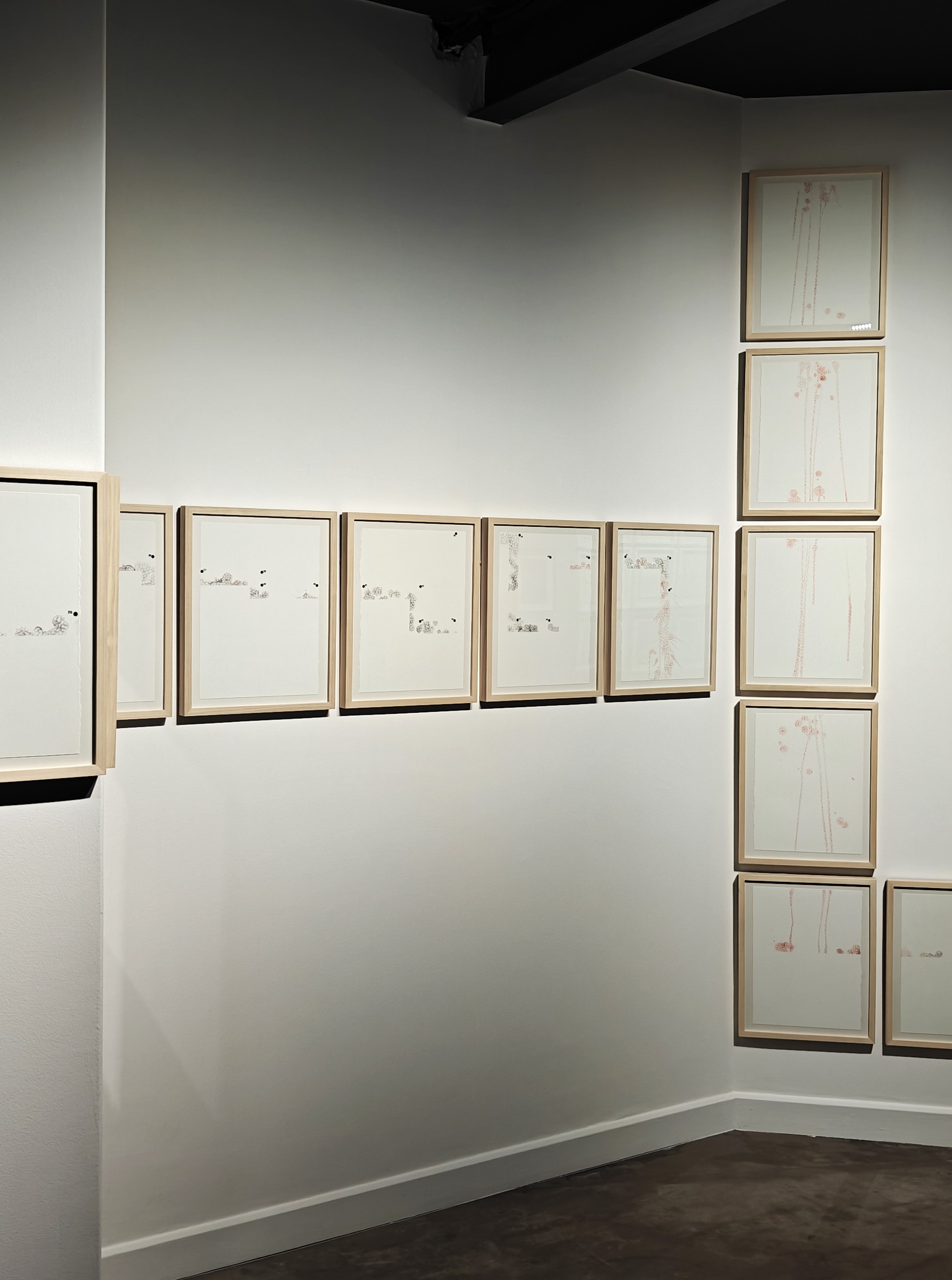
Curated by Hassan Sheikh and displayed at the COMO museum in Lahore, Traces rethought drawing not simply as a medium but as a fundamental and instinctive language through which artists register their presence in the world. The exhibition emphasizes the act of mark-making itself, where lines become evidence of movement and thought in real time. This framing shifts attention from representation to the process itself.
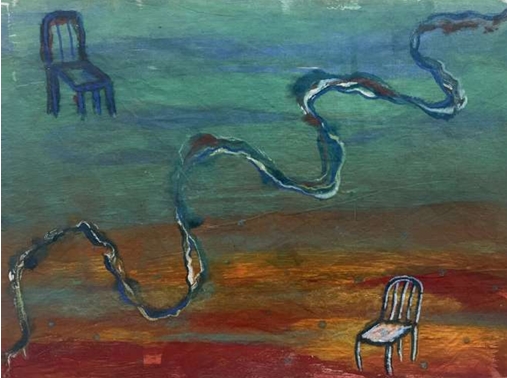
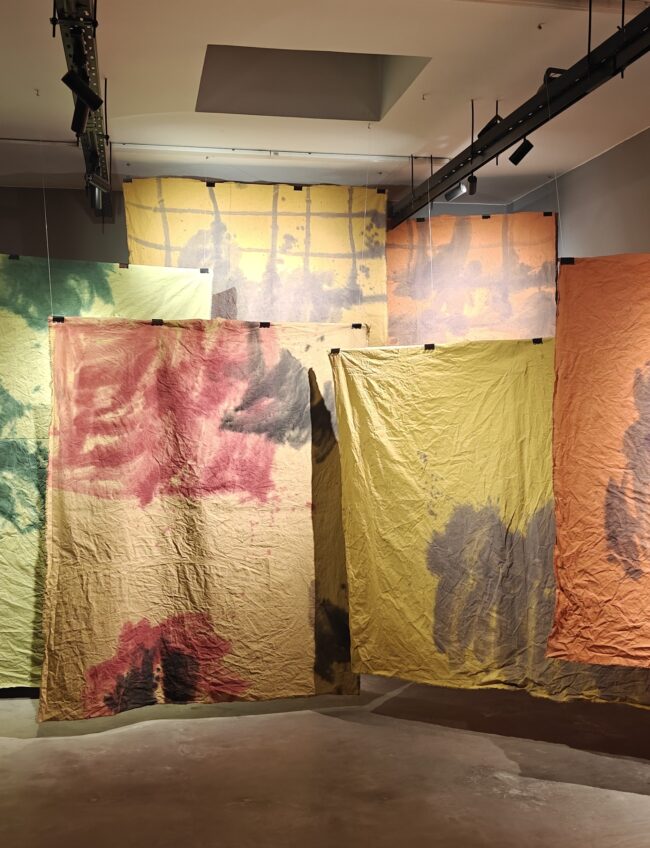
Traces unfolds as an essential proposition, i.e., to return drawing to its most elemental condition; not merely a foundation step but a complete and thinking form in itself. In works by Abdullah Qureshi and Amna Suheyl, the lines bring in a sense of intimacy and destruction. Qureshi’s fluid, dye-based surfaces extend the drawn mark into stain, representing how desire does not mark territory with outlines but bleeds deep to leave residues. While Suheyl’s monotype figures seem to emerge from and dissolve back into the ground, carrying the brittleness of memory and gendered histories.
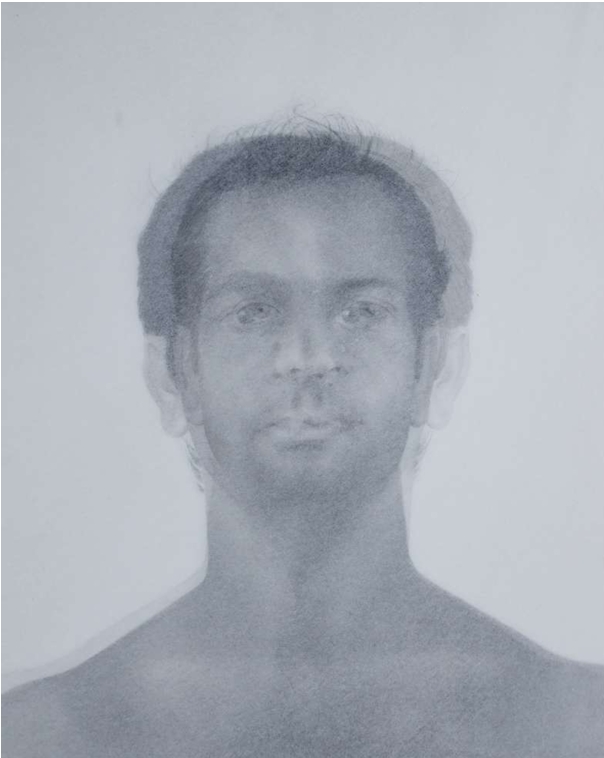
A quieter, more contemplative story appears in Ali Kazim’s work, where the drawn line becomes an instrument of duration. Kazim works on multiple surfaces here. He reduces the act of drawing to an intimate conversation between the surface and the self. Maryam Moinuddin, by contrast, allows her line to drift and hover in states of becoming, constructing images that feel less drawn than remembered.
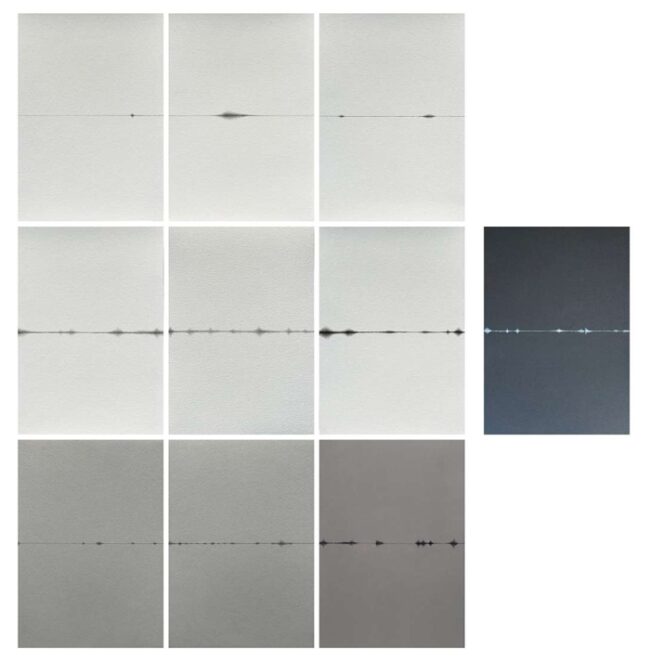
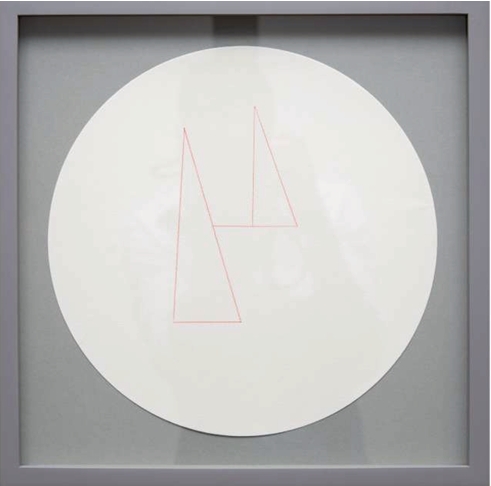
A similar speculation in structure and belief is seen in Ayesha Jatoi and Babar Gull’s works, where the line organizes space through geometry and repetition. Jatoi’s pared-down compositions oscillate between diagram and symbol, questioning the systems of power through minimal means, while Gull’s graph-based explorations turn the line into a reflective device, mapping belief and movement across grids. Their works reminded me of the famous Paul Klee words describing line as “a dot that went for a walk.” Though in these works, the walk is measured and disciplined.
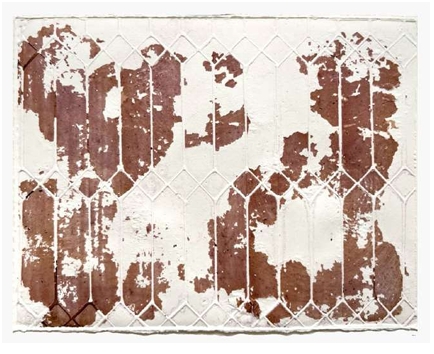
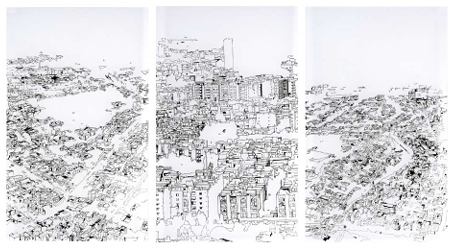
Materiality takes precedence in the works of Mina Arham and Hafsa Nouman, where drawing extends beyond paper into processes of layering, transfer, and surface. The expressive and psychological potential of the line is most intense in Musawir Shabbir and Rakshanda Atawar’s works.
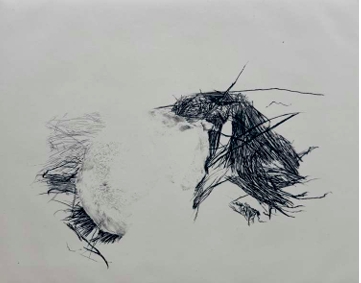
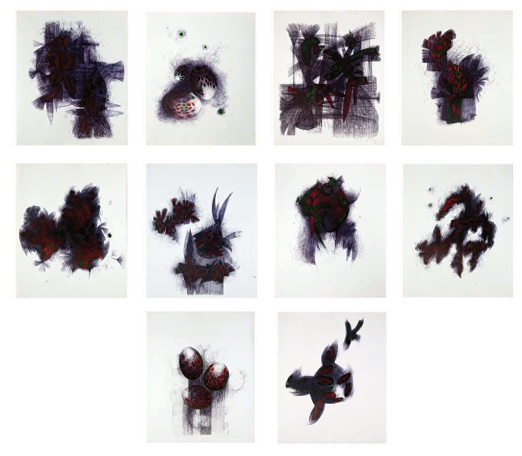
In Shabbir’s drypoint works, the line fractures under emotional pressure, becoming the witness to an inner chaos. Atawar’s vivacious, freehand gestures move in the opposite direction, that is, towards release. Fusing color and line so they are cathartic.
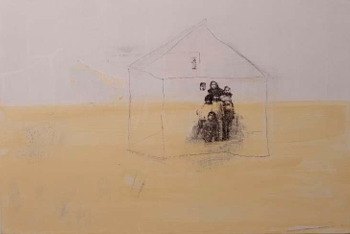
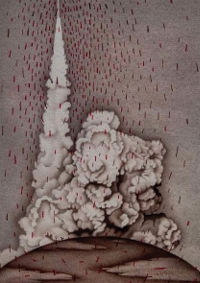
In the works of Nisha Hasan and Sajid Khan, drawing now acts as a symbol of grief and of history and to some extent of latent violence. Hasan’s layered surfaces incorporate photographic transfers and archival material, treating the line as the delicate thread that binds personal and collective memory. Khan’s images are dense and tonally rich. They fascinate at first glance but reveal darker traces upon a closer look, telling us that every mark carries within it the possibility to break.
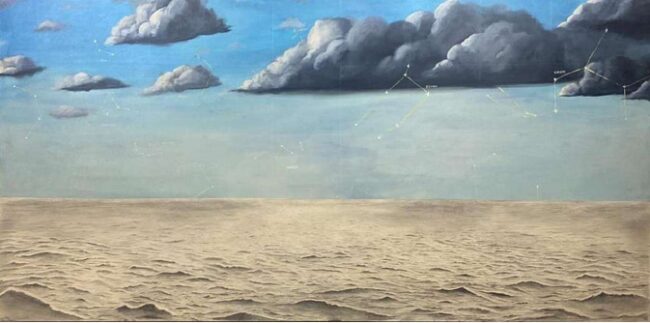
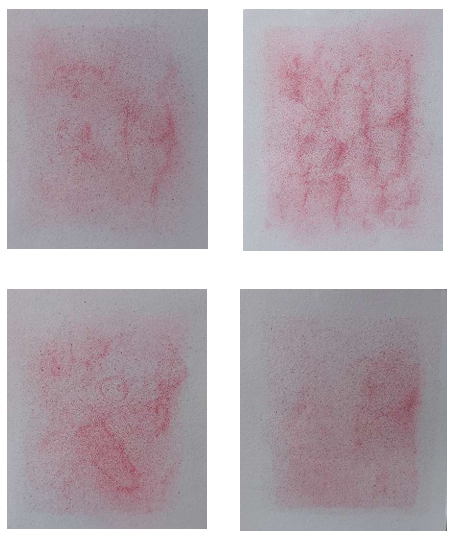
Faraz Aamer Khan and Muhammad Usman Ali approach drawing as a hypothetical phenomenon. Khan’s works situate the line within a cosmic framework, while Usman Ali’s lines remain open-ended, asking the viewers to complete the image through their own perception.
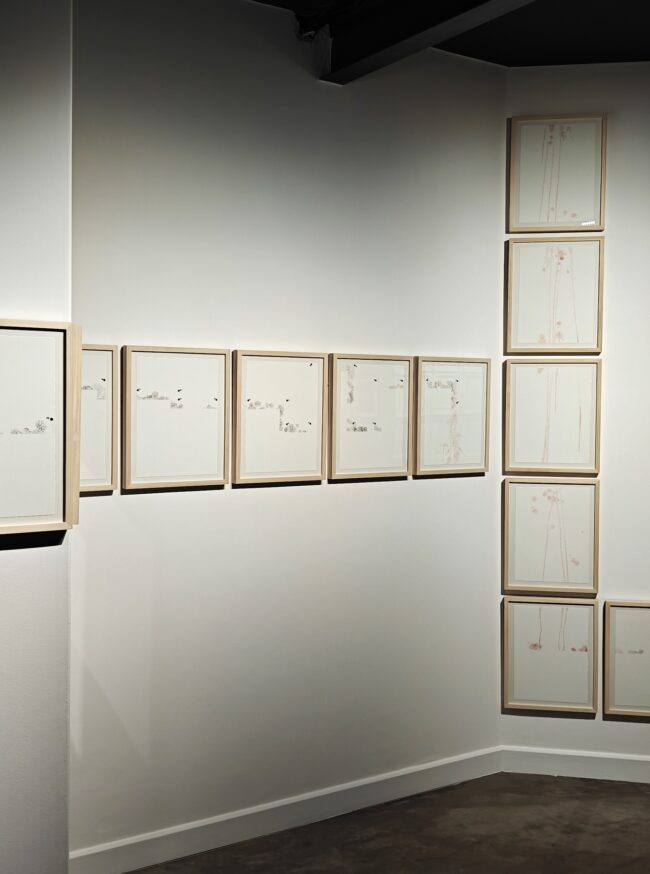
Finally, seasoned artists like Imran Qureshi and Muhammad Ali Talpur anchor the exhibition within longer histories of drawing while simultaneously expanding its possibilities. Qureshi’s practice is rooted in miniature painting and demonstrates how the discipline of the line can move fluidly across scale and medium. Talpur’s perseverance in drawing as a meditative and process-driven act reinforces the exhibition’s central theme: that the significance of drawing lies not in what it produces, but in the act of making itself.
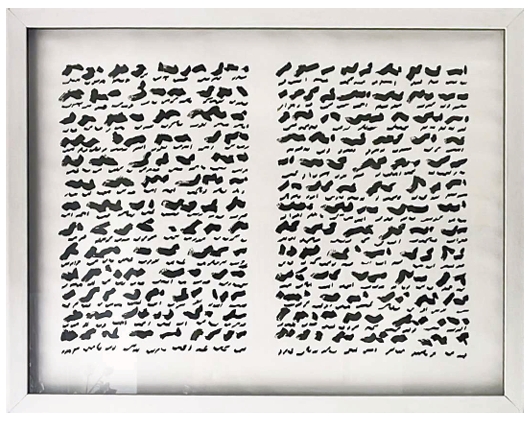
What Hassan Sheikh has ultimately achieved through Traces is a reorientation of attention. In an art world often obsessed with display and scale, the exhibition prioritizes looking closely and returning to the most basic gesture: the mark. Yet, as these works demonstrate, there is nothing “basic” about drawing. Each line is a trace of thought and time. And in this collection of traces, the exhibition softly reclaims drawing as a persistent and ever-evolving language that continues to shape how we observe and remember.
The exhibition titled ‘Traces’, curated by Hassan Sheikh, opened on the 27th of March and is on display at the COMO museum in Lahore till June 30th 2026.