
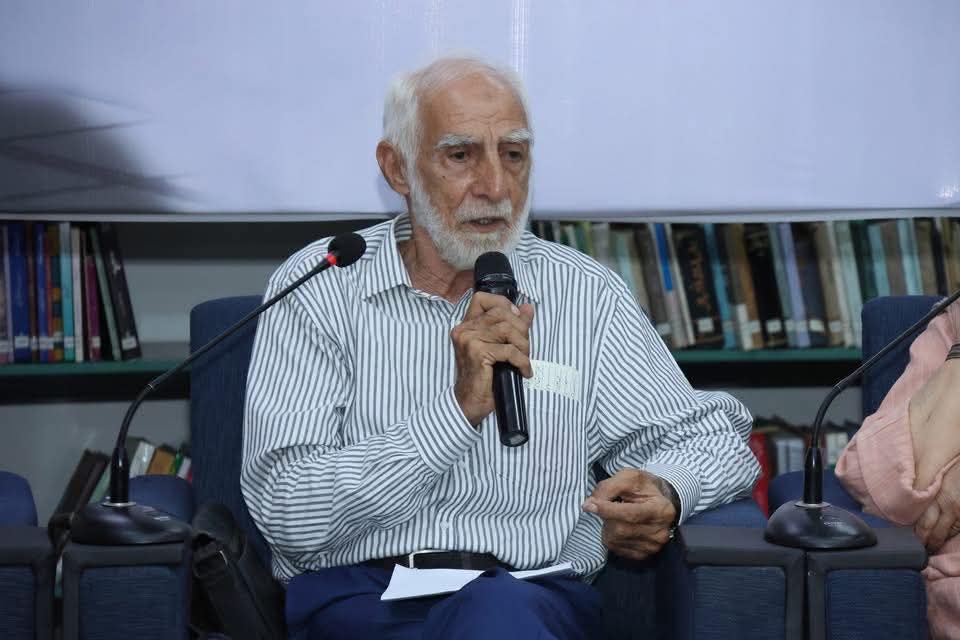
On 13 June, a panel discussion at the Arts Council of Pakistan, Karachi, brought together artists, friends, former teachers, and colleagues to reflect on the life and work of senior painter Akram Spaul. Moderated by artist Farrukh Shahab, the programme began with a video presentation featuring Spaul’s paintings and interviews before moving into a panel discussion with Noorjehan Bilgrami, Rumana Husain, Sabiha Nasr-ud-deen, Shaji Kazmi, and Spaul himself.
Known for his paintings of still lifes and architectural details such as windows, doors, and facades, Spaul has spent decades observing the quieter aspects of everyday life. His paintings often focus on light, form, surface, and the marks left by time on ordinary objects and buildings. The discussion explored both his artistic practice and the relationships that have shaped his career, offering insight into the experiences and people that have accompanied his work over the years.
The panelists reflected on Spaul’s professional journey beyond painting. His years in advertising and publishing were discussed, including his association with Herald magazine and his work alongside figures such as Ali Imam and Imran Mir. These experiences make him a part of the generation of artists, designers, and creative professionals whose contributions extended across multiple fields. Noorjehan Bilgrami read a message from former principal Rashid Arshed, who recalled Spaul’s years as a student and his development as an artist. Bilgrami also shared her own memories of a contemporary whose career she has witnessed over many decades. Rumana Husain focused on their time together at the Central Institute of Arts and Crafts (CIAC), recalling student life and the friendships from that time.
Sabiha Nasr-ud deen, who taught both Spaul and Husain, spoke from the perspective of a teacher who had watched her students build lasting careers in the arts. Her reflections connected different generations of practitioners and added historical context to the conversation. Throughout the evening, fellow panelists described Spaul as thoughtful, modest, and committed to his work. When he eventually addressed the audience, he reflected on his arrival in Karachi from Punjab in the late 1960s, his studies at the Arts Council’s art institution, and his early years working in advertising and publishing. He also recalled the encouragement he received from fellow artist Imran Mir, who urged him to begin painting, and the support he later received from writer and artist Anwar Maqsood after showing some of his earliest works. One of the evening’s more personal moments came when Shaji Kazmi read from a text he had written about his longtime friend. Together, these recollections offered a portrait of an artist whose practice has been shaped by friendships, mentorship, and professional relationships. More than a discussion about paintings, the event became a reflection on a life spent making art and maintaining meaningful connections within Karachi’s cultural community.