
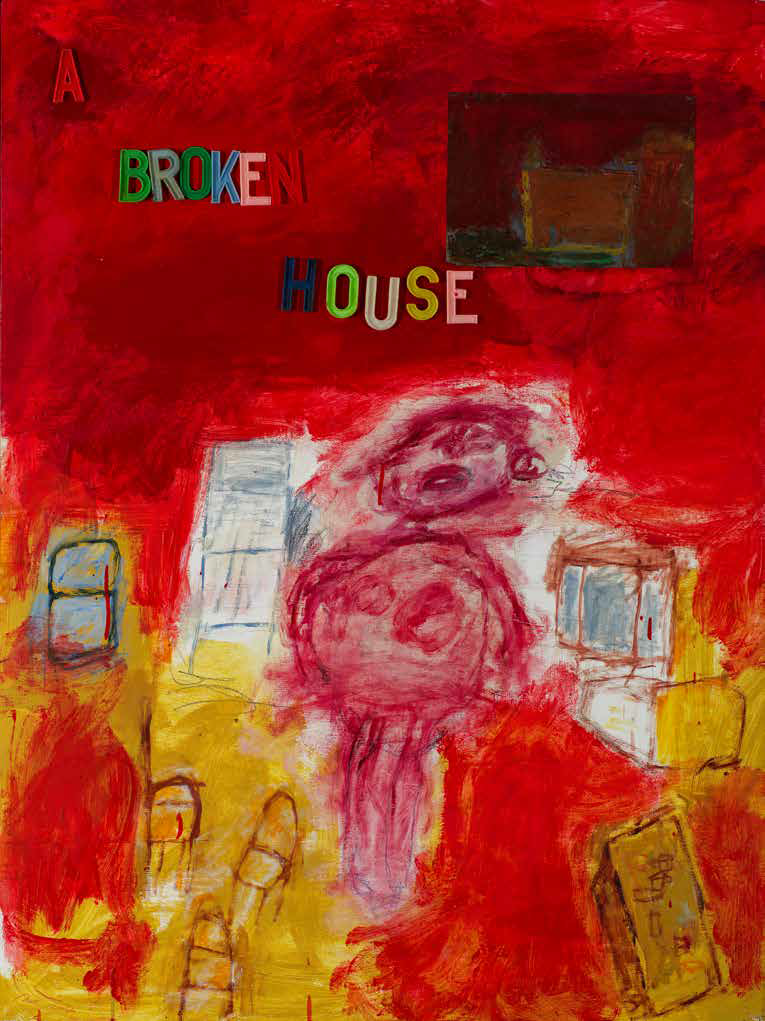
Quddus Mirza exhibited his latest collection of paintings in Karachi, with the solo showcase “New Works” opening at Canvas Gallery on April 8th. In his previous solo held in Dec 2023 at the same gallery, titled “Doubts, Dreams and Desires,” Quddus Mirza disclosed, “My art is a form of celebrating life and a means to mourn death”. The current solo seems to be in continuation of the previous, even more so emphasizing death, along with other atrocious and vulnerable conditions and the aftermath of war and violence. The continuing practice shows how, for this artist, war is not an event; it is a state.
Artistic practices exist beyond inspiration and influence, or at least, that is how it must be in an ideal world. But since we don’t live in an ideal world, the market, sensationalism and personal branding infiltrate into and distort the artistic making processes. As a result, works that engage with crisis risk are read akin to news or as aestheticized and commodified translations of suffering. Yet, as Susan Sontag reminds us in her discussions on form and content in the essay “Against Interpretation”, art is neither reportage nor a substitute for reality. “The ideal or the dream would be to arrive at a language that heals as much as it separates.”
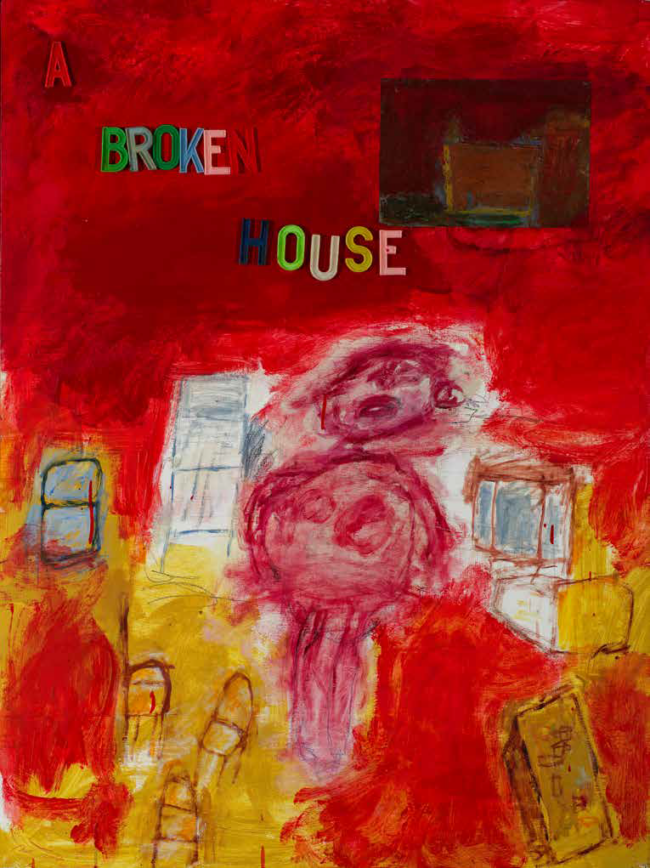
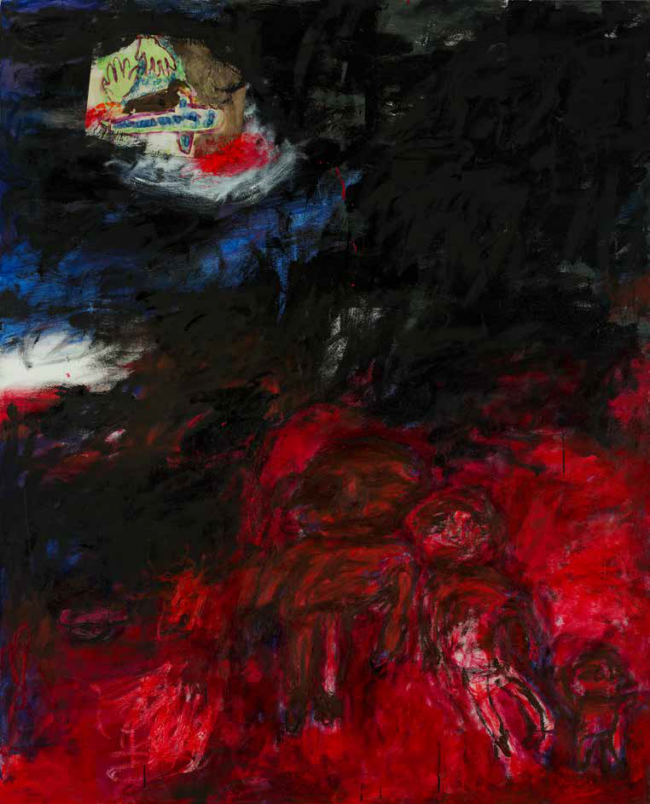
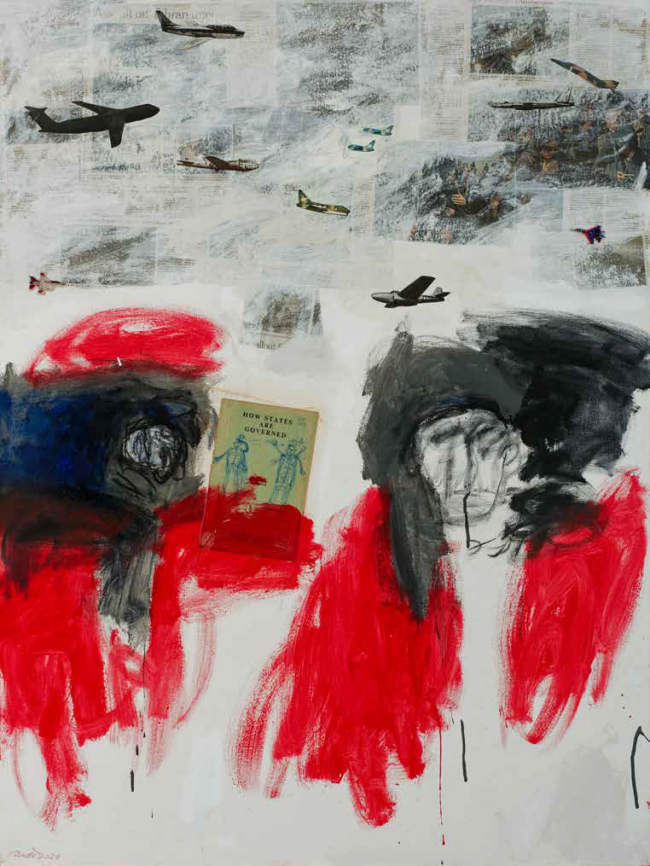
In a cathartic manner, the parts that heal are those that imply suffering. In the paintings, grief and emptiness have been implied through bold and broken lines that remain empty or expressively filled with colours red and black; objectively associated with feelings of primal discomfort and macabre. The sharp contrasting colour add depth and energy to the paintings. Displaced homes are another element that seems apparent, with drawings showing interior spaces and scattered pieces of furniture. The dining table with chairs waiting to serve food is shown across several paintings, signaling a domestic routine that stabilizes daily life. In “The Ghost City,” the dining tables are surrounded by the simplest drawings of empty, inhabited houses. In “Black Birds,” the artist uses a magical realist and dark-humoured lens to show us the war aircraft as birds in the sky. The painting holds newspaper clippings and a book cover that states “How States Are Governed,” which adds a layer of surveillance and control over war news and imagery. I found this specific work to be the most remarkable because it not only reinstates the suffering but, through the use of humour and accusatory print material, points towards accountability on the part of the state and media. It not only tells but asks.
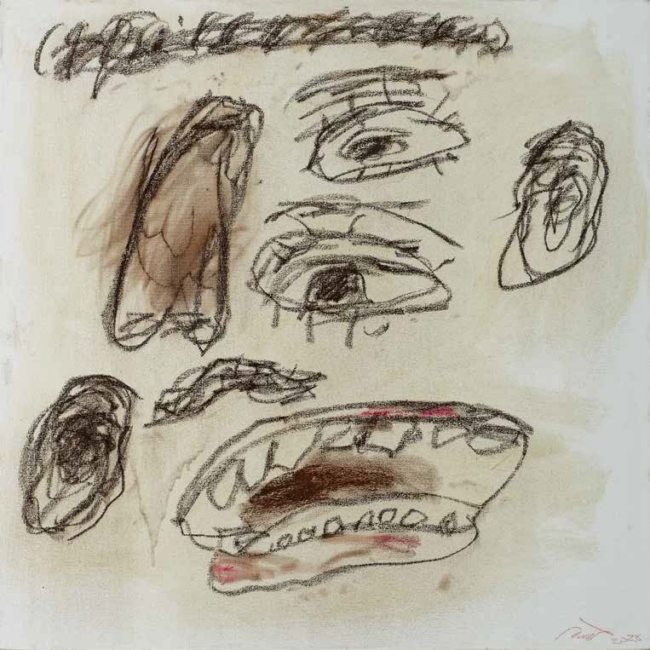
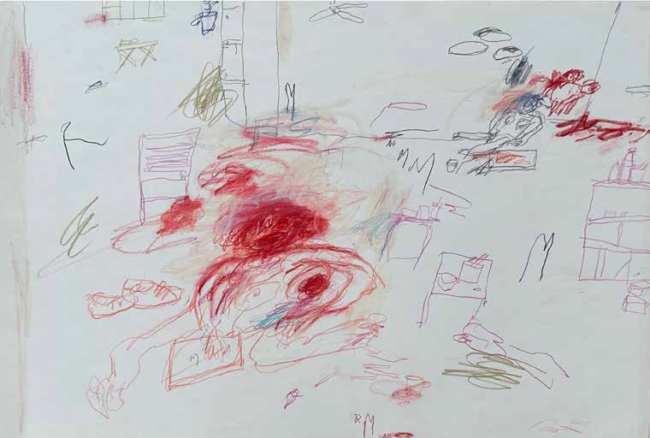
The drawings “A Man and Woman”, “In Between”, and “In the Heat of Making” show scattered interior spaces, but they present something unique. There is more intimacy. Within the lines, if you see closer, you can almost see a story unravelling. There are literal forms, such as a heater plugged into the wall; such items gesture at warmth and comfort inside a home. The drawn figures sitting on the floor with paper, pencils, and coffee suggest that they are engrossed in drawing amidst an unstable, grieving atmosphere. Similar drawings were found in his previous aforementioned solo, e.g., in “Artist At Work” and “In the Solitude of Studio”. Such drawings show the physical and emotional presence of the artist quite literally in his works, heightening the sense of intimacy in the drawings. The most painful and intimate of all symbolic gestures was the use of tracing rulers that I remember using when I was in school. This reference to childhood innocence and play is merged with drawing techniques, resulting in a powerful portrayal of embodied making. It captures the raw feeling as opposed to a represented feeling. Or, in Susan Sontag’s words, there isn’t a disconnect between form and content.
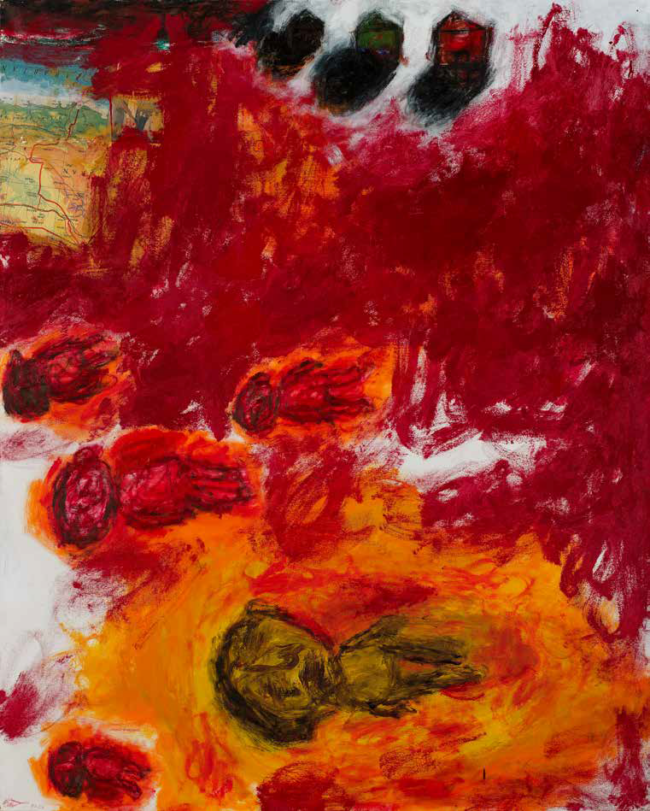
The part that separates art from reality is when the artist doesn’t represent any specific moment, community or place. To show this non-specificity, he paints the body in a very expressive, almost art brut manner, without gender, garment, or any other reference to an individual identity, as in “The Book Still Burning” and “The Ghost City”. Whilst the diptych, “Anatomy and Other Lessons,” shows these remnants of identity scattered. It reminds me of images we see in the media, capturing the remains at bombed sites. The same media also erases specificity and avoids naming victims and perpetrators. Furthermore, Quddus Mirza employs a flattened, multi-layered perspective drawing upon Pahari painting. This use of perspective shifts the reality of crisis through an imaginary, magical-realist lens.
The way an artist conveys violence brings forth questions on social perception of it and the artist’s openness to risks. Historically, artists like Francisco Goya and Pablo Picasso have depicted war as historical testimonies and have confronted the viewer directly. Their works produced feelings of horror and shock. While artists such as Mark Rothko have not depicted war literally, the practice holds the associated emotional weight and residue; mourning, grief and vulnerability. Abstraction, while not highlighting war for its spectacle, creates a safe distance. Some may perceive this safe distance as emotional numbness or detachment from reality, for today’s audience is more accustomed to literal portrayals. The media has made us desensitized to the pain of others. Amongst this dilemma, Quddus Mirza’s paintings represent literal portrayals in a subdued manner. Like Rothko, he has prioritized the human condition amidst war and in Susan Sontag’s words, “the effusion of interpretations of art today poisons our sensibilities.” Quddus Mirza’s works play a role in dissolving these poisons of theorizing and mentally categorizing forms. However, this doesn’t imply that only distanced works carry more sensitivity and less of a spectacle. Zainul Abedin’s famine drawings are one of the clearest examples of how an artist can engage disastrous events without spectacle, without aestheticization, without abstraction, and without distance.
Quddus Mirza’s New Works navigate a delicate space amidst safe distance and confrontation, merging imaginative scenes with reality and accountability. These works offer us an alternative perspective to the dominant narratives shared in the media; more slow and interpretive and less bound by time. They show the role of the artist in times of conflict. While the governments state that the works of artists is important, less than deserving support is given to artists who play an empathetic role amidst and post war.
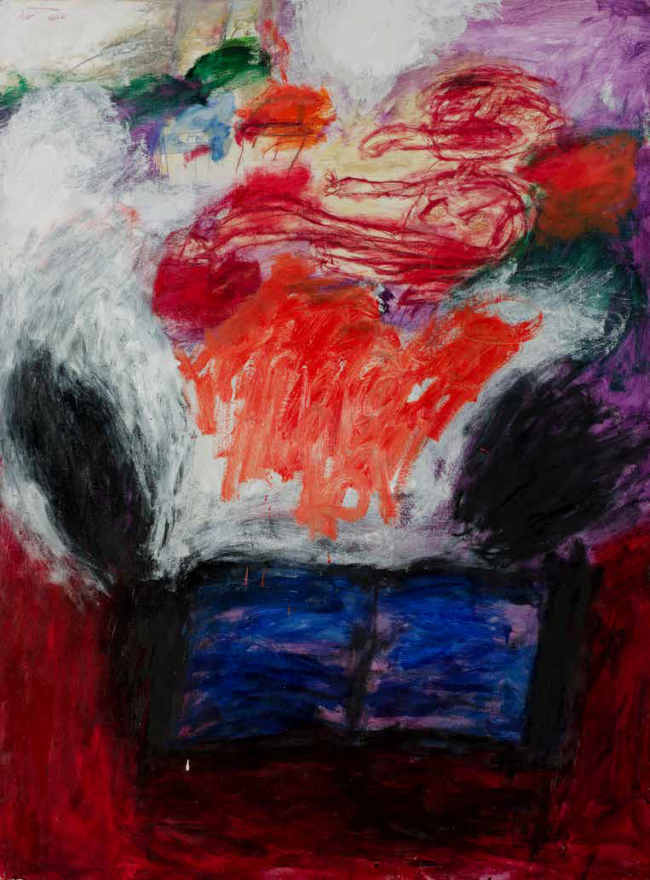
When an artist refers to a real-world event, whether explicitly or implicitly, it risks the works being viewed as news or spectacle, especially when the artists themselves have not been directly involved in the said events. In the present times of crisis and war, we need to create space for the victims to speak and create for themselves, for they have brutally earned the right to this authority. And, at the same time, we need to let visual artists express themselves, as long as it is not meant to overshadow the victims. Art may exist as silent empathy, though in times of war, silent empathy may seem questionable. But for some artists and the public, the creative process may be the only way to make sense of the violent reality around them.
References:
- Canvas Gallery, Doubts, Dreams, Desires, 2023, E-catalogue
- Canvas Gallery, New Works, 2026, E-catalogue
- Susan Sontag, Against Interpretation
- 50 Years of Visual Arts in Pakistan, Salima Hashmi and Quddus Mirza, Sang-e-Meel Publications
Image credits belong to Canvas Gallery