
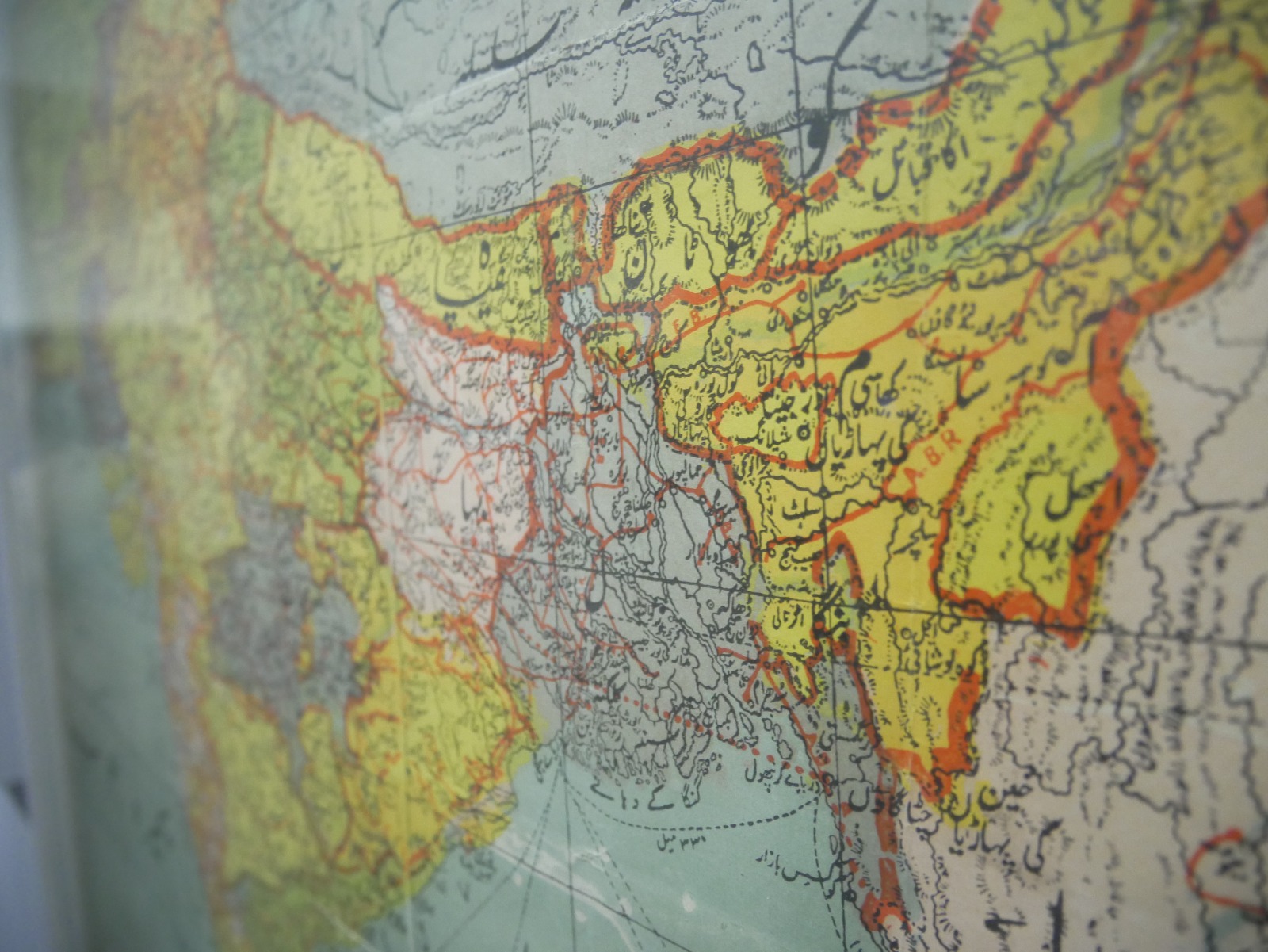
To trace the identity of a people is to engage in an act of historical divination, a process that transcends the mere linear recording of civilizational continuity or the shifting configurations of national borders. True lineage resides within a deeper, more elusive geography: the landscape of the collective soul. Cultural and creative cartography of a people emerges not as the literal sketching of the topography of the land they inhibit, but as the scholarly and philosophical practice of mapping the invisible currents of human expression, belief, ritual, and aesthetic evolution.It is a methodology that charts how a society understands its place in the cosmos, translating memory into material expression.
For Pakistan, a land that serves as both a cradle of ancient antiquities and a modern laboratory of post-colonial identity, this cartography has taken the critical position of an existential imperative. Without the deliberate documentation of the aesthetic impulses that have washed over this land, society risks a profound collective amnesia, forgetting that its contemporary realities are anchored in millennia of creative contemplation.Culture and art exist in an eternal, symbiotic feedback loop, continuously generating the scaffold upon which society builds itself. Culture can be understood as the foundational soil, the shared reservoir of values, anxieties, spiritual yearnings, and historical traumas. Art is the flora that blossoms from this soil, translating abstract collective undercurrents into tangible iconography, verse, and architectural space. Yet, this dynamic is cyclical.
The emergence of a seminal artwork, a revolutionary visual sensibility, or a profound philosophical treatise reacts back upon the soil, morphing the cultural composition, redefining societal priorities, and expanding the boundaries of the collective imagination. This constant synthesis forms the very substance of any civilization. The cultural cartographer operates at the intersection of this dialogue, tracing how a single terracotta vessel from Mehrgarh, a Gandharan Bodhisattva carved in schist, a Mughal miniature, or a radical modernist canvas from Lahore speaks to an unbroken continuum of human experience for this land.
This cartography is never an automated process; it relies on an interconnected ecosystem of human agency, wherein art patrons and collectors play a distinct, steering role. By offering resources and sanctuary to creator, patrons transform private wealth into public heritage. To collect is to assert that certain objects possess an enduring truth about the era of their creation. A dedicated collector, operating with a taxonomy of taste, goes a step further by assembling fragments of creative expressions into a coherent narrative.Historically, this patron-collector dynamic has anchored South Asian cultural preservation across shifting eras. In the ancient civilization of Mohenjo-Daro, patronage was inherently tied to civic and ideological authority, as evidenced by the meticulous craftsmanship of iconic artifacts like the bronze Dancing Girl and the steatite Priest-King, which reflect a society that collectively allocated resources to skilled artisans for ritualistic or administrative symbolism.
By the seventeenth century, this localized statecraft expanded into the grand visual production of the Mughal courts. Emperors like Shah Jahan operated as supreme individual patrons, directly funding architectural marvels such as the Badshahi Mosque and Shalimar Gardens in Lahore, while institutionalizing royal ateliers that elevated miniature painting to a global standard.In the modern era, the mantle of custody has transitioned to a diverse ecosystem of private individuals, financial entities, and multinationals. Corporations like renowned banks have historically commissioned massive public artworks, including iconic murals by Sadequain, while multinationals such as Unilever consistently sponsored major national biennales, contemporary art prizes, and restoration projects. This corporate capital now mirrors the civilization-mapping roles once held by ancient councils and imperial monarchs.
Over the last few decades, alongside these institutions, passionate and brave individual patrons also stepped in to build spaces for creative expression. In the post-independence decades, figures like Ali Imam turned his Indus Gallery in Karachi into a vital sanctuary and intellectual hub that discovered, mentored, and financially sustained legendary modernists like Bashir Mirza and Colin David. Similarly, the visionary Wahab Jaffer emerged as a prolific collector and close companion to master painters like Ahmed Parvez, building an unparalleled personal archive of post-independence modern art while funding regional initiatives to support struggling creators.More recently, the landscape has been redefined by contemporary visionaries, who have systematically documented regional art movements and established major gallery spaces.
Joining this modern lineage of stewardship is Dr. Furqan Ahmed, an art collector and patron whose private collection of contemporary Pakistani art spans a wide range of media, including paintings, works on paper, sculpture, installations, prints, photography, and new media art. His curated holdings of contemporary Pakistani ceramics and new media work, in particular, stand as the largest of their kind.To fully comprehend the depth of this creative heritage, one must adopt a deeply philosophical and anthropological perspective.
Art patrons, historians and contemporary cultural thinkers do not merely catalogue art or determine the authorship of antiquities; rather, they function as archaeologists of a collective consciousness. Their intellectual labor views an art object as a fragment of a coherent tapestry, containing encoded values, socio-political synthesis, and class dynamics. Through such an expansive lens, the geography of a people is revealed not as a modern political entity, but as a sum-total of cultural and artistic crossroads. Perhaps, the loudest take away from experiencing such a collection is the ultimate truth: identity is never static or monolithic but an accumulation of historical strata, a fluid dialogue between the indigenous and the global.Ultimately, artistic and cultural cartography is an act of profound preservation against the corrosive effects of time and political instability.
For Pakistan, possessing an incredibly rich civilization legacy yet frequently grappling with the challenges of modern self-definition, the mapping of its artistic landscape is vital. It offers an alternative, humanistic history to the often dry, polarized accounts found in political textbooks. It reminds us that the true identity of a people is found not in transient rhetoric, but in the enduring beauty, nuance, and complexity of creative expressions that emerge from the land and its people. Enshrined within these precious collections, the map of the society’s soul remains illuminated. They bequeath to future generations a vital compass—one that allows them to navigate the turbulent currents of global modernity while staying profoundly anchored to the artistic lineages of those who lived and created on this land before them.