
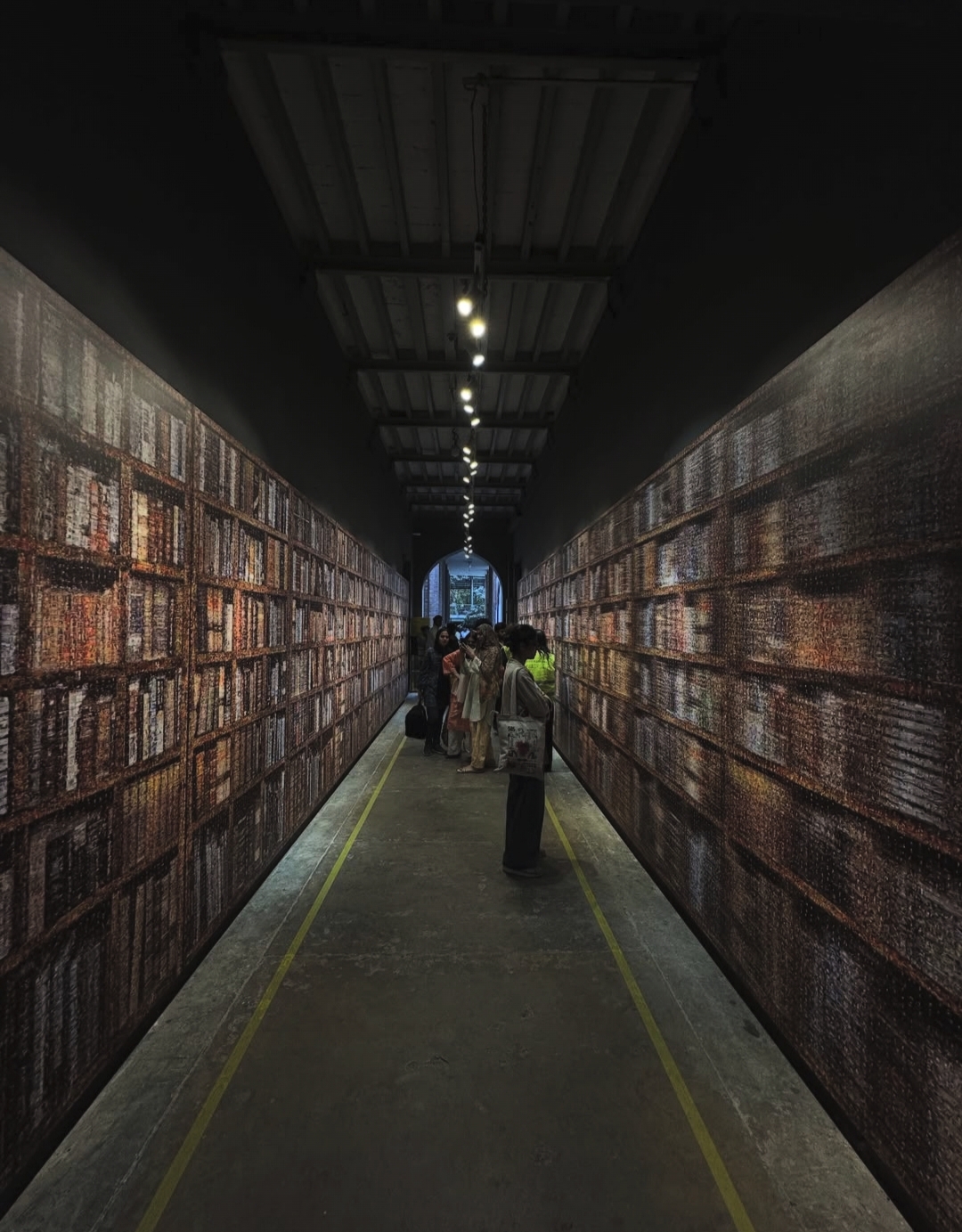
Towards the end of fall, on a crisp afternoon of October 31st, the National College of Arts, Pakistan’s oldest art institution, opened itself to a scale of artistic doctrine not seen before on its campus. The inaugural NCA Triennale, mounted across galleries, studios, halls and archival corridors, positioned itself as more than a celebratory gesture for the institution’s 150-year legacy. It offered a proposition: to rethink Kasb-e-Kamal Kun, the college’s doctrinal motto of “seeking excellence, not as a static directive rooted in craft, but as a living, contestable ethic for contemporary art practice.
This is the central tension and opportunity of the Triennale. Long accustomed to serving as a custodian of craft traditions and design pedagogies, NCA has rarely activated its campus at this scale before. But the Triennale chose expansiveness as a method: a month-long collection of residencies, exhibitions, performances, workshops, symposia and festivals that resist easy categorization. It was an event stretching across mediums and geographies, drawing in craft practitioners, established artists, young alumni, emerging creators, and international residents, all simultaneously inhabiting the college. In doing so, the Triennale attempted to transform institutional memory into an active social laboratory.
Central to the curatorial rationale was a shift in the meaning of excellence. Historically, Kasb-e-Kamal has carried the weight of skill-based authority: mastery of form, of craft, of the discipline one is trained in. The Triennale’s structure dilated that meaning, reframing excellence as collaborative, dialogic and pedagogical. Excellence becomes a practice of listening, of learning in public, of opening the institution to multiplicity rather than guarding its traditions.

Workshops on Islamic bookbinding, fresco, Kashmiri papier-mâché, ceramic tile making, mosaics and kite making produced a redefinition of the “studio” itself. Students and the public alike learned alongside master artisans. In parallel, sound practice sessions and experimental digital workshops introduced entirely different vocabularies of skill. Excellence thus migrated from a narrow expertise to a collective social act, a generous, porous understanding of how knowledge moves.
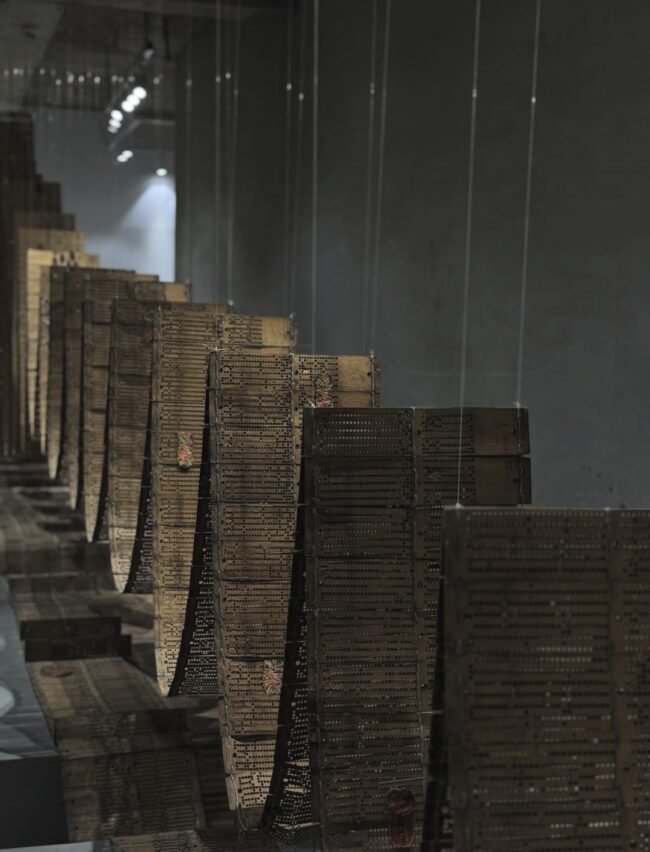
The Triennale’s most intellectually ambitious move lies in its residencies. The presence of the Ajam Media Collective as a transnational, research-driven residency provided the kind of rigor often absent from large-scale events. Their project Khak-e-Hayat engaged with shared Persianate histories, devotional sites and linguistic entanglements across Iran and Pakistan. Their workshops and lectures foregrounded the porousness of regional cultural memory, situating Lahore not as a provincial art node but as part of a wider cultural geography.
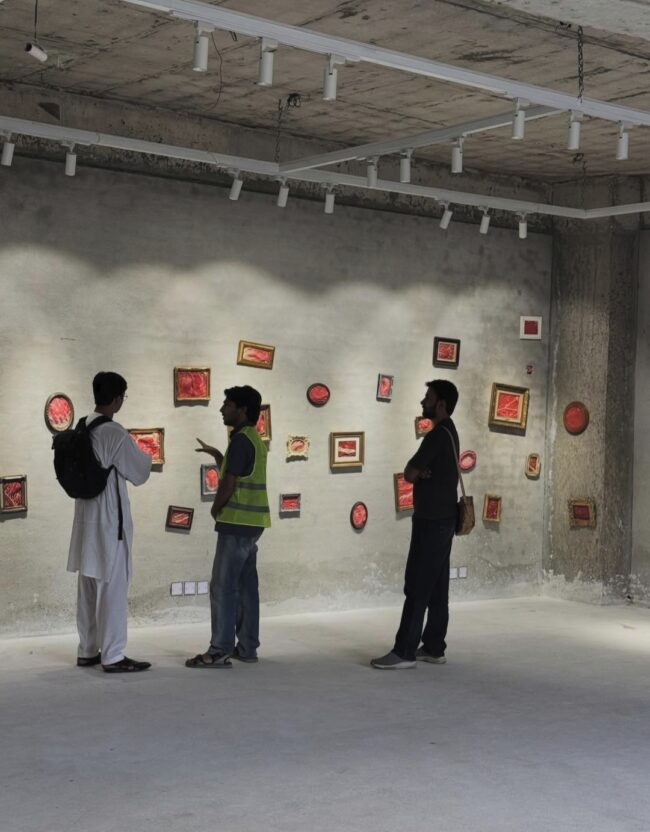
Equally significant was Kitab Ghar, conceived with British curator Venetia Porter. Part-archive, part-exhibition, part-pedagogical unit, Kitab Ghar drew from book-arts traditions, manuscript cultures, and contemporary reworking of textuality. It’s quiet, contemplative gravity balanced the Triennale’s exuberant sprawl. Kitab Ghar served as a reminder that craft traditions are not mere heritage objects; they are living epistemologies requiring custodianship, scholarship and contextual renewal.
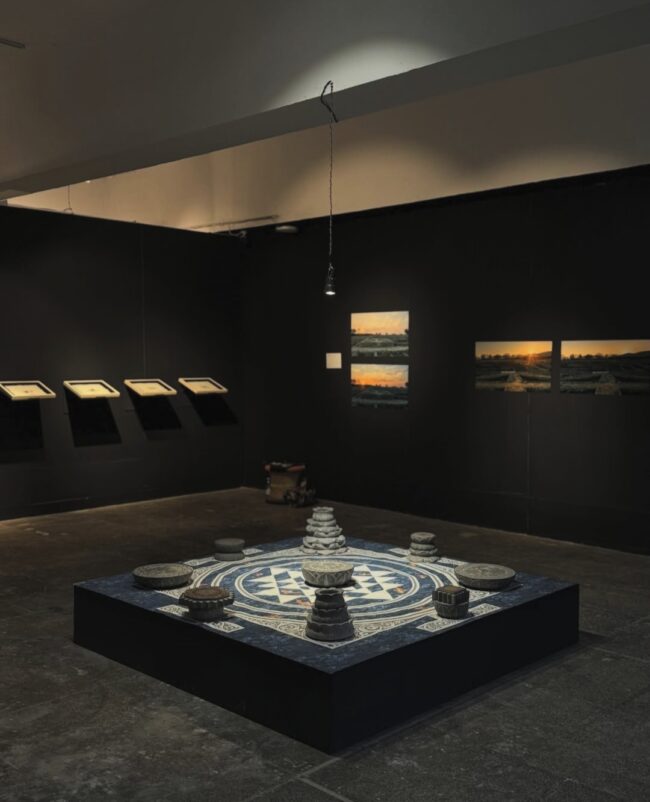
Both these projects functioned as micro-institutions within the Triennale, offering depth within breadth. Their presence signaled a curatorial commitment to intellectual rigor, research-led practice, and forms of making that exceed the exhibition cycle.
Internationality at the Triennale was not confined to opening-night speeches or guest lists. Artists from Europe, Iran, China, the UK, and Palestine lived and worked on campus for extended periods, and this mattered. Their daily presence, visiting studios, conversing with students, collaborating in workshops, participating in informal critiques, produced a campus atmosphere that was unusually alive, dynamic, and unpredictable.
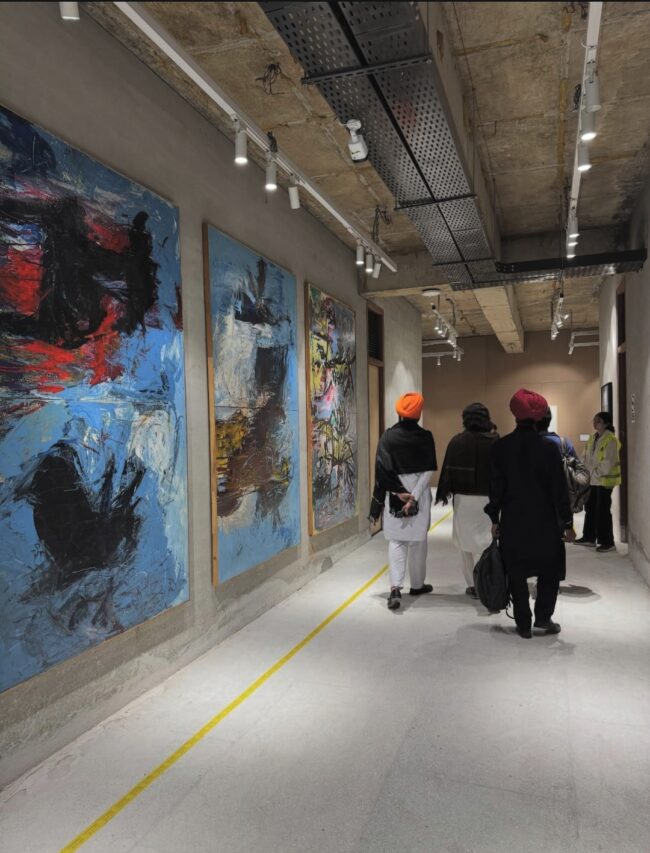
This proximity broke the hierarchical distance that typically structures Pakistan’s art institutions. Students encountering international practitioners in hallways or their studios described the environment as “charged,” “fun,” and “intellectually generous.” Faculty members noted the unusual sense of communal energy, a reminder that residencies are not only about artistic production but about altering the social temperature of a learning environment.
Unlike many curated biennales and triennales, NCA chose to preserve an open call at the heart of its plan. This decision produced a democratic, though uneven, multiplicity. Works came from established artists, mid-career practitioners, student collectives, independent initiatives, master craftspeople, and young alumni. The result was a visual and conceptual heterogeneity that mirrored the real ecology of contemporary Pakistani art; messy, uneven, energetic, uncontained by institutional tastes.
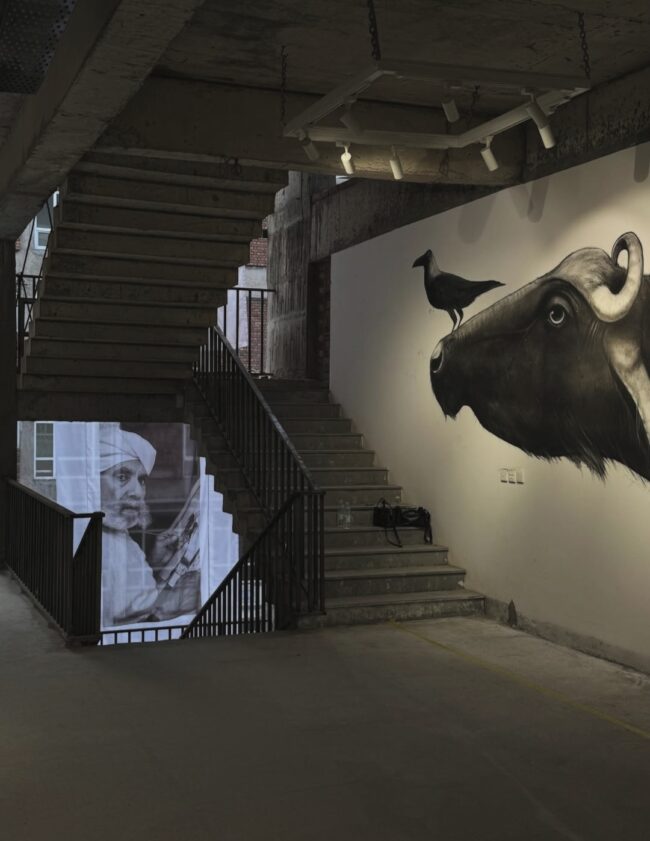
The open call acted as a corrective to the exclusivity that often shapes major art events in the country. It granted visibility to younger voices and experimental mediums while allowing institutional elders to engage the same platform without dominating it. And crucially, the inclusion of a curated section devoted to the NCA Archives grounded this multiplicity within a historical continuum.
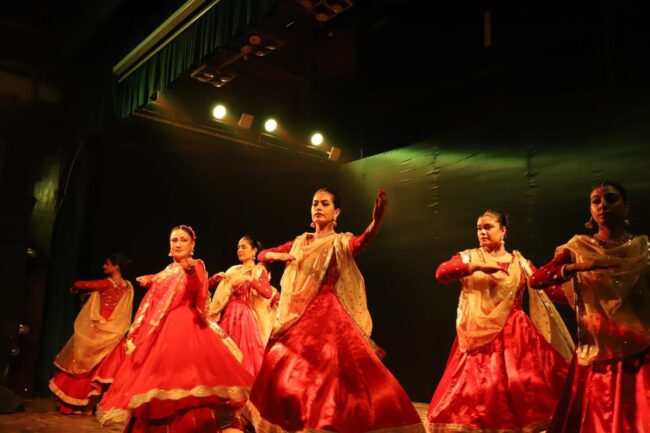
One of the Triennale’s most compelling aspects was its commitment to the performative. The event hosted a Music Festival, Dance Festival, Theatre Festival, Youth Film Festival and Mushaira; each drawing different publics into the college. Evenings of sarangi and sitar recitals, contemporary dance, theatre productions, film screenings, and poetic gatherings animated the campus far beyond gallery spaces.
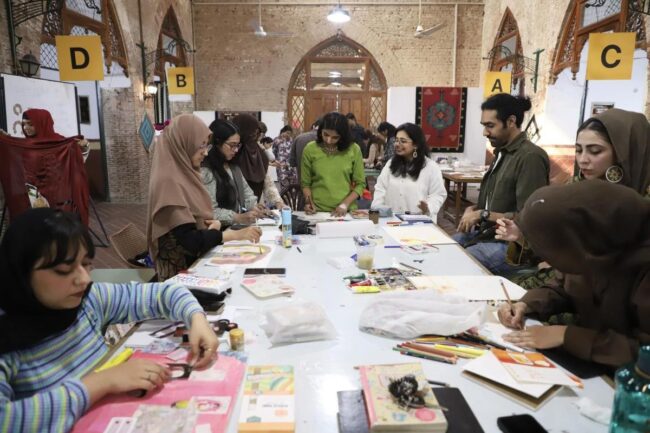
In a cultural landscape where performance is often sidelined or underfunded, the Triennale’s embrace of performance arts expanded the definition of what counts as “art” within an institutional context. It also revived a long, if sporadic, NCA tradition of performance culture; one that links students of fine art, theatre, design, music and film in a shared public sphere. These nights were not peripheral entertainment; they were central enactments of the Triennale’s mission to position art as lived social practice.
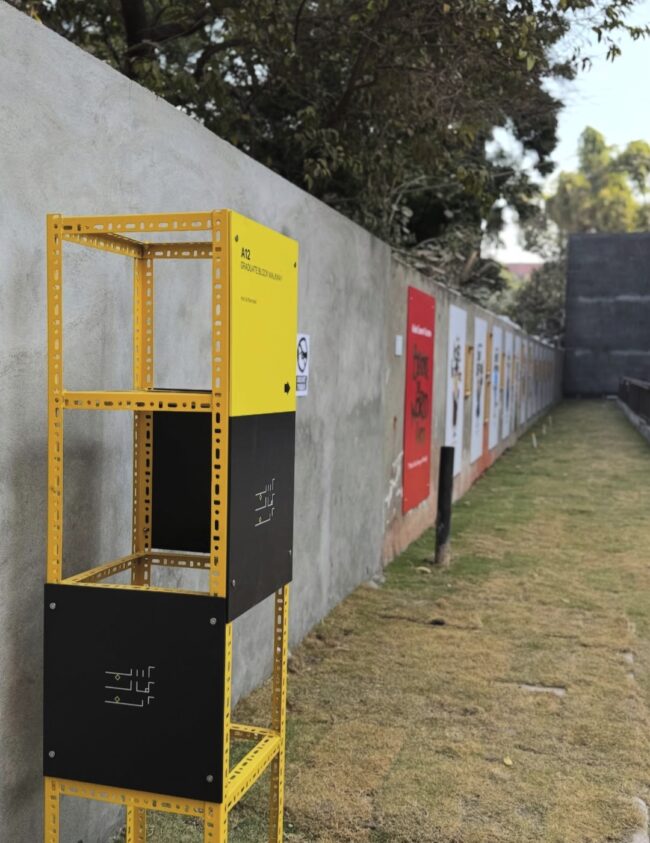
What distinguished the Triennale from conventional large-scale exhibitions was its staging. The college itself, its galleries, corridors, workshops, studios, lawns, auditorium, Tollinton Block, became the exhibition.
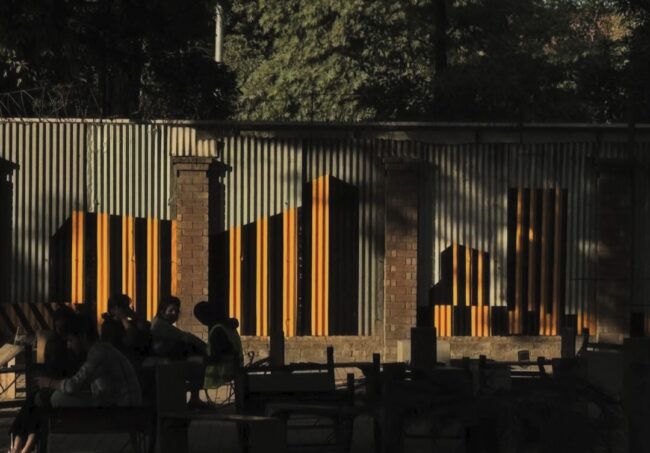
This occupation of space was a curatorial statement. It resisted the modernist neutrality of the white cube and instead treated the institution as a site of memory, pedagogy and labour. The architecture of NCA, featuring colonial bricks, Gothic facades, and craft studios, became an extended text that viewers read as they navigated the Triennale. It was an argument about institutional transparency: everything was visible, happening in real time, open to the public.
The Triennale’s intellectual backbone was a series of symposia, artist talks, panel discussions and the international conference THiAA (Theories in Art and Architecture). These academic components consisted of a series of symposia, artist talks, and panel discussions, attempted to contextualise the event’s visual and performative plurality. Discussions on art pedagogy, craft histories, decolonial frameworks, and contemporary curatorial strategies offered critical grounding.
The inaugural NCA Triennale is ultimately an institutional proposition. It is uneven in places, as any first edition of this magnitude would be, but it is undeniably ambitious, generous, and transformative. It tests what an art college can be: a craft school, a research centre, a performance venue, a festival ground, a laboratory, an archive, a meeting point for the world.
Its greatest achievement is its shift in the meaning of Kasb-e-Kamal Kun. Excellence here is not a singular pinnacle reached by a select few. It was dispersed across workshops, residencies, collectives, archives, performances and conversations. It is relational, not hierarchical; process-based rather than outcome-driven. This first iteration of the NCA Triennale proved to be courageous. It insisted that institutional history is not a burden but a resource, and that excellence, when reimagined collectively, can become a public form of cultural renewal.
The NCA Triennale 2025 took place from the 31st of October to the 30th of November in the NCA Lahore campus.
Images courtesy: Imran Qureshi and NCA