
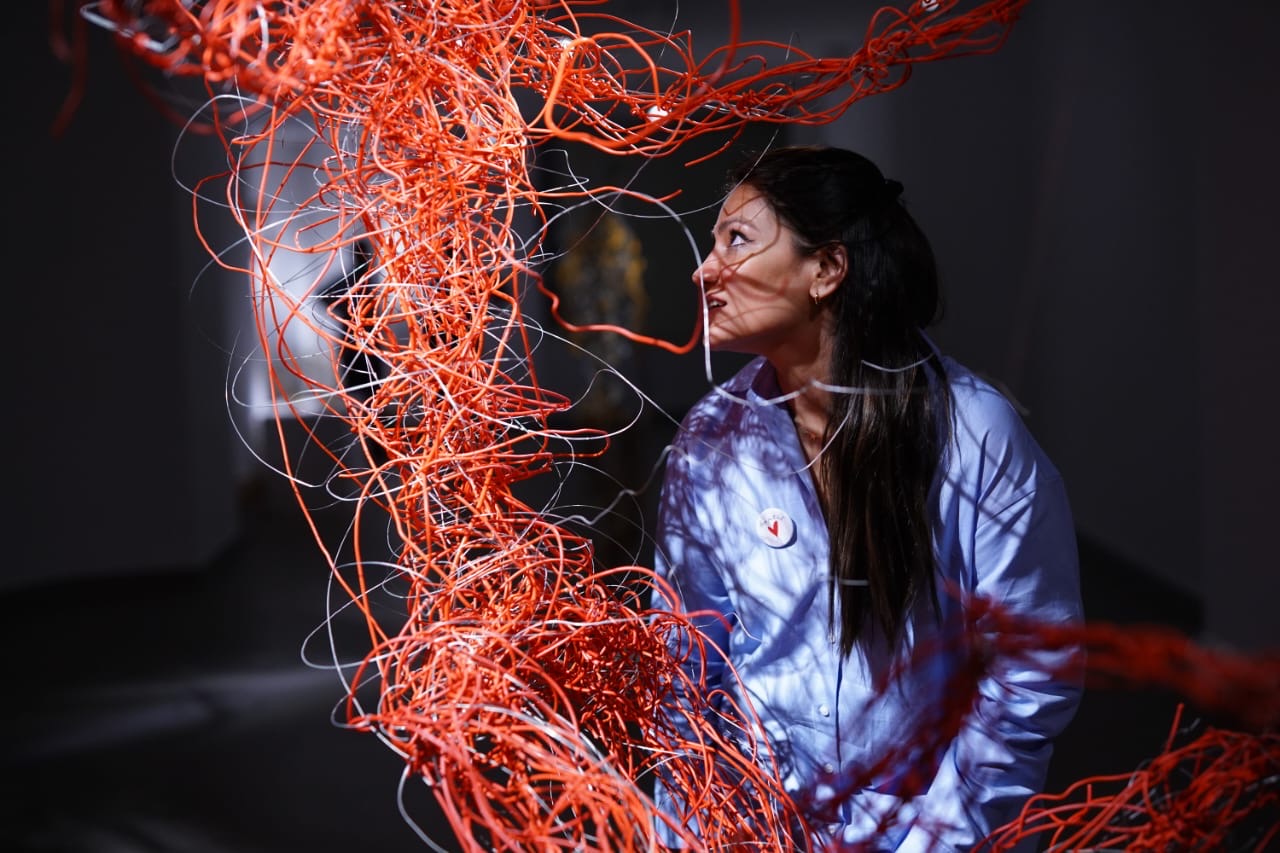
At VM Art Gallery, Director and Curator Mallika Rangoonwala is reimagining what an art institution can be. From exhibitions and emerging artists to creative studios, performing arts and community engagement, she envisions a space where art is not simply displayed but experienced, practised and lived.
Whenever there is a one-on-one interview, things rarely fall into place exactly as scheduled. This time, I was meeting Mallika Rangoonwala, Director and Curator at VM Art Gallery, Karachi.
The gallery had a show by Qasim Bugti on view, an artist who has also been contributing to the art scene by bringing emerging artists into focus and collaborating with galleries to give them a platform. Mallika was in the middle of a meeting, so I had some time to look at Bugti’s work. As I stood examining one of his pieces, following the tiny pen marks as they extended, merged and formed intricate patterns, a familiar voice called my name from outside her office. It was Mallika.
We greeted each other and exchanged the inevitable “long time” before making our way through the space to another room, where much of the administrative work takes place. Administrative rooms are not usually the most inviting spaces, but this one surprised me. The desks were clear, and the room was no less artsy than the rest of the gallery. We pulled up chairs, settled in with our beverages, and began talking.
As the sunlight fell across Mallika’s face, I could see her blush whenever she spoke about VM. There was an unmistakable affection in the way she talked about the institution, its history and everything she hoped to build around it. Our conversation began with the gallery’s mission, but it soon became clear that her vision extended far beyond the walls where the artworks are displayed.
“Our mission is to showcase and foster the growth of arts in Pakistan. It is to create a space that celebrates art and creativity while preserving our rich artistic history and cultural identity and educating people about our heritage. An important aspect of this mission is the showcasing of the VM Collection, which holds a very significant body of work from Pakistani and South Asian modernists. To reflect that, I curate a show once a year that reflects on this mission. Last year, I curated Ahmed Pervez’s show, and this year I am working on something special.”
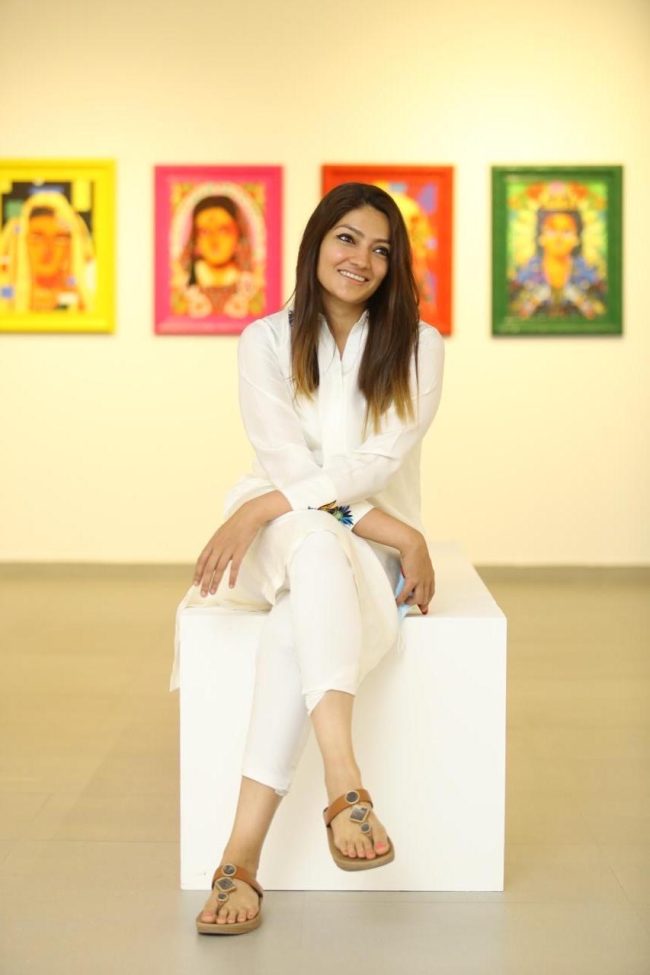
Preserving and presenting the collection remains central to VM’s identity, but what struck me was how Mallika spoke about the institution as a growing, interconnected space. VM Art Gallery is no longer simply a place to exhibit art. It is gradually becoming an environment in which people can encounter art through different entry points, whether through exhibitions, workshops, research, creative practice or even a cup of coffee.
I was not particularly familiar with VM Sanctuary, the art café that Mallika affectionately calls her “baby”. VM Sanctuary is Mallika’s love letter to VM, a space she has styled and curated with colours, décor and artworks and memorabilia from across VM’s various collections, alongside her own installations, which she changes seasonally.
She describes VM Art Gallery as a space where the art speaks to her and guides the curation. At the VM Sanctuary, however, she feels more like the artist herself, creating installations and displays that make people feel they’ve stepped into a sanctuary of beauty. The space is meant to be an artistic oasis, a place where visitors can feel inspired and immerse themselves in art and beauty all while having a good meal and conversation. It also serves as a welcoming entry point for those who may not be familiar with the art gallery.
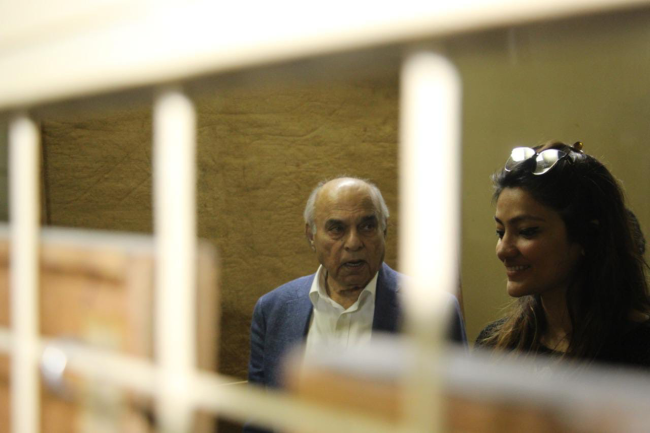
There is, after all, a common misconception that galleries are intimidating places, particularly for those who have not studied art or are unfamiliar with the language surrounding it. Mallika is conscious of this barrier and believes that the Sanctuary offers a more approachable way into the art world.
“First time gallery goers may not necessarily be aware of the nuances of the artworks on display, but we make sure to create a hospitable, welcoming and informative environment
where the exhibition statements are visible and someone is available to answer any questions visitors may have. After spending time in the gallery, they return to the café to discuss what they have seen.”
What Mallika enjoys most is watching people stay, talk and exchange ideas. Some are inspired to propose collaborations; others approach the team about starting reading or writing groups. Furthermore, VMs new recurring workshops introduce VM goers to new forms of creative expression and also houses a wonderful research library dedicated to the arts for students and anyone interested in learning more about art.
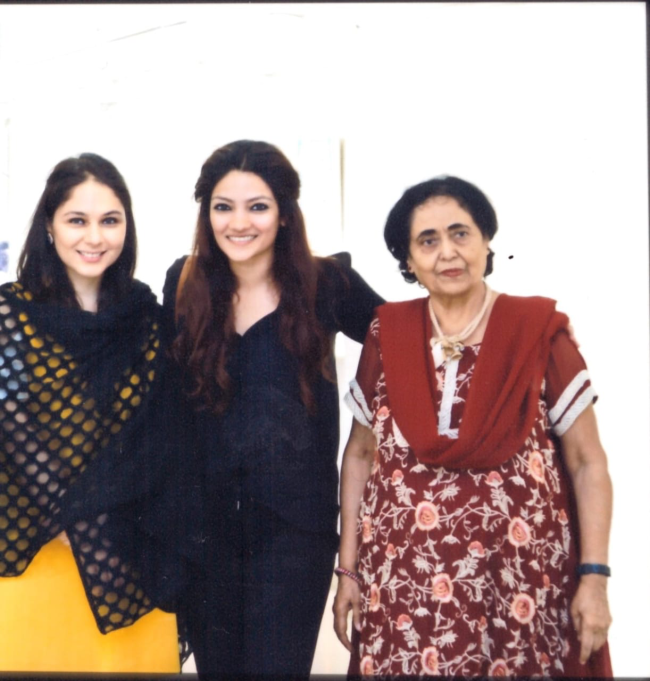
“Essentially, this place becomes a creative retreat for people. I love seeing that. People often write on our comment cards that they spend their days here, that they get lost in space. They thank us for having a place where they can come, forget their troubles and simply be around art.”
Listening to Mallika, I began to understand that the Sanctuary is not merely an extension of the gallery’s exhibition programme. It is part of a deliberate effort to make art accessible in everyday life, allowing people to approach it at their own pace and discover their own reasons for engaging with it.
The same thinking informs VM’s studio spaces. Mallika recognises how difficult it can be for artists to find affordable, suitable places to work in Karachi, particularly spaces that offer women a safe working environment.
“We have created studio spaces because I know how hard it is to find studio spaces in the city, especially within a safe environment for women. I have three studios upstairs, which you can rent on a daily, weekly or monthly basis.”
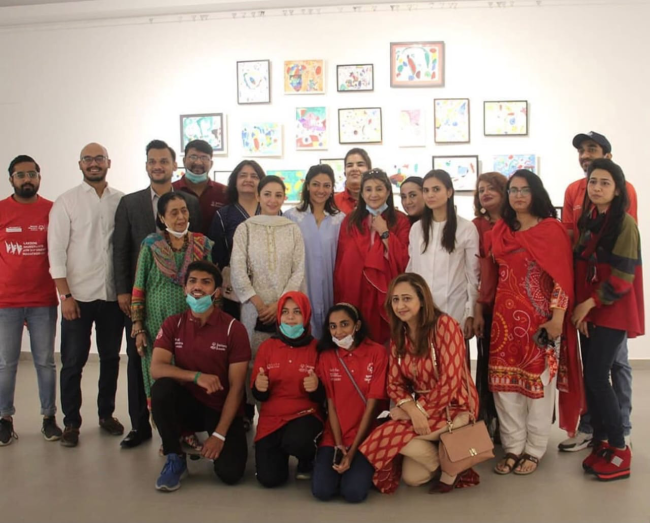
There is also more in the pipeline. VM Ceramics, an initiative she hopes to launch in 2027, will introduce another dimension to the institution’s activities. Rooted in Pakistan’s rich artistic traditions, the programme will encourage people to explore ceramics beyond conventional forms, from expressive abstractions and unusual shapes to functional objects such as plates, mugs and cutlery. Workshops will offer opportunities to engage with the medium in a relaxed, exploratory setting. Ultimately, Mallika wants people to understand that the arts offer more possibilities than they might imagine.
VM Art Gallery has been around since 1987. What began as a small gallery has grown into a multifaceted institution encompassing exhibitions, a café, studios and, more recently, performing arts. For Mallika, expanding its activities is only one part of the responsibility she carries. Preserving its history is equally important.
“If you look around, you will see all these folders. These contain our archives, which I hope to digitise so that people can better understand how VM has helped shape the Pakistani art landscape. Many masters have exhibited here, and many Pakistani artists who have gone on to make it big internationally began their careers at VM. That is something we take great pride in.”
There is something particularly significant about her desire to digitise the archives. An institution’s history is not only a record of the exhibitions it has held; it is also a record of the artists it has supported, the conversations it has facilitated and the changes it has witnessed. Making that history accessible could offer a valuable resource for researchers, students and future generations of artists.
“VM has always held its mission of being a champion of artists from Pakistan. We have always done that, and we will stay true to that for as long as VM exists. It is a huge responsibility to take on, but, Inshallah, I am confident that we can carry it forward.”
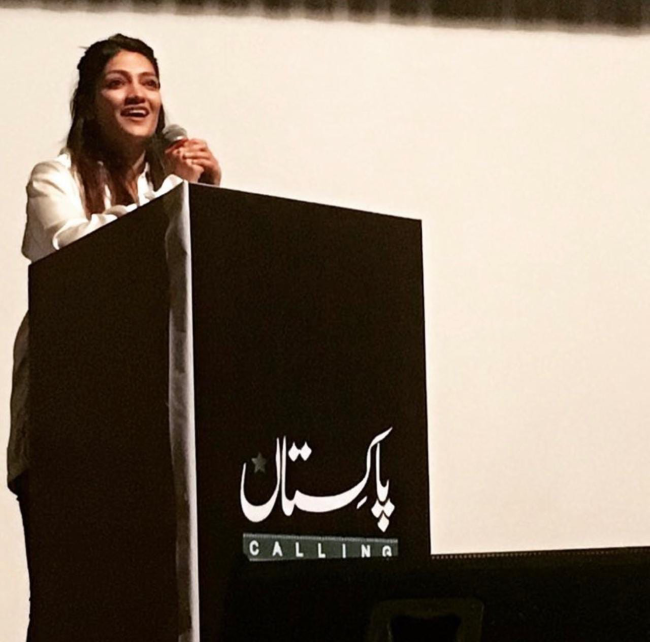
Mallika’s association with VM goes back to her childhood. Having grown up around the institution, she would return during college summers to intern there. With a multifaceted educational background, including an MA in Media Studies and other certifications and skillsets relevant to the arts, she brings an interdisciplinary perspective to her work at VM. Her more active involvement began in 2016, when she organised the Pakistan Calling Film Festival at the gallery.
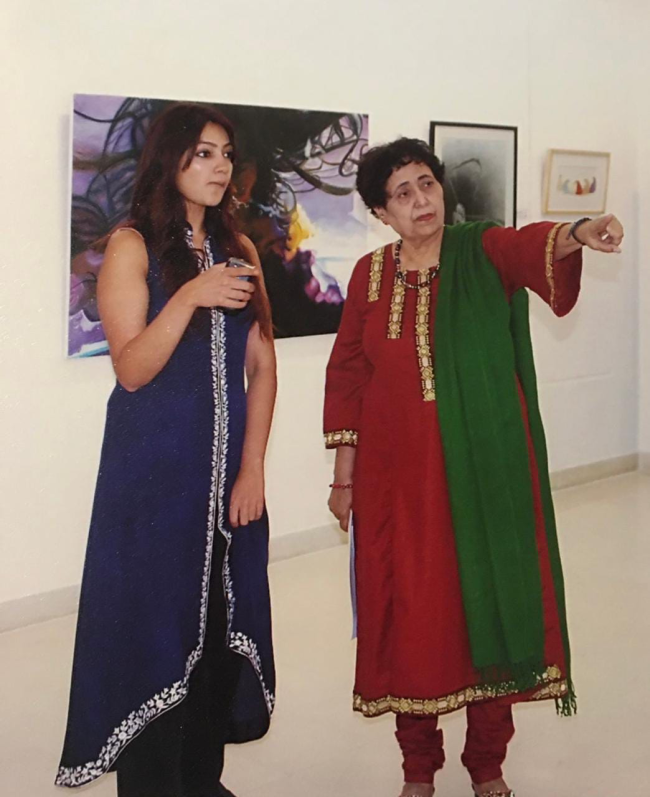
“That was when I learned a lot about how the gallery space is run. I spent a lot of time with Ms Riffat as she curated shows, dealt with artists and created programmes. I had the privilege of learning from her. In 2019, I became Director, and I have been working ever since.”
As our conversation moved towards the wider art scene, I brought up something that has often crossed my mind. Karachi’s gallery culture has developed considerably over the years, with regular exhibitions, art walks and events introducing audiences to contemporary art. Yet much of this activity remains concentrated in Clifton and Defence.
VM, located away from this established gallery circuit, occupies a different position. I wanted to know what kind of audiences and critics the institution attracts, and how it has managed to build a following beyond the city’s familiar art-going circles.
“Because of VM’s history and the great efforts of Miss Riffat Alvi, we continue to welcome senior patrons, critics, and established figures from Karachi’s art and cultural circles. But I think that, in recent years, we have also started appealing to younger audiences. Influencer culture has drawn in new audiences and allowed gallerygoers to become critics in their own way. They come in, conduct their own tours, and introduce the gallery to their audiences.”
Traditional art journalism continues to have its place, but the ways in which exhibitions are discussed and circulated have expanded. Younger visitors are increasingly documenting their experiences, interpreting artworks and sharing their responses with their own communities.
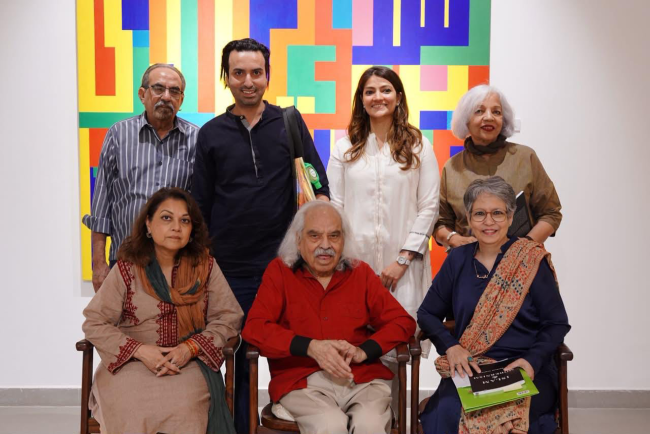
In terms of visitors, Mallika is particularly proud of the range of people who walk through VM’s doors. It’s programming and location in Dhoraji allow VM to draw visitors from a wider cross-section of the cit. The gallery welcomes people of all age groups, with visitors coming from KDA, PECHS, Tariq Road, Bahadurabad, Gulshan, Malir, Nazimabad, DHA, Clifton, and, as Mallika puts it, “all over the city, really.
She is careful not to dismiss the work of galleries in Clifton and Defence, acknowledging the important role they play in the city’s art scene. VM, however, occupies a different position within the city’s cultural landscape, with its location in Dhoraji allowing it to connect with audiences across a wider range of neighbourhoods.
While making art accessible is one part of VM’s mission, supporting the artist behind that work is another. Having worked in art journalism, I have seen emerging artists struggle to secure exhibition opportunities after graduating. Some become fixated on exhibiting at a particular gallery, believing that a show at a prestigious institution will somehow propel their careers forward.
I asked Mallika how galleries and art institutions could help young artists develop a more sustainable approach to their practice, rather than treating exhibitions as milestones to be ticked off a list.
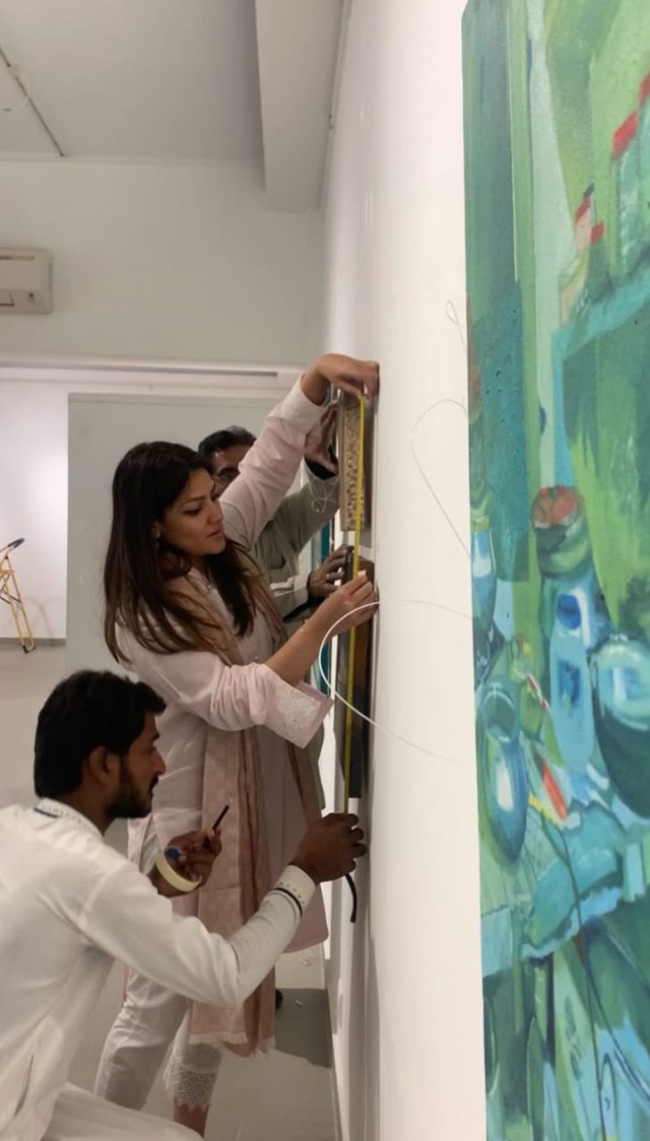
“VM’s Emerging Talent Show showcases the work of art university graduates from across the country. It is the first step in our effort to educate and guide fresh graduates on how to navigate the professional art world, from submitting their work and documenting their practice to writing artist statements, and packaging their artworks.Their work may be strong, but without thoughtful presentation and a cohesive approach, they risk missing out on opportunities. Through the Emerging Talent Show, we aim to equip young artists with the practical skills to present their work effectively and develop sustainable careers in the arts.”
Beyond these practical skills, Mallika returned to a principle that runs through much of her work with artists: an artist must be connected to what they are making.
For Mallika, the relationship between an artist and their work is central to the curatorial process.
“Whenever I take on an artist, I want to understand their work, their intentions and where their drive, and connection to their practice comes from. If an artist approaches us simply saying, ‘I want a solo exhibition’ or ‘I want a show’, I would say that it does not work that way here.”
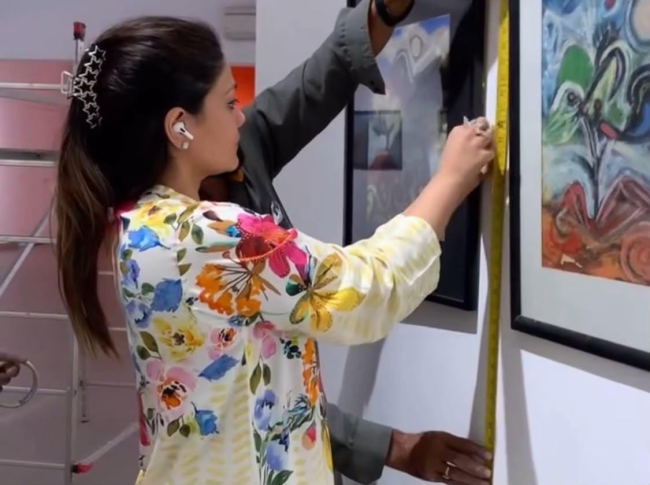
This philosophy informs her exhibition choices and the artists she pairs together. Yet an emphasis on artistic integrity does not mean overlooking the practical realities of an artist’s career. Artists need to produce work, exhibit it and, of course, sell it. But she believes that commercial considerations should not become the primary motivation behind making art.
“I always say that if selling is your initial intention, it will not move forward. If the work is good and you are connected to it, I promise you the selling will happen. We do not go into it thinking, ‘Will it sell?’”
Instead, her starting point is a belief in the artist and the work. The aim is to create the conditions in which that work can communicate with an audience.
“I want artists to create work they truly connect with, so that when it is shown on VM walls, people connect with it too. They feel what the artist is feeling, experience what the artist is experiencing, or see themselves in it because they can feel the emotional depth that went into the work.”
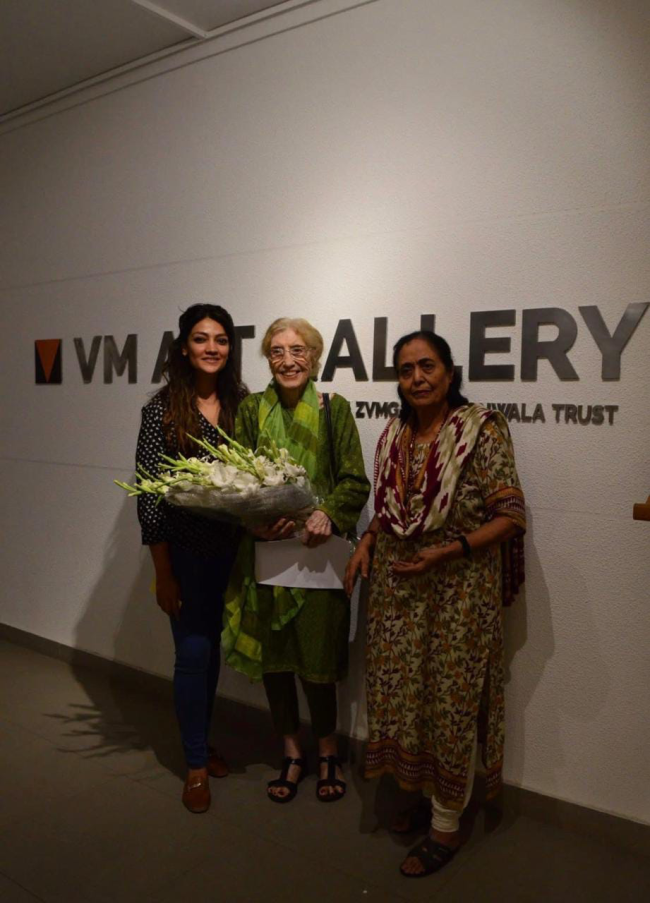
By the time our conversation drew to a close, it was clear that Mallika’s vision for VM extends well beyond its exhibition calendar. She wants the institution to remain committed to its collection and to the artists it has historically supported, while creating new ways for people to encounter, learn about and participate in the arts.
The Sanctuary, the studios, the proposed ceramics programme, the performing arts initiatives and the research library are not isolated additions. Together, they reflect an attempt to make the institution more accessible and to bring creative activity into the everyday lives of people who may never have considered themselves part of the art world.
What stayed with me was Mallika’s evident affection for the space and the sense of responsibility that accompanies it. She speaks about VM not simply as a gallery to be managed, but as a living institution whose future depends on the people who enter it, the artists it supports and the opportunities it creates.
For her, the task is to carry forward a legacy without allowing it to become static. That means preserving the work of earlier generations while making room for emerging artists, encouraging experimentation and giving audiences reasons to return.
As she put it, the ultimate goal is to create an ecosystem of the arts: a place where people can spend time, discover new ideas, develop their practices and become part of a wider creative community. At VM, the exhibition may be the starting point, but the ambition is to make the experience of art extend far beyond the gallery walls.
As we closed the interview, I realised that VM is not merely an art gallery but an institution carrying a rich and significant history. Ms Riffat Alvi ensured that this legacy would live on, placing her trust in Malika Rangoonwala, who is now carrying it forward with passion, the fire it demands, and an ambition to build upon what came before her.