
Science has a way of reducing feelings to chemicals. Happiness becomes oxytocin. Love is dopamine. Fear is cortisol and adrenaline. The grandness and mysticism of the body is broken down into compounds and molecules that can be observed and replicated in labs. Similarly, I see DNA connected to a materially grounded body, where the body exists in objectivity and can be categorized, measured, controlled and modified. This may be because I enjoy watching science fiction films or because I read absurd literature; in both these genres, the objective systems destabilize and bring unease. Maurice Merleau-Ponty reminds us in Eye and Mind, “The body’s animation is not the assemblage or juxtaposition of its parts.” The body is not merely an object to be decoded, but the very condition through which seeing, feeling, and knowing occur.
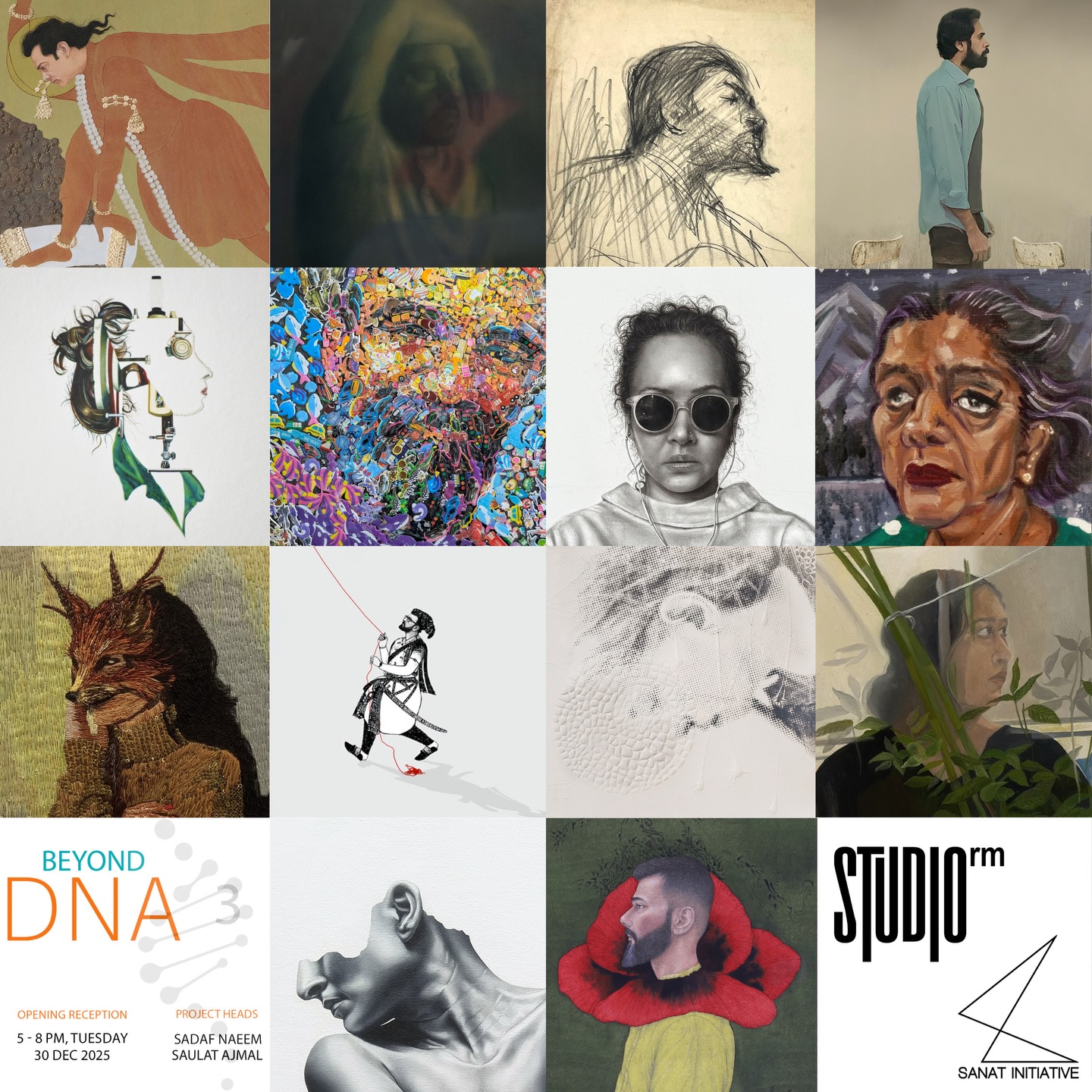
When the language of DNA is transferred into the realm of art, it sheds this objectivity and rigidity; this is the site of inquiry in Beyond DNA 3. Opened on 30th December, 2025, at Sanat Initiative, Karachi, curated by Studio RM under the project leadership of Sadaf Naeem and Saulat Ajmal, Beyond DNA 3 marks the third iteration of a long-term curatorial inquiry. By bringing the works of 14 artists from all over Pakistan, the exhibition proposes DNA not merely as a scientific fact but as a way of thinking about ethics, philosophy and aesthetics.
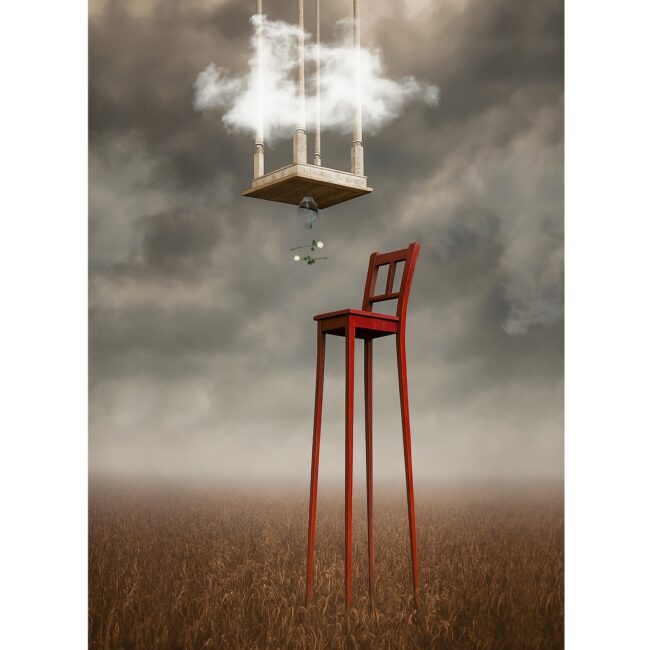
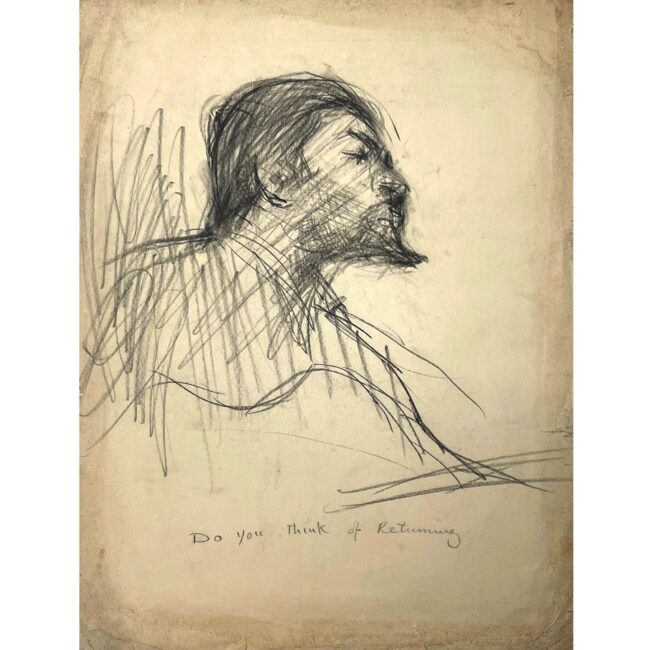
“Do you think of returning?” A piece of text in Colin David’s charcoal drawing caught my attention immediately. This probing, existential question moves the viewer beyond the worldly bounds of the body. In a similar evocation, Ahsan Memon’s “The Dreamers” highlights the realm of dreaming and its connection to our body. In his hexaptychs, Abid Aslam uses gravity as an anchor. “Falling” and “Soaring” indicate literally the physical acts that we observe in life, how the spirit feels in dreams as well as symbolize life’s setbacks and achievements; triumph and resilience. These works bring to focus the connection of humanly experience and presence on the earth and away.
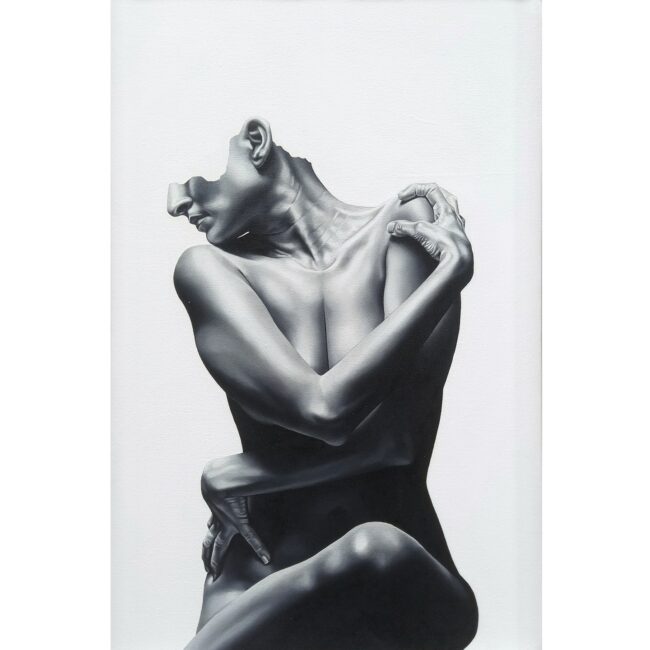
Scheherezade Junejo has painted a hyperrealistic, seminude woman’s body, with just enough covering and erasure to not lean into pornographic display. The artist generally works with this edge in her practice. In the clenched poses, where the arms and waist of the body are activated, I see restrictions and expansiveness as points of reference. Meanwhile, Madiha Hyder draws hyper-realistically with charcoal and graphite and shows assertiveness and authority in body posture. In a world increasingly governed by biometric surveillance, through Scheherazade and Madiha’s works, DNA extends beyond biology into questions of power, consent, and control.
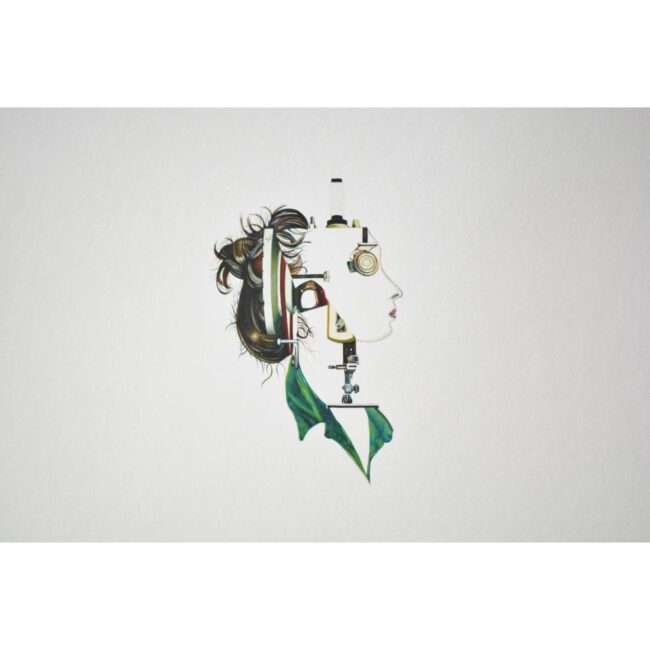
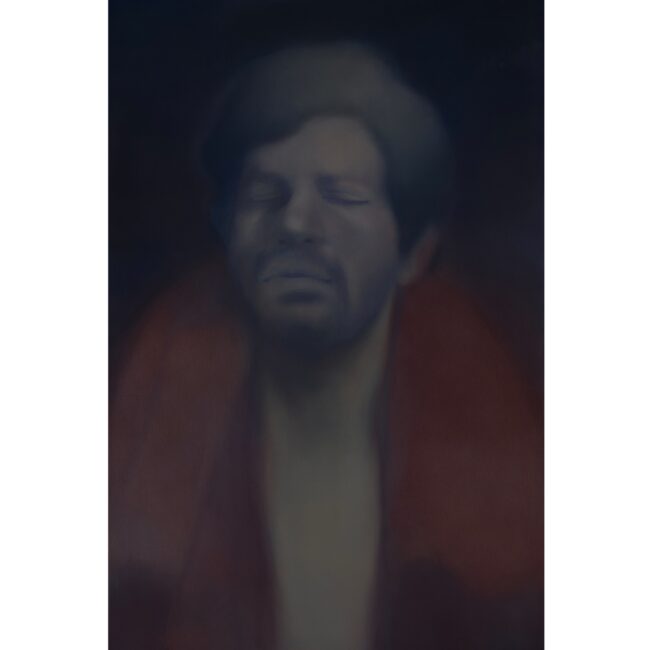
As I witnessed the art and as I wrote about the artists mentioned above, I felt myself being forced to think of DNA and impose it upon the works. This may be because of the nature of self-portraiture that makes it difficult to separate the artist from the subject. In the Roland Barthes sense, is the viewer trying to relate to the artist or to the subject? Understanding the artist’s metaphorical usage can be burdensome at times. And other times, no matter how hard we try to connect subjectively, we tend to think objectively about things and figure out absolutes, like right or wrong, truth or fiction. Furthermore, the presence of diversity in art languages, miniature art, realism, and other styles, all together in a single exhibition space, can be distracting. Instead, to ease my perception, I focused on looking at the exhibition through the body. The act was like a sigh of relief as I let go of my own objectivity and scientific thinking. The art became the artists’ responses to seeing and questioning the body within and beyond the bounds of science, relating to its social, political and metaphysical aspects.
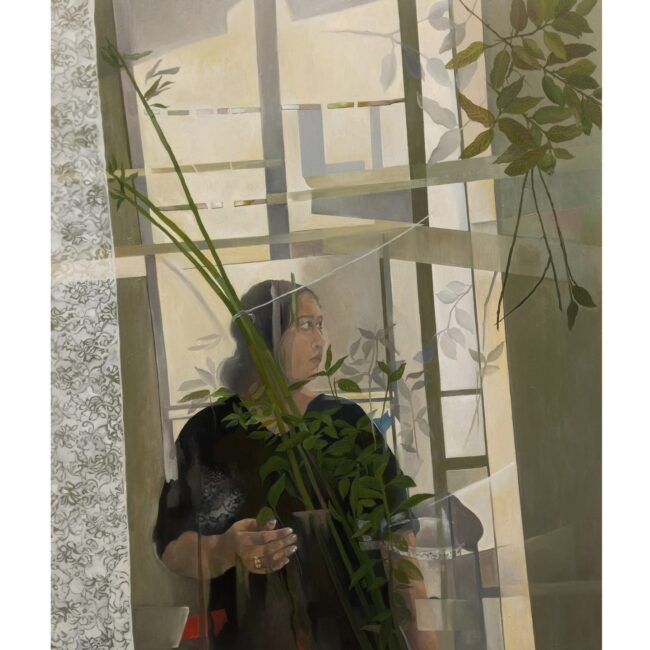
While several works gesture toward origins through titles such as “Zygote” by Scheherezade Junejo or through reflections on time and the past, these references are symbolic rather than structural. It seems that the artists saw the body and DNA interchangeably, concluding that metaphorical, sensory and affect-based making remains dominant in artistic processes.
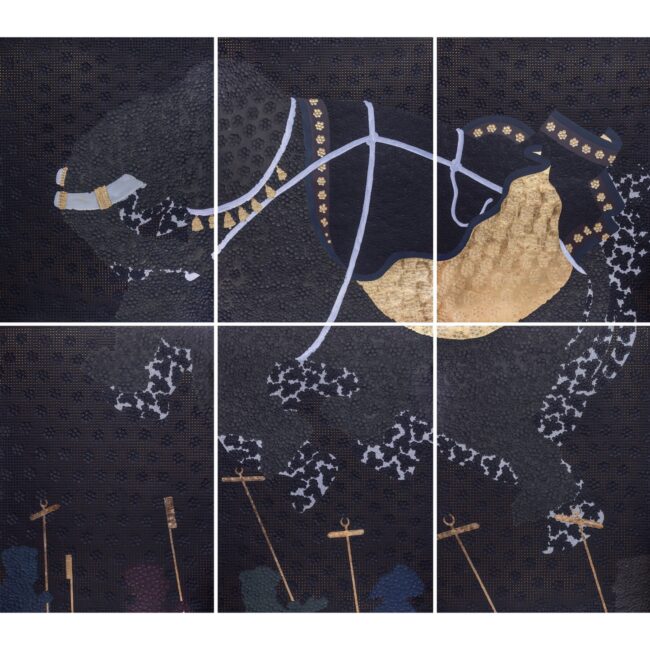
Meanwhile, some artists from the exhibition related to DNA in its material sense, as a networked, relational structure rather than a personal metaphor. I find these works as a response to the late capitalist era, where politics of individuality and shared identity emerge with the societal shift. Nurayah Sheikh Nabi’s diptych, “Inherited Terrain, Becoming Landscape,” shows identity as inherited, something that’s visibly lost but present in fragments. In Imran Hunzai’s experimental drawings, with repeatability and code-logic, there is a sequential connection with the genetic makeup and it feels as though this code can easily be taken apart, just like the objective, molecular body. Maria Khan’s expressive paintings hint at age as a universal reality that the medical and physical body cannot escape. Among all the works from the exhibition, my favourite has to be Mariam Agha’s. Through an absurd sensibility, Mariam’s threadwork shows hybrid figures, blurring the bounds between man and animal and focusing on a shared biological ancestry.
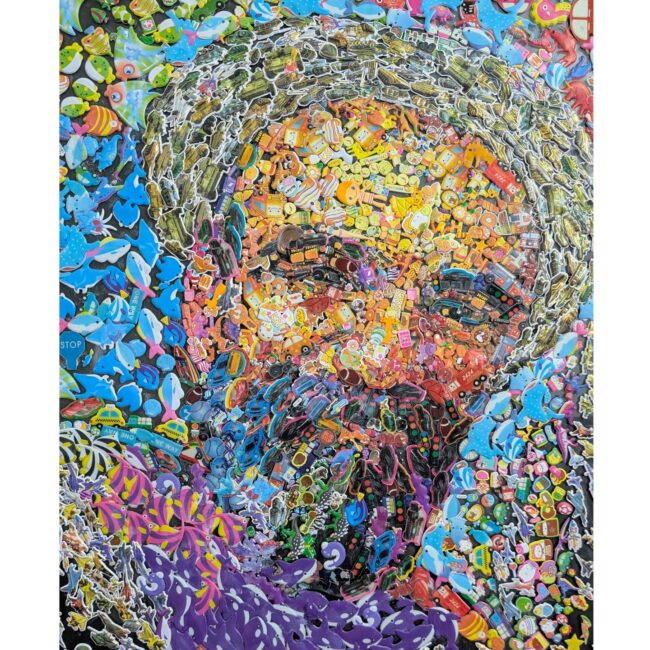
As opposed to popular belief, DNA doesn’t lie at the core of all our existence, but only at the biological level. Every field of knowledge has its own basic element; the atom in chemistry, the binary digit in computer language and stardust and the 4 elements (air, water, fire and earth) in occult science. Beyond DNA 3 provides a space for well-rounded thinking about DNA. It becomes introspective, exploring personal artistic journeys, vulnerability and metaphorical thinking, and interrogative, exploring the DNA through larger systems and networks that expand, govern, limit and shape us.