
A group show at That Studio sparked a meaningful dialogue with the site, specifically delving into the historical context of the location.
The latest exhibition of That Studio, titled “We are the Trace of What was Never Whole,” commenced with an open call inviting artists from diverse disciplines to interact with the peculiar ambience of the gallery, but not in the traditional sense. A curated selection of artists was chosen for their proposals that sparked meaningful dialogues with the site, specifically delving into the historical context of the location, established as a textile school. A few works in the exhibition resonate with this feature of creation and nurturing, situated amid rural homes, surrounded by open fields. While others examined its diminishing and restored architectural elements, engaging with the walls and niches, the display invited a dialogue with memory and place, exploring the delicate lines and lasting impressions that shape our understanding of what endures over time.
Ayesha Naeem explores the concept of home as a dynamic entity that changes over time, mirroring shifts in human presence in its vicinity. The gradual erosion of simplistic structures generated records of alteration and the vanishing of living spaces. Whereas, Daniyal Ahmed traversed the phenomenon of pareidolia found on the damp walls of the studio space, suggesting that these elements may have narratives to convey. His focus is on the forms that emerge, transforming something deemed unwanted into something that provokes ideas.
Mashal Sipra and Mehr Mehmood used similar iconography pertaining to nostalgia of local and familial homes in Pakistan, if not specific to South Asia. The curvaceous grills placed in windows, often wielded against protection from intruders, might carry an emotional and psychological significance as well. Their works examine the stillness of time and its insignificant moments, where life seems to be halted and preserved in familiar aspects. These gentle interruptions are found within the everyday, the commonplace, and the unconscious transitions of time.

Nabiha Khan utilized the forgotten and surplus material found within the premises of the gallery, on which she engaged the practice of mark making on a molded surface tension. Whereas the medium and material, begotten from the same space, the unraveling and layering of time, breathe soul into the work in form of memories.
Mudasir Chandio’s piece unifies the concept and purpose of a wall and a veil into a cohesive representation by showcasing a literal image of a bricked wall adorned on a burka as both share similar roles by providing concealment and creating privacy while being visible and publicized.
Zahra Jokhio and Javaid Joya collaborated to investigate the historical significance of this site, as it functioned as a place for acquiring skills in the fabrication of textiles. While those practices might have come to an end, their legacy continues to linger within the building as ghosts of dedication and vision that were essential to the establishment of the institute that was once.
Ramsah Imran and Ayan Hameed materialize the semantics of language in diverse depictions. Whereas Ramsah’s work investigates situations where language falls short, as an incomplete letter serves as a rendition for feelings that remain unvoiced, Ayan Hameed examines the historical background of the site to illustrate how language and culture intersect and blend across shifting boundaries by literally representing the concept with an installation of baked clay tongues, nailed to the wall in form of cascades.
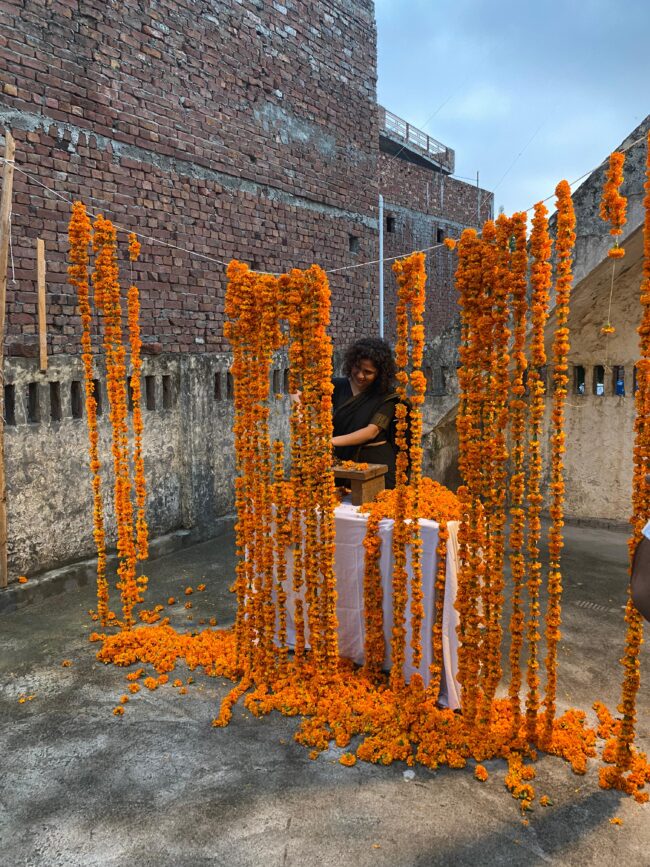
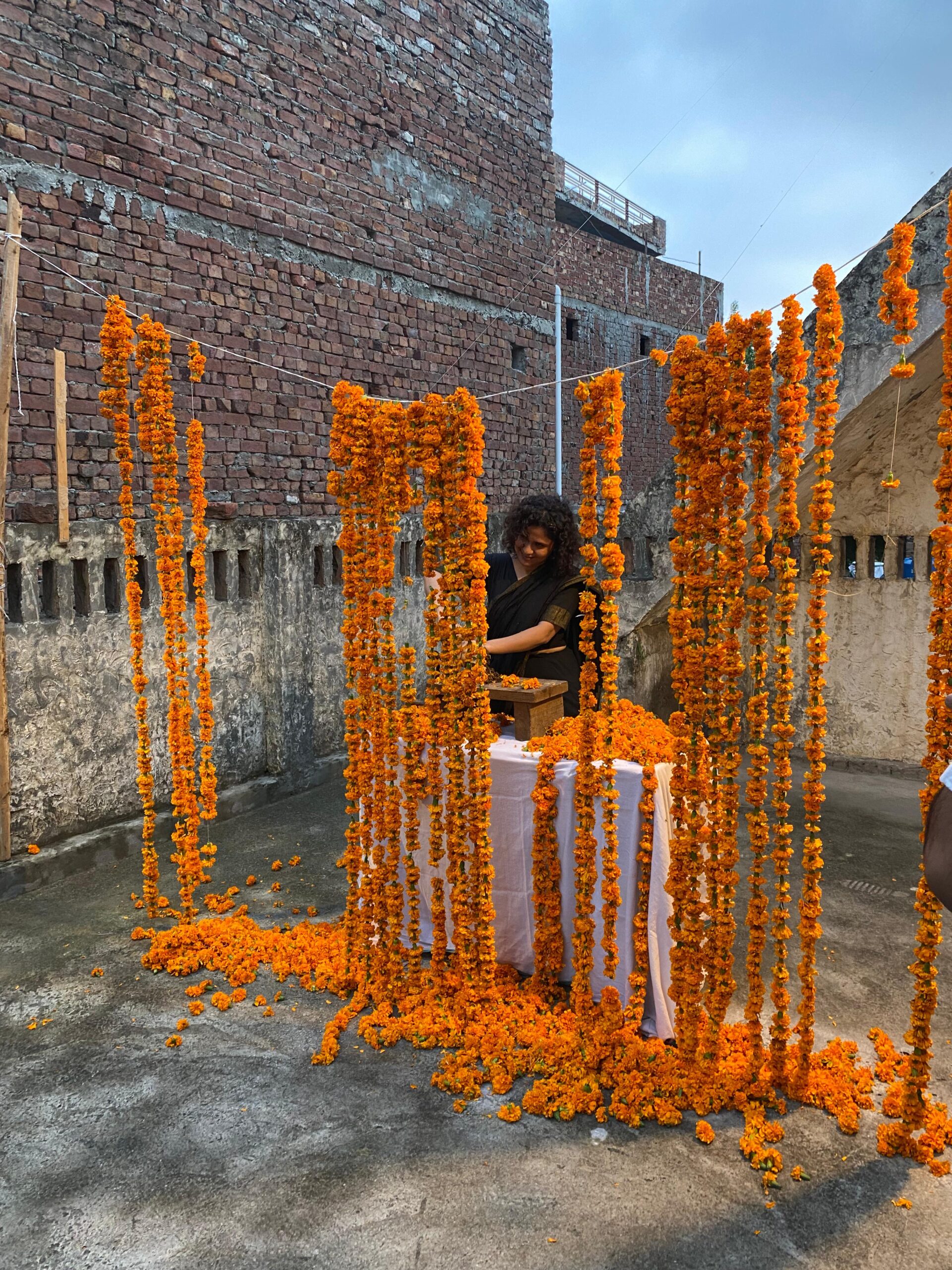
Yumna’s performance seeks to confront the prevailing South Asian notion of the institution of marriage. She utilizes her own body to serve as a vehicle for conscious defiance and forceful destruction of chrysanthemums, which are often symbolized with the occasion of a wedding. She uses a hand mincer to grind the garlands of yellow petals into a mash to signify individual autonomy and the possibilities for alternative circumstances of affection that go beyond accepted conventions and restrictions.
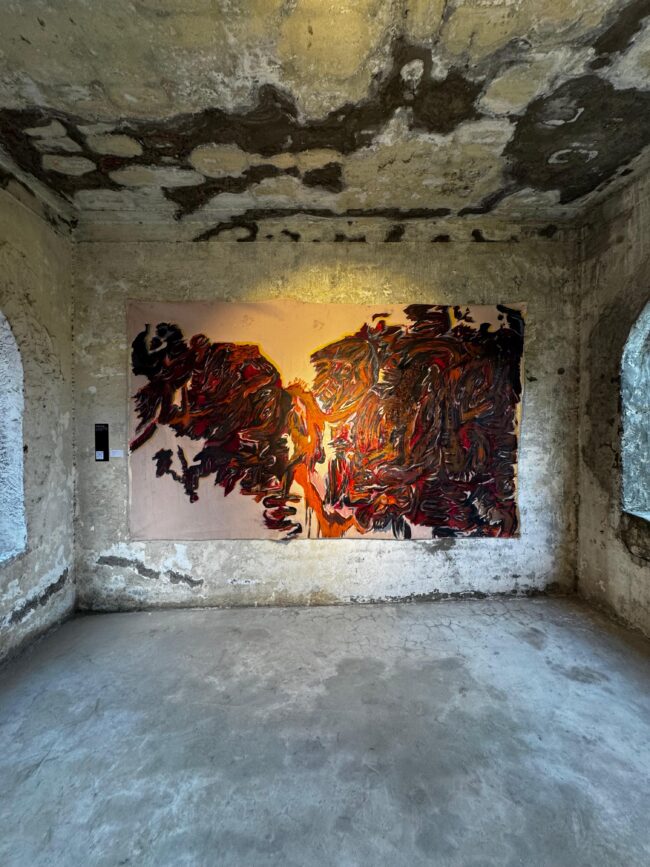
Hadiqa Dogar’s reaction to the expanse of the area surrounding the gallery’s built structure was showcased in an open veranda. Her installation titled “Demons and Dummies” reflects the tranquility and the hauntedness of the flooded walls, gathering her vivid monsters and shadows to morph freely. The painted fabric of the canvas seemingly shows the putative figures and alienated features frozen in a devilish dance, the hallucinatory image captivates viewers and slowly reveals its transformations over time, like the nuanced chittering sounds if one gazes at it for an extended period