
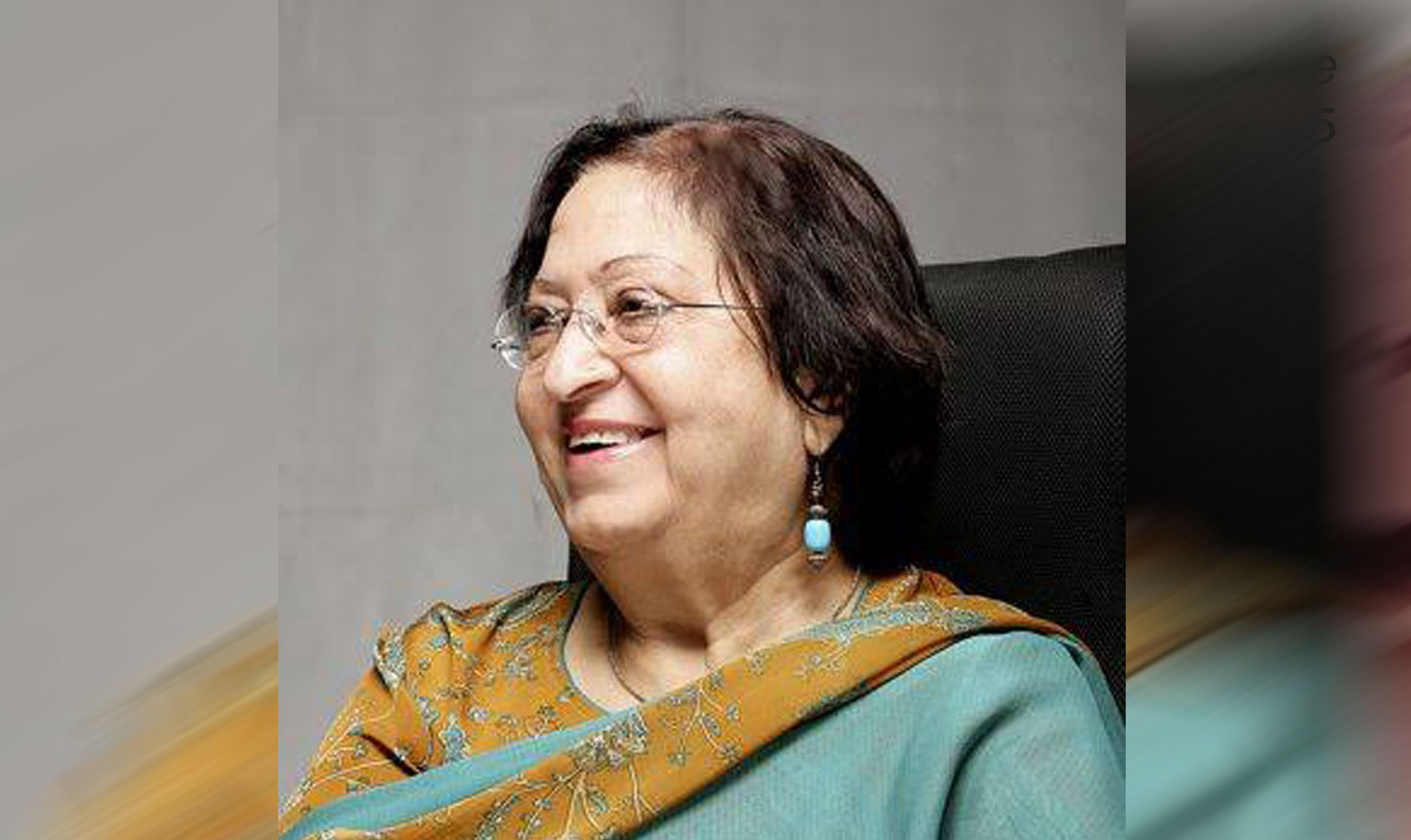
Rabia Zuberi, an art institution herself and a master sculptor of global acclaim, founded Karachi’s first art school. She also had many other firsts to her credit during her long and eventful art journey.
If painting as an art form can be described metaphorically, one would better call it a metaphor for womanhood. Just as fully understanding a woman and her ideational predisposition is a complex endeavor, so is knowing and perfectly mastering the art of painting, as both are deeply driven by soulful emotions and finer feelings. This is why there’s an eternal connection between art and womanhood. If someone truly understands their essence, both become eternally kind to them. This kindness is rooted in love, truth, and sincerity. An artistic combination of these intrinsic elements results in a creative masterpiece that attracts buyers so strongly that they are willing to pay any price.
When it comes to female artists in Pakistan, Rabia Zuberi serves as a shining example whose lifelong journey and career-long commitment until her last breath reflect her unmatched devotion to art and its promotion to the grassroots levels through formal education. This not only elevated her stature as a promising artist but also fueled the evolution of art in a country where there exists a fine line between art and infraction.
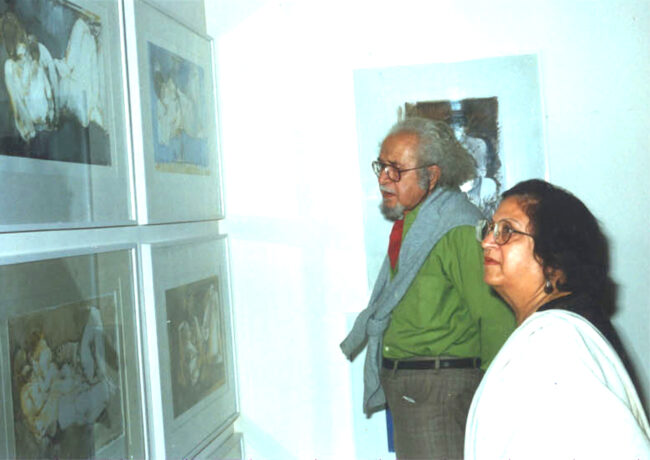
Rabia Zuberi was born in Kanpur, India, in July 1936. She pursued her B.A. from the Aligarh Muslim University, and later, she, along with her sister, Hajra Mansoor, went to the Lucknow College of Arts and Crafts, where they received formal art education. From her early childhood, Rabia was drawn to dolls and the moonlit sky, indicating an inborn sensitivity to aesthetics and beauty. Her family left India for Pakistan in 1961, and a couple of years later, the two sisters joined their family in Karachi, where they established, in 1965, Mina Art School, named after their father, Anis Mustafa Mina Zuberi, who was a pivotal influence in her life. It was subsequently renamed Karachi School of Art. The school was founded without any external support. Rabia Zuberi left behind a promising future in India, filled with awards and recognition, to contribute to her beloved homeland, Pakistan. This selfless act underscored her dedication to national service through art.
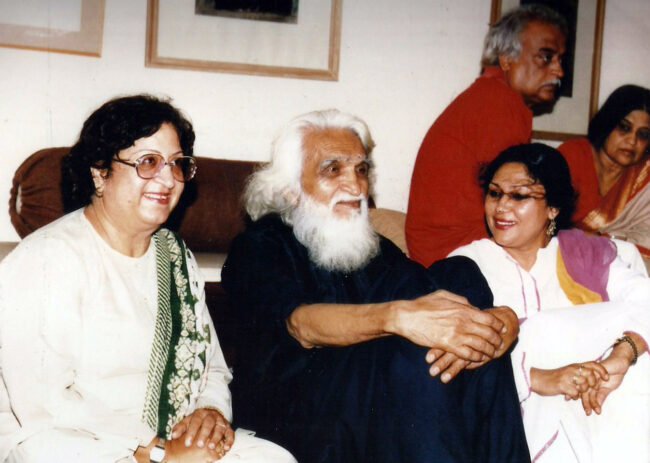
A significant change occurred in her work when, in the 1970s, she began to examine human anatomy through her sculptures. In 1978, she created two life-sized fiberglass and iron sculptures for the Pakistan Navy. In the same year, the Pakistani government commissioned her to work for the presidency. She was also commissioned to create a statue for an industrial organization and some public and private architectural structures in the capital. In the 1980s, the focus shifted to gender issues, and in the ‘90s, the city of Karachi’s socio-political turmoil resulted in a series called ‘Quest for Peace’. An art institution herself and a master sculptor of global acclaim, Rabia Zuberi not only founded Pakistan’s first privately run art school but also had many other firsts to her credit during her long and eventful art journey. For instance, Zuberi is often referred to as Pakistan’s first female sculptor as well as the first female sculptor to receive the President’s Pride of Performance award. Great artists like Sadequain and Ahmed Parvez deeply inspired her. Black, white, and pink were her favourite colours.
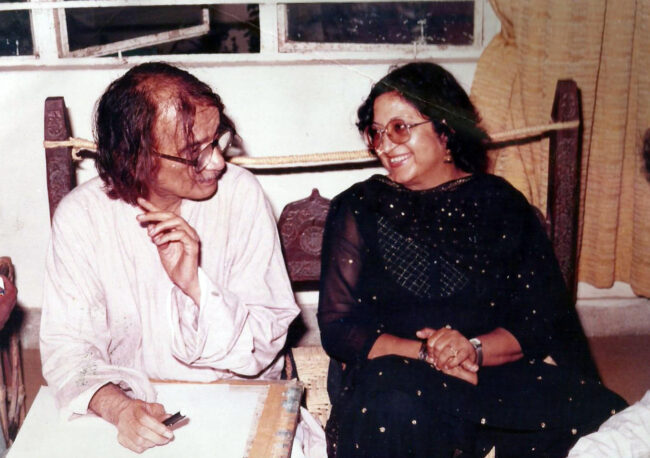
Affectionately called “Aapa” by her students, Zuberi was “the mother of sculpture” and a guiding light for those artists who seek not just to create art but to live it, thus leaving a legacy behind for coming generations to expand it through innovative expressions and fusion of styles. As a dedicated educator, she mentored thousands of students, many of whom now carry her legacy across many countries and continents. Her students include renowned names such as Mashkoor Raza, Zawar Hussain, Ghalib Baqar, Riffat Alvi, Abdul Hafeez, S. Zaheen Ahmed, Abdul Hai, Lubna Agha, Sanbal Nazir, and many more.
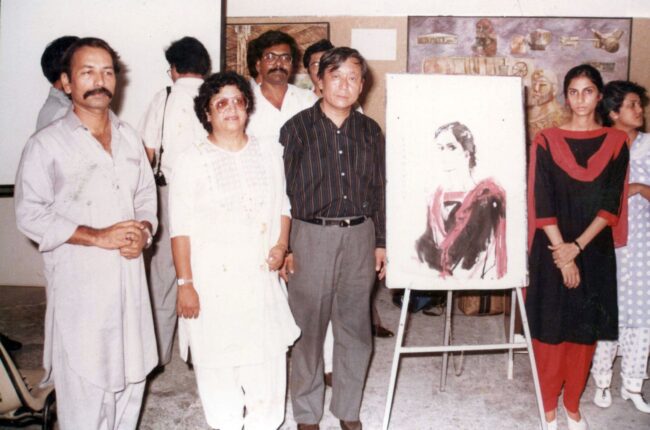
Art is not just visuals—it’s a language. In her own words, art is omnipresent, an essential language of humanity, and an instinctive feeling that arises in moments of pain. For Zuberi, her art studio was her home; she described her paintings as her children and considered each brushstroke an extension of her soul. As she rightly said, artists often exist in a world of their own, whether in solitude or crowds, and their works speak of love, truth, and peace, serving as beacons of hope in a chaotic world.
Figuratively speaking, the world lived in by Rabia Zuberi, a born sculptor and painter extraordinaire, was more of a fairyland fantasized by a consummate utopian. Come what may, to all intents and purposes, she toiled like a hard-working labourer, self-bonded to a never-ending task, day in and day out, of planting a fruit-bearing tree that never withers — Karachi School of Arts. Many in the creative community regard Rabia Zuberi as a “university of art” unto herself.
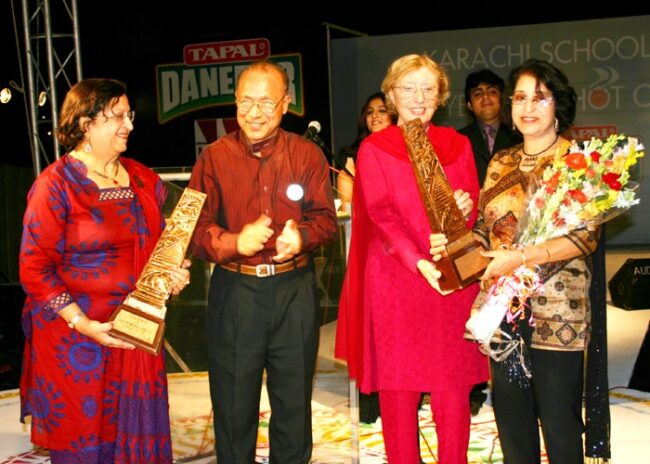
An icon of art, art education, and a benevolent human spirit, Rabia Zuberi stood taller than her art contemporaries for shaping the artistic landscape of Pakistan. She can succinctly be described as a woman of many talents with many incredible sculptures to her credit, one of which is a seven-piece work called ‘Peace Message from the Progressive World’ that is part of the National Art Gallery Islamabad’s collection. She authored several books on painting and sculpture. In January 2022, at 81, she died in Karachi.