
Whether personal or communal, all locations contain memories, stories, and emotions that can remain even after their occupants are absent. The environment people interact with is continuously transcending its layers with historical influences, and may carry an underlying sense of loss or longing. The recent exhibition at Lakir Gallery explored the narratives associated with the spaces that outlive their residents and relate to personal or collective experiences, and what histories or emotions they may convey.
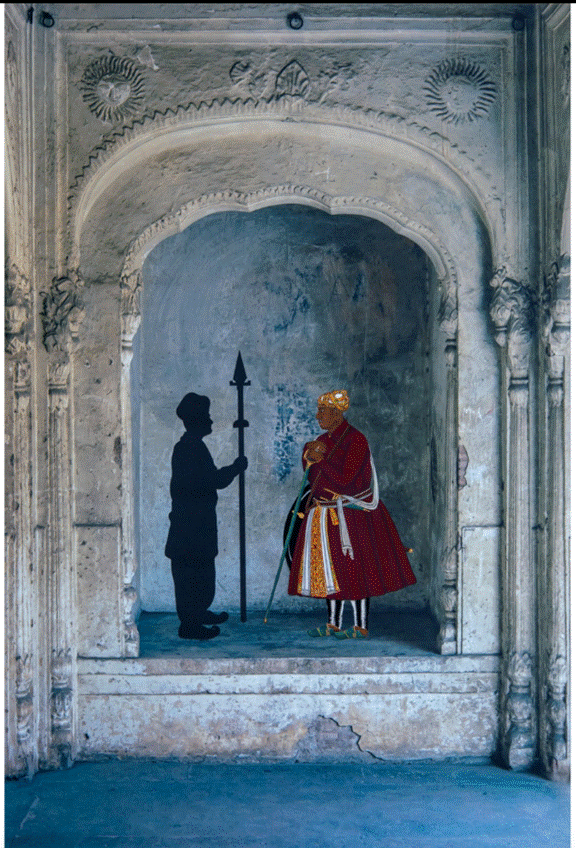
Hassan Sheikh explored how history exists within modern environments, focusing on the interactions between the past and the present of the Mughal architecture with themes of memory, identity, and human connection as they endure beyond their initial contexts. Each piece illustrates the simultaneous presence and absence to reflect on the remnants of those who once inhabited these places. Paras Murad fused fabric and paint to transform typical sewing materials into contemporary, expressive creations. She explored various sewing techniques and materials, combining delicate and coarse textures to create pieces that evoke curiosity and emotion.
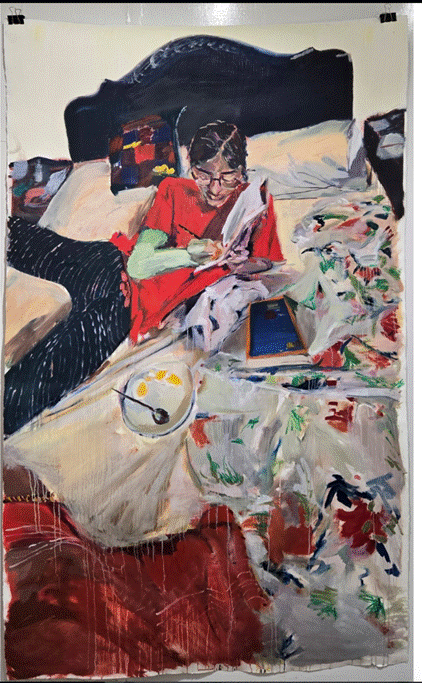
Irum Rahat
Irum Rahat delved into the concept of banality, exploring its multifaceted effects that resonate on both cultural and personal levels. Through her thick, layered oil paintings, she examined her perceptions of family and the subtlety of familiarity, providing insight into the emotional landscapes of her themes. Her artwork predominantly focused on private spaces; the complexities of feminine experiences served as a critique of the patriarchal structures often found in traditional white male adventure narratives, all while exploring the physical and emotional dimensions of space. Javed Joya’s work examined a range of issues characterized by turmoil, violence, and grief, and presented a narrative that goes beyond traditional notions of toys, which reflected on broader human experiences. By recontextualizing toys as symbols of human experiences, he exerted his role as narrator and observer of the challenges and consequences of war.
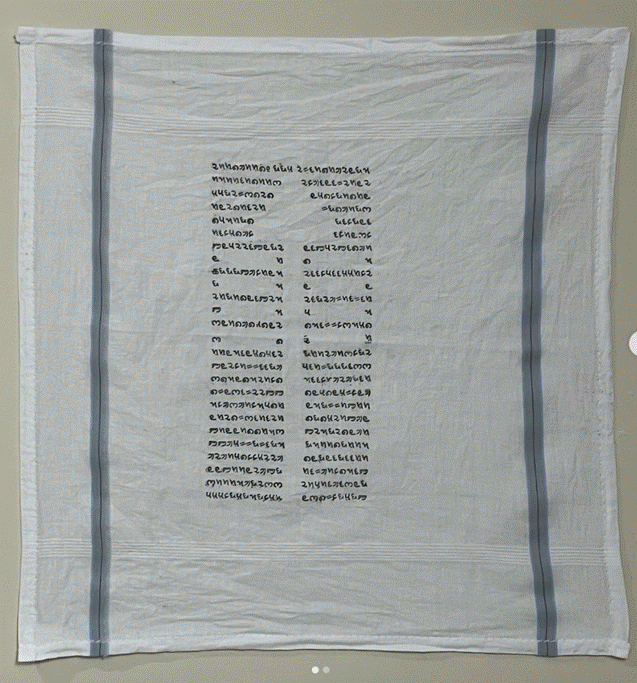
Poonam Jain drew a parallel between houses and books, proposing that both embody interconnected realms of language and architecture. A crucial element of her artistic practice involved inscribing alphabets and numbers on men’s handkerchiefs, which was influenced by a diasporic Marwari Jain baniya heritage. An examination of scripts was included as manifestations of sound and space, alongside coded poetry and textual analysis.
Her artworks seemed to tackle issues of conflict, borders, and identities shared among post-colonial South Asia. These pieces explored the interaction between the state and individuals while focusing on the burdens and memories stemming from conflict, exemplified by the documents retrieved from the debris of a demolished kitchen inscribed with words from Mahmoud Darwish’s poem ‘Aroma of Coffee.’ Jain explored the systematic omission of the Tamil numeric system in her project called ‘Book of Hybrids,’ and converted this gap into a hybrid system. Her work ‘Mother Tongues’ reinterprets a kitchen as a repository for preserving generational stories, which contemplated the political dimensions of language and script and underscored the historical oversight of numerous languages in favor of dominant tongues like English and Hindi within the Indian context.