
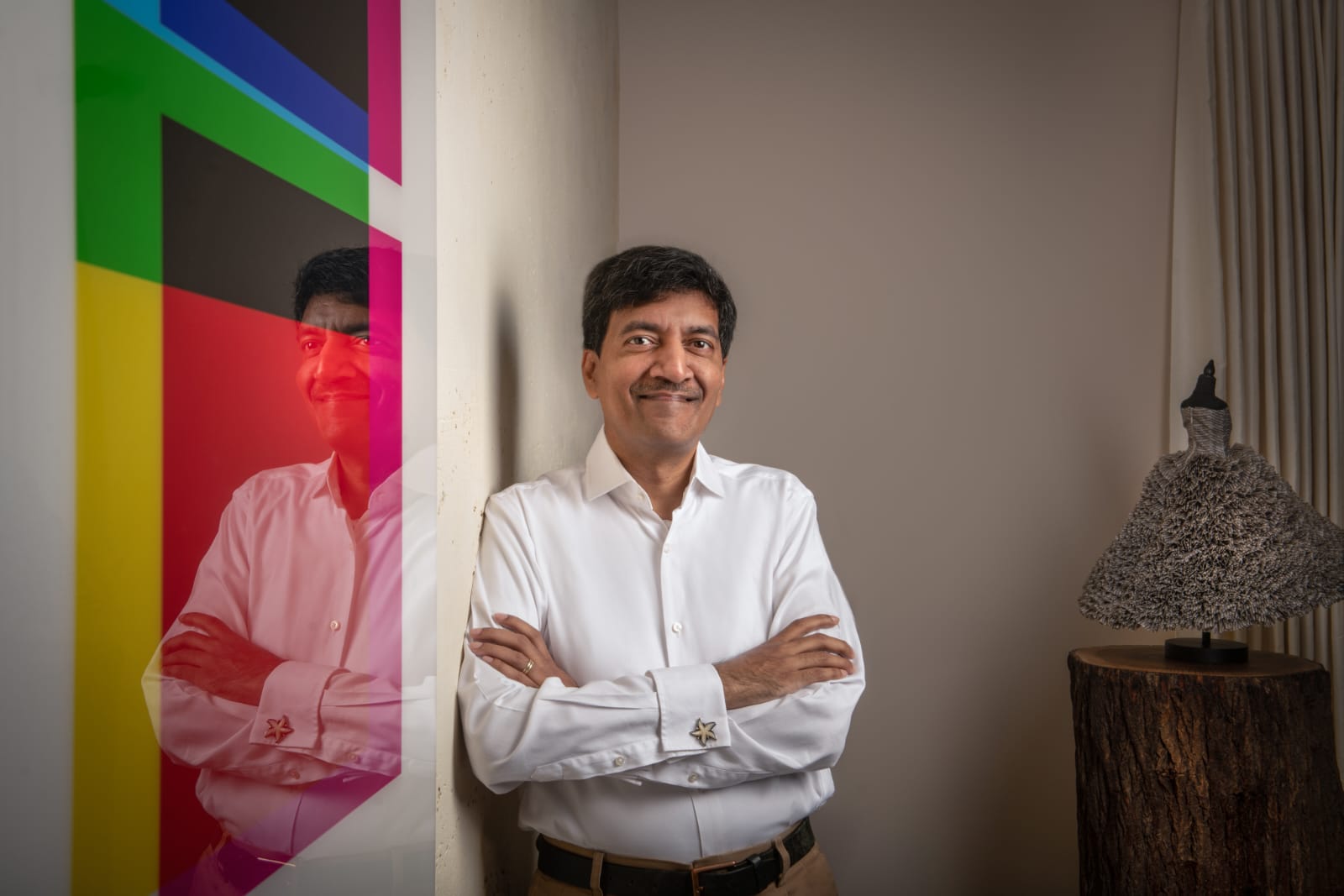
There are collectors who acquire objects, and then there are those rare individuals who collect histories. Dr. Furqan Ahmed belongs firmly to the latter category.
Anthropologist, archivist, researcher, curator, collector, educator, and cultural advocate, Dr. Ahmed has spent decades preserving fragments of Karachi’s social and cultural memory that might otherwise have disappeared. His work exists at the intersection of scholarship and passion, where the act of collecting becomes an act of safeguarding collective identity.
For many, Karachi is a city in perpetual transformation—a metropolis constantly rebuilding itself while erasing traces of what came before. Yet within this relentless cycle of change, Dr. Ahmed has dedicated himself to preserving the stories embedded in photographs, publications, postcards, maps, documents, artworks, and everyday objects. His archive is not merely a collection of things; it is a living repository of the city’s layered histories.
What distinguishes Dr. Ahmed from conventional collectors is his anthropological approach. He understands that objects acquire meaning through the lives they touch and the narratives they carry. A fading photograph, a forgotten publication, or an overlooked artifact can reveal as much about a society as any formal historical record. Through years of meticulous research and documentation, he has assembled an extraordinary body of material that offers insight into Karachi’s evolving urban, social, and cultural landscape.
His commitment to archiving extends beyond preservation. Dr. Ahmed consistently seeks ways to activate archives, transforming them from static repositories into dynamic spaces for dialogue and discovery. Through exhibitions, lectures, publications, and collaborative projects, he invites audiences to engage with history not as something distant and fixed, but as a living conversation that continues to shape the present.
This commitment was particularly evident in his recent exhibitions at Canvas Gallery and Koel Gallery. Bringing together decades of collecting, research, and reflection, the exhibitions offered visitors a rare opportunity to encounter Karachi through an expansive cartography of memory. Rather than presenting a singular narrative, the exhibitions unfolded as a constellation of stories, images, and artifacts that revealed the city through multiple perspectives and temporalities.
Yet Dr. Ahmed’s contribution extends far beyond the walls of galleries. Over the years, he has played an important role in fostering conversations around heritage preservation, urban history, and cultural memory within Pakistan. At a time when rapid development often threatens historical continuity, his work serves as a reminder that progress need not come at the expense of remembrance.
There is also a generosity embedded within his practice. Collecting, for Dr. Ahmed, is not an act of ownership but of stewardship. The archive is not assembled for private enjoyment alone; it is shared, researched, exhibited, and discussed. His work demonstrates a belief that cultural memory belongs to communities and that access to history enriches public understanding.
In many ways, Dr. Ahmed’s practice challenges conventional distinctions between researcher, curator, collector, and artist. Through the careful arrangement of archival material, he constructs narratives that encourage viewers to reconsider familiar histories and overlooked details. The archive becomes a creative medium in itself, capable of generating new meanings and connections.
As conversations surrounding decolonisation, heritage preservation, and cultural identity gain increasing relevance worldwide, Dr. Ahmed’s work offers a model for how archives can function as spaces of care, inquiry, and resistance against forgetting. His dedication reminds us that memory is not something that survives automatically; it requires individuals willing to preserve, interpret, and share it.
For Karachi, a city often described through its uncertainties and contradictions, Dr. Furqan Ahmed has become one of its most devoted custodians. Through decades of collecting and research, he has created pathways into the city’s past while opening possibilities for future generations to understand where they come from.
His archive is ultimately more than a collection.