
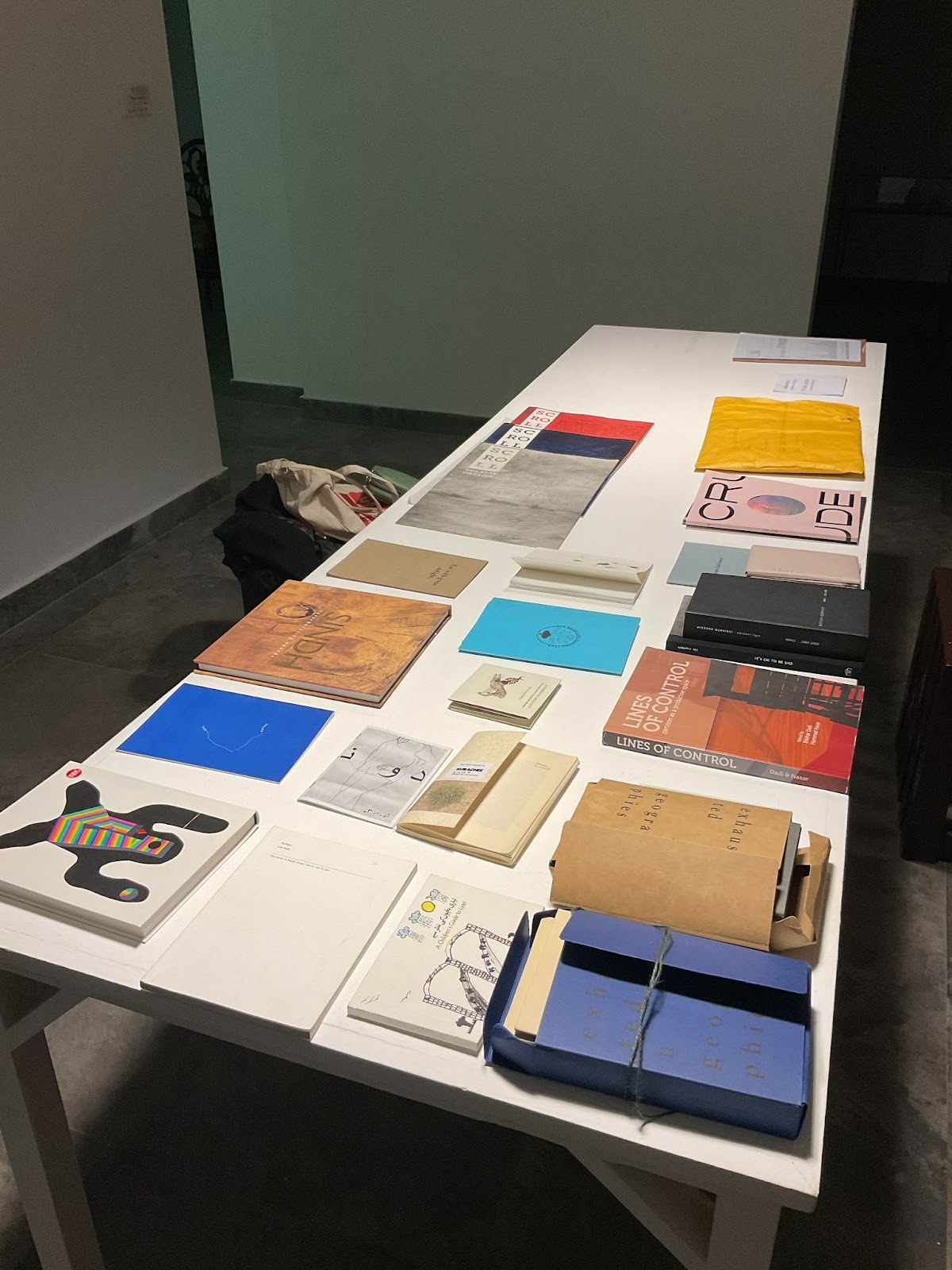
A new independent space has emerged in Karachi, shaped by practices of gathering, reading, and collective care. Darham / Marham brings together two ongoing initiatives, The Kurachee Reading Room by Sophia Balagamwala and The Table – A Project Space by Fazal Rizvi, creating a shared site for publishing, conversation, and experimental work. Rooted in the city’s need for informal, responsive cultural spaces, Darham / Marham offers a place where ideas can be unsettled and tended to at the same time.
Darham / Marham emerges from the Urdu phrase Darham Barham, a state of disorder, rupture, and unrest. By intervening in this phrase with Marham, an ointment or dressing for wounds, the space proposes a gesture of care within chaos. Darham / Marham holds both conditions at once: the shaking up of settled structures, and the slow work of tending, resting, and repairing. It is a space shaped by contradiction, unfixed yet intentional, unsettled yet attentive.
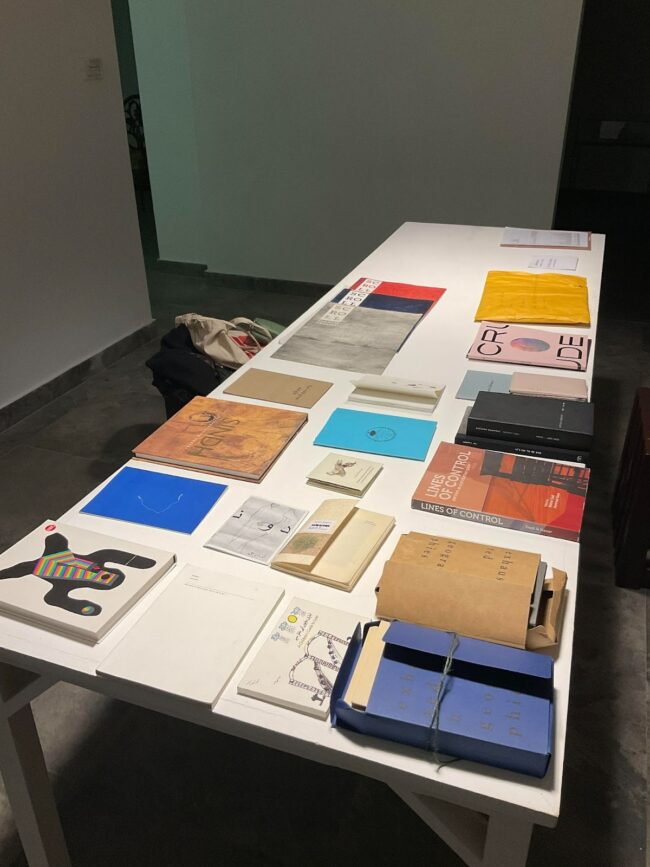
Within this shifting ground, The Kurachee Reading Room, created by Sophia Balagamwala, finds a new home. Conceived as a nomadic and evolving collection, the Reading Room brings together artists’ books, zines, catalogues, and experimental publications that often circulate on the margins of institutional archives. Rather than functioning as a static library, it invites slow engagement, reading as an embodied, social, and political act. Its presence within Darham / Marham strengthens a commitment to publishing as a form of thinking-with: allowing texts to be read alongside conversations, silences, and shared time.
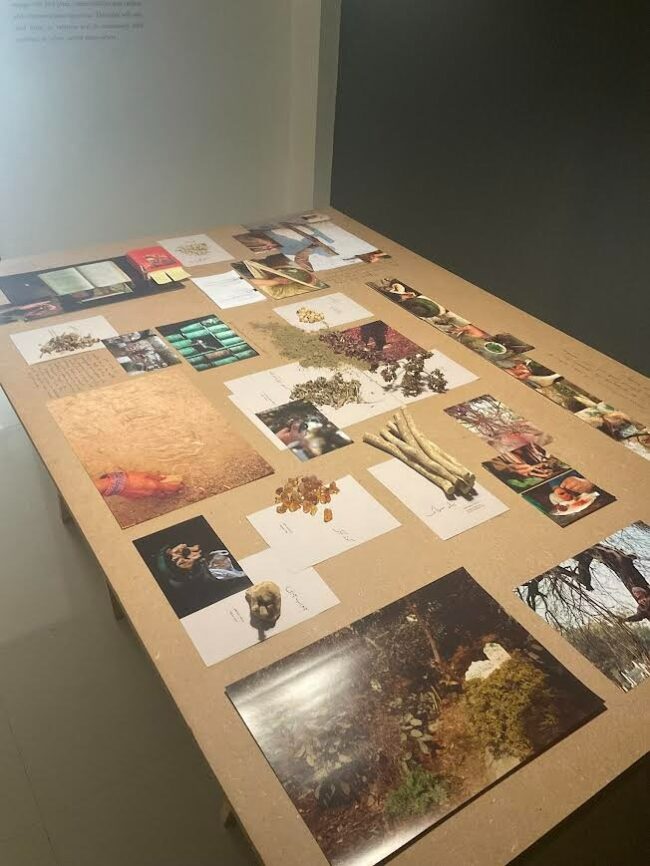
Alongside it unfolds The Table – A Project Space, initiated by Fazal Rizvi. The Table resists fixity in both form and function. It is not bound to a singular design, location, or timeline, but instead folds and unfolds where there is reason to gather. It is a surface for meeting, where food may be prepared and shared, where words may be spoken or withheld, where recipes, gestures, and fragments of knowledge circulate. The Table holds space for informal exchange and collective presence, allowing process to take precedence over outcome.
Together, The Kurachee Reading Room and The Table animate Darham / Marham as a living site of encounter. Programming will grow around publishing practices, sound and listening, and experimental and research-based work—guided not by rigid structures but by responsiveness to community and context.
In a city that often demands speed, productivity, and spectacle, Darham / Marham insists on something slower. Through The Kurachee Reading Room and The Table, it nurtures forms of engagement that are relational rather than extractive. This approach makes it a meaningful and much-needed space within Karachi, one that allows culture to grow through proximity, trust, and shared time.