
Contemporary art negotiates the relationship between the physicality of material and the immaterial presence of human memory. In the work of Adeela Suleman, this dialectic becomes a tool for brutally honest socio-political critique and existential reflection. Educated in both International Relations and art, Suleman occupies a unique position in South Asian contemporary art, operating as both a socio-political archivist and a material philosopher. Her oeuvre does not merely depict conflict; it excavates the psychological terrain of living alongside structural violence, shared trauma, and historical amnesia.
Born and raised in the North of Karachi, it was during her time at Karachi University that she really understood the politics. Violence often permeated the air. “15000 students were marching in the University with me. They had steam and every political party had their student wing, which often locked horns with the law enforcement agencies. When I went to study art at Indus Valley, David Alesworth was my teacher. I learnt there that anything and everything was art. Before this, I had a very cliched version of art. Before this, my only understanding of art was from the fact that Karachi School of Art was two lanes from our house in North Nazimabad. I had played there with clay as a six-year-old. But I, of course, didn’t have a very clear understanding of what art really was or Pakistan’s classical, modern and contemporary art scene,” Suleman shares.
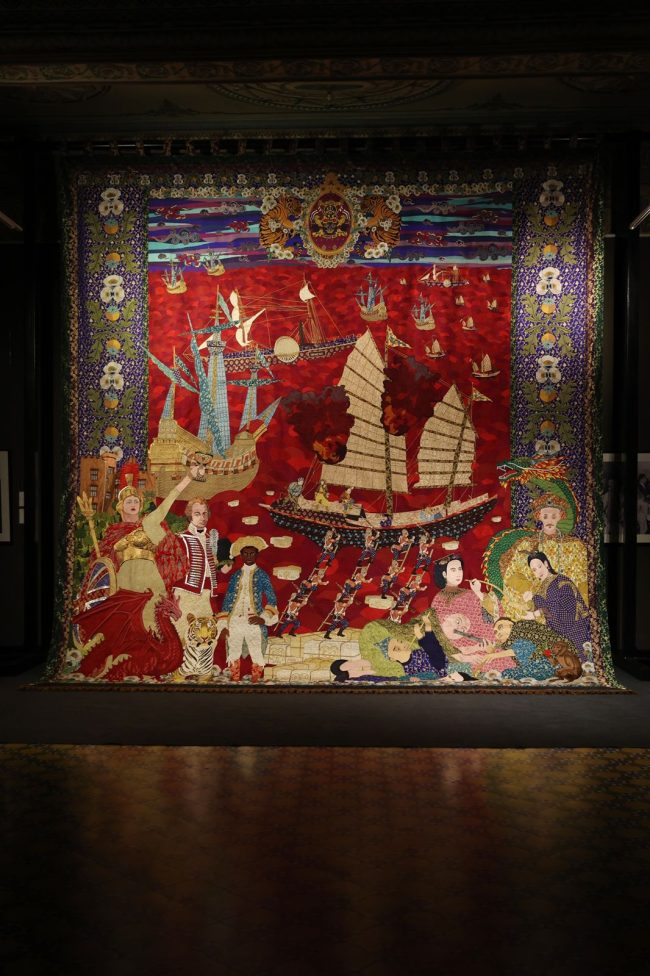
At the heart of Suleman’s practice lies a deliberate engagement with domestic artifacts, reclaimed materials, industrial items, and vernacular crafts. Drainage pipes, stainless-steel kitchen utensils, hardware fixtures, vintage ceramic plates, and utilitarian metal sheets can be seen making dignified appearances in her work. Crafts such as the hand-beaten repoussé work, embroidery, and applique tapestries form the skin on which she painstakingly and tenderly carves her creative vision, elevating the mundane into the monumental, forcing a confrontation between domestic intimacy and institutionalized horrors. Plucked from the urban vernacular of Pakistani domestic and commercial spaces, these objects and crafts undergo a rigorous conceptual transformation.
“David opened the world of real art for me. He taught me the significance of the idea, the thought, and the thesis behind an art piece that elevates it to the level where art starts to make a difference. He showed us how one can pick up anything that people have associations with in the outside world, put a context, and bring it into the art gallery.” This completely transformed how Suleman viewed conceptual art. It was like a revelation, opening endless possibilities for her. “It was very empowering to realize that I could bring things that have been used into my studio space. I was looking at craft and what was available in the market with a newfound appreciation.”
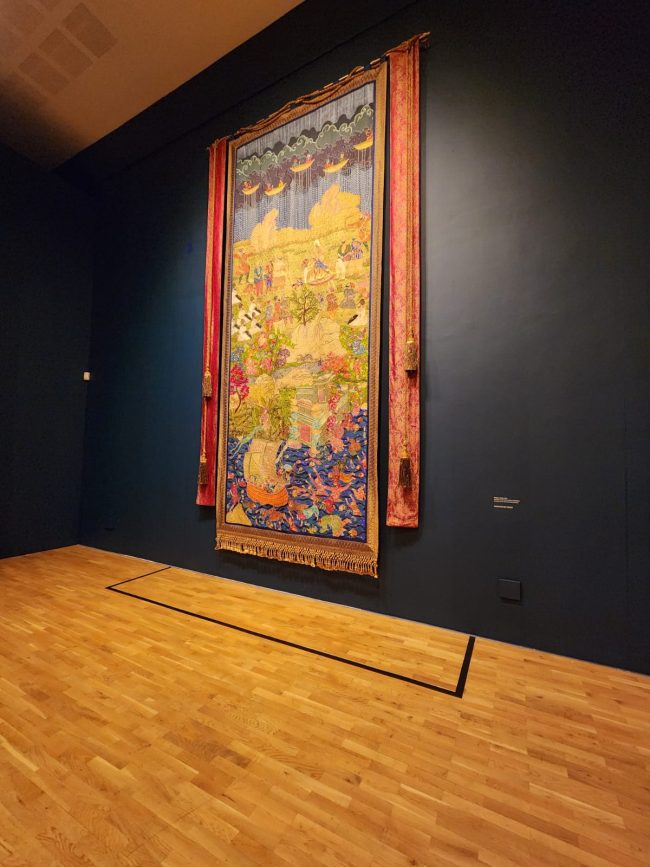
Once Suleman discovered her penchant for finding profounder and more creative meanings behind found objects and crafts, she started using these discoveries for her creative expression that could signify shared contexts, shared memories, and shared pain. The ambient, systemic grief embedded in the everyday around her in the melting pot of Karachi had uncovered a practice for her that continues to interrogate how societies metabolize horror, how trauma becomes domestic, and how art can construct memorials where history offers only silence.
Bilal Tanweer, in his book The Scatter Here is Too Great, writes about Karachi, “for the first time I am confronted with the fact that places and people are like things: both made of memories and meaningful to us in the same way: we construct ourselves in our conversations with them.”
To trace Suleman’s engagement with materials, processes, and conversations they trigger is to trace a genealogy of the city that she lived in and loved unconditionally. Amid these constraints, particularly regarding the gendered body within urban public spaces, her attention lingers on the bustling Karachi streets, its economy, commerce, transport, struggles – social and creative experiences, entertainment, street culture, and the kitsch that comes with it. Utilizing objects and crafts, Suleman constructs art through overlooked yet familiar and animate items, ordaining them the authority to arrest, converse, reveal, reflect, and impose a lingering idea.
“I was always in touch with the crafts. Every summer and winter vacation for me was some time at a vocational school near our house where I had picked up crafts such as crochet, embroidery, macrame, and stained glass painting. Making things with my hands came naturally to me. So, this idea of picking up objects and crafts and putting them up in an exhibition was already there somewhere in my mind. My mother and grandmother, of course, wanted me to train to be a perfect homemaker. When I went to the art school, that same craft that was available outside in my city became my language,” She recalls.
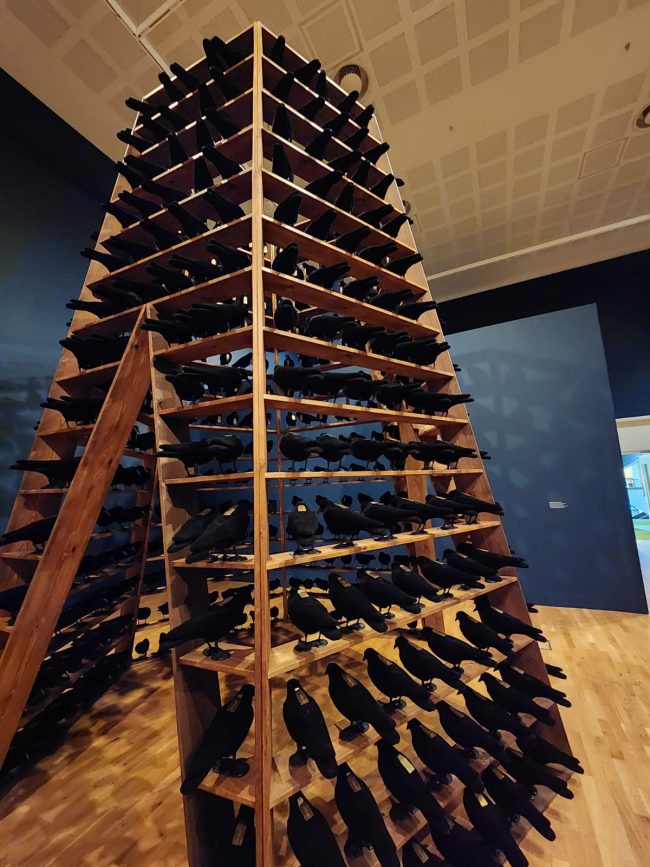
Philosophically, these early interventions blurred the lines separating utility, ornamentation, and her own unique creative expression. Objects and crafts carry a pre-existing social life; a drain cover or a kitchen strainer possesses a specific functional history tied to sanitation; crafts such as quilting, applique, and knitting signify domestic labor and bodily sustenance. By re-stitching these elements and adding a new interpretation of her unique vision through paint, embroidery, repoussé, and other such meticulous processes, Adeela continues to highlight the absurdity of Karachi dwellers’ lived experiences and objects around them to project how basic survival demands structural defense. Every cosmopolitan city’s underbelly offers the same challenges – bursting at their seams due to overcrowding, insufficient resources, and inefficient governance systems. Suleman’s materials and objects may be local, but her themes and contexts are universal. Her work has successfully initiated many social negotiations and manifestations of structural precarity.
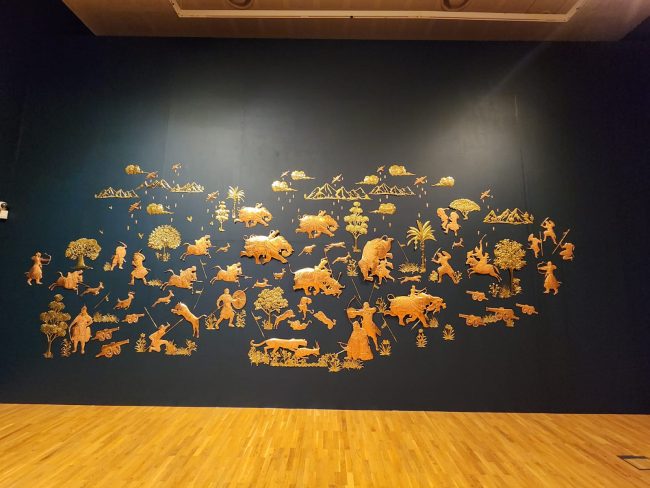
Today she works from her three studios spread across Karachi with a select team of artisans who support her to bring each vision into a creative reality – transforming her discoveries beyond utility and aesthetic convenience into a rigorous critique of labor, value, history, and social commentary. “Whoever lives in Karachi, unless they live in a bubble of their own on the other side of the bridge, has to be political. They have to be politically aware because they have to constantly fight for their rights and their due share in this city. While their griefs may be private, their struggles and challenges are shared. I still recall how my mother used to cut towels into smaller pieces, soak them in water, and throw them from the balcony for the protestors when there was tear gas. I have seen from our terrace a man getting flogged as a punishment during the martial law period at a playground next to our house in Nazimabad. I have seen growing militarization of politics in this city with each passing year,” Suleman shares.
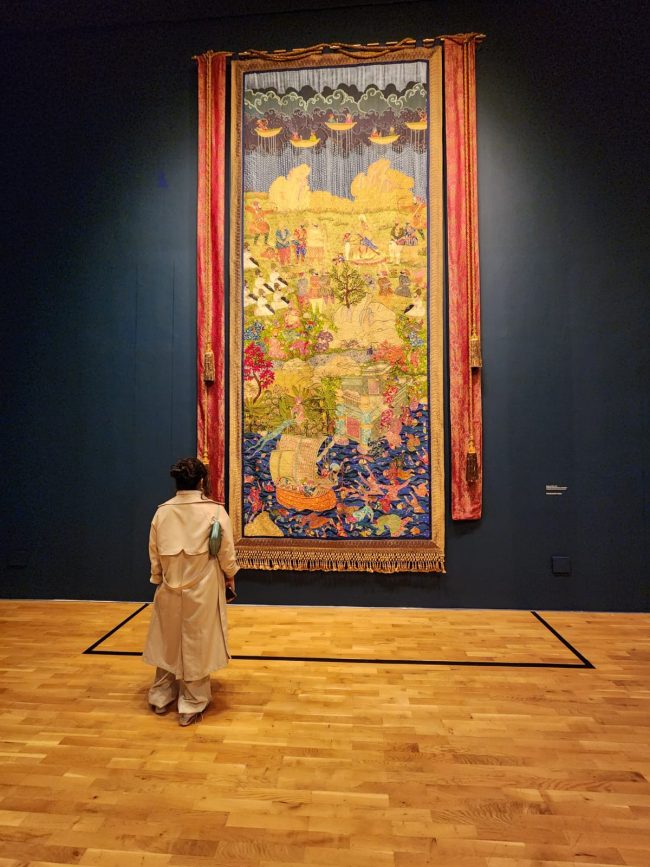
Localized, and tied to individual memories, Adeela’s shared pain in her art describes this very ambient, un-localized suffering that permeates a city facing violence, resonating universally across societies. It is the cumulative psychological weight of news headlines, unclaimed bodies in mortuaries, and vanished citizens that are reflected through her art. It hangs in the atmosphere, woven into the urban fabric of all the cities like Karachi across the globe. Adeela, married to a lawyer who is also politically active and regularly associated with high-profile litigations, continues to observe politiques around her.
By forcing the viewer to experience delight before recognizing destruction, Suleman perhaps is mirroring the societal desensitization that allows routine violence to be swallowed by daily routine – an ironic take on the omnipresent uncertainty and terror that communities continue to exist in, taking it as their given reality – demanding a philosophical meditation on the human condition amid political flux and socio-economic challenges. Adeela’s art makes this terror less grotesque or visceral; rather, she subsumes it under the guise of harmony and creativity finding a space for them in an art gallery, exposing how resilient communities normalize tragedy in order to be able to continue functioning despite the crushing pain they hide in their hearts. She refuses the easy comfort of pure abstraction, just as she rejects the graphic sensationalism of documentary photojournalism. Adeela’s found objects and crafts scream of the shared pain, but in whispers – hoping to cut through the deafening noise on the streets around us.