
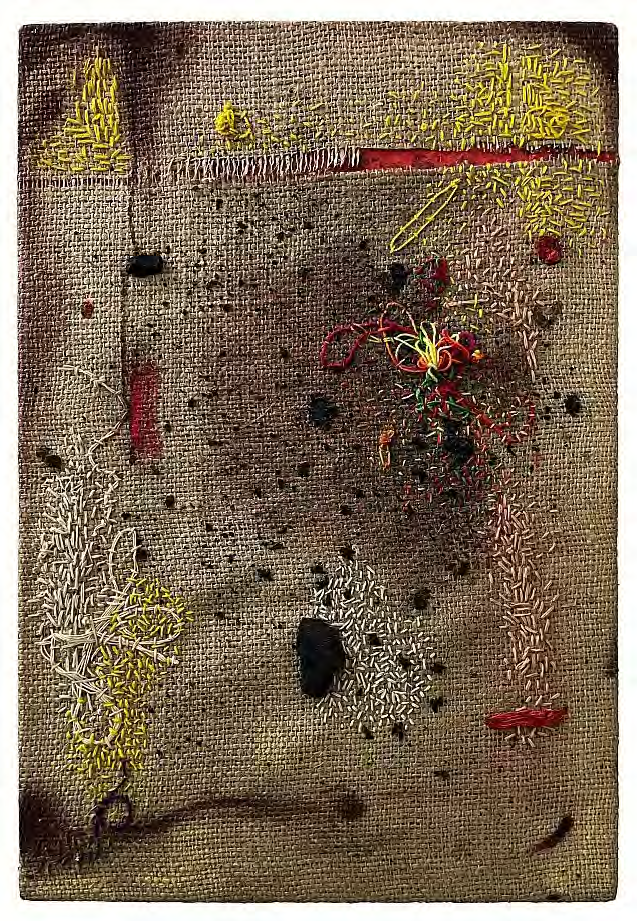
Niamat Nigaar transforms landscapes into emotional terrains, stitching together themes of memory, displacement, and the passage of time…
In From the Mountains to the Sea, displayed at VM Art Gallery in early November, a solo presentation by Niamat Nigaar constructs a resounding meditation on belonging, displacement, and the slow passage of time. Emerging from the terrains of Loralai and extending toward the Arabian Sea, his work creates a geography of memory, one that is less about the precision of cartography and more about the tremors of lived experience. His work used mixed media; each drawing, stitch, and xerox transfer has the intensity of a landscape recalled rather than directly seen.
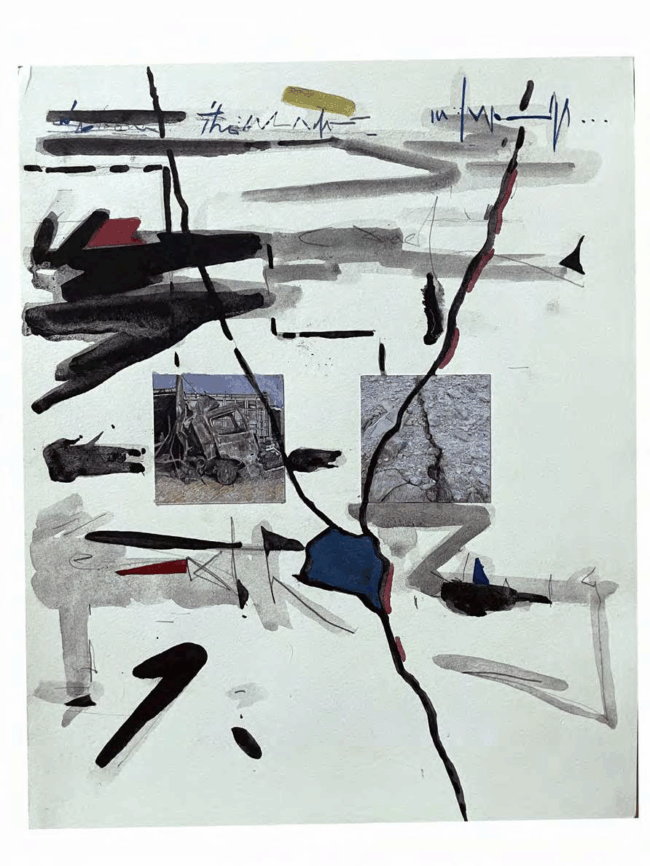
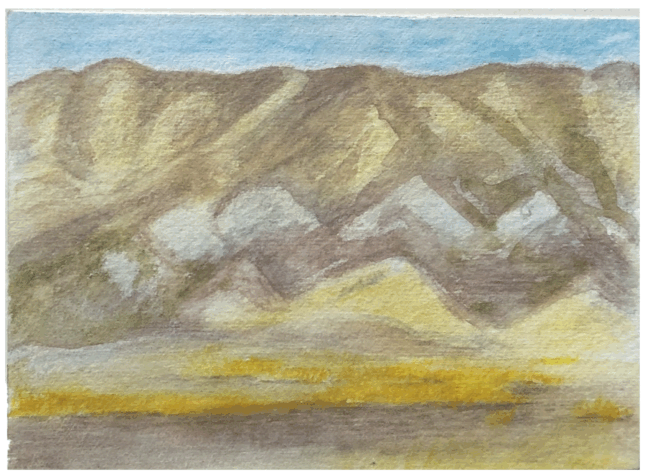
Nigaar’s practice, deeply rooted in material exploration, evokes the tactility of Balochistan’s soil and the softness of Lahore’s light. The modest scale of his works, featuring pencil colour on handmade paper, Xerox transfers on dyed cotton, and stitched jute, invites intimacy. Viewers are invited to lean in, to dwell within the texture of pigment and fibre. The use of natural pigments and handmade paper feels like an act of retrieval, of returning to the land, even as his compositions oscillate between abstraction and recollection.
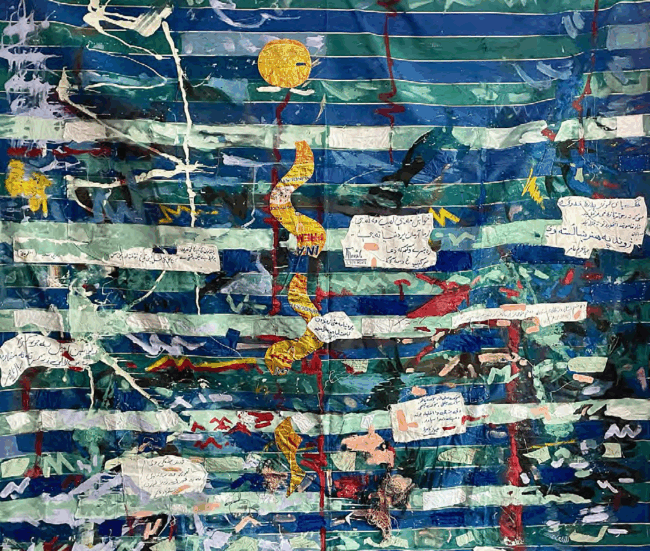
Across the exhibition, a rhythm emerges: drawings of barren landscapes, sea shores, and nocturnal skies interweave with patchwork assemblages that carry traces of labour and tenderness. Works like Starry Night III and Moon and Floating Words suspend time, their luminosity revealing how the night sky becomes a ceiling and a shelter. Meanwhile, the Barren Landscape and Land series introduce the tactile residue of reproduction through xerox transfers, a medium that paradoxically flattens and preserves. This layering of image and impression mirrors the artist’s negotiation between presence and distance, memory and its echo.
In Assemble I, the stitched jute surface carries the marks of manual repair, an insistence that making can be a mode of care. The thread binds what might otherwise unravel, becoming a gesture of continuity between land, labour, and body. Nigaar’s description of his process, tracing “memory, labour, and breath”, materialises in these tactile acts. There is no romanticisation of landscape here; instead, we witness the sedimentation of histories, personal and collective, that lie beneath its surface.
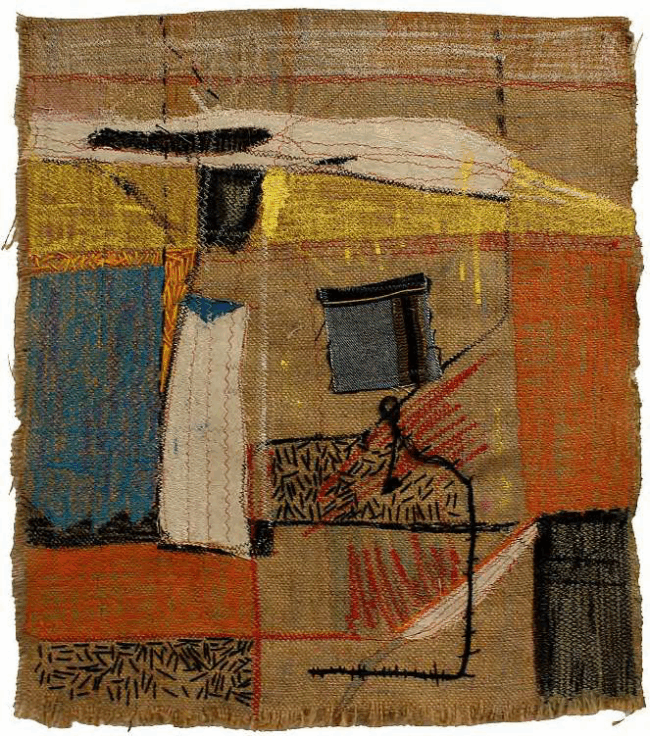
What makes this exhibition compelling is its refusal of spectacle. Nigaar resists the pressure to monumentalise either his origins or his trajectory. From the Mountains to the Sea ultimately asks: what remains when the landscape shifts, when the mountain meets the shore, and memory meets the body? In Nigaar’s hands, the answer is not certainty but resonance. His materials breathe, his marks pulse, and his surfaces hum with quiet insistence. Through this body of work, he transforms the act of looking into one of listening, to the land, to labour, and to the silences that connect them.