
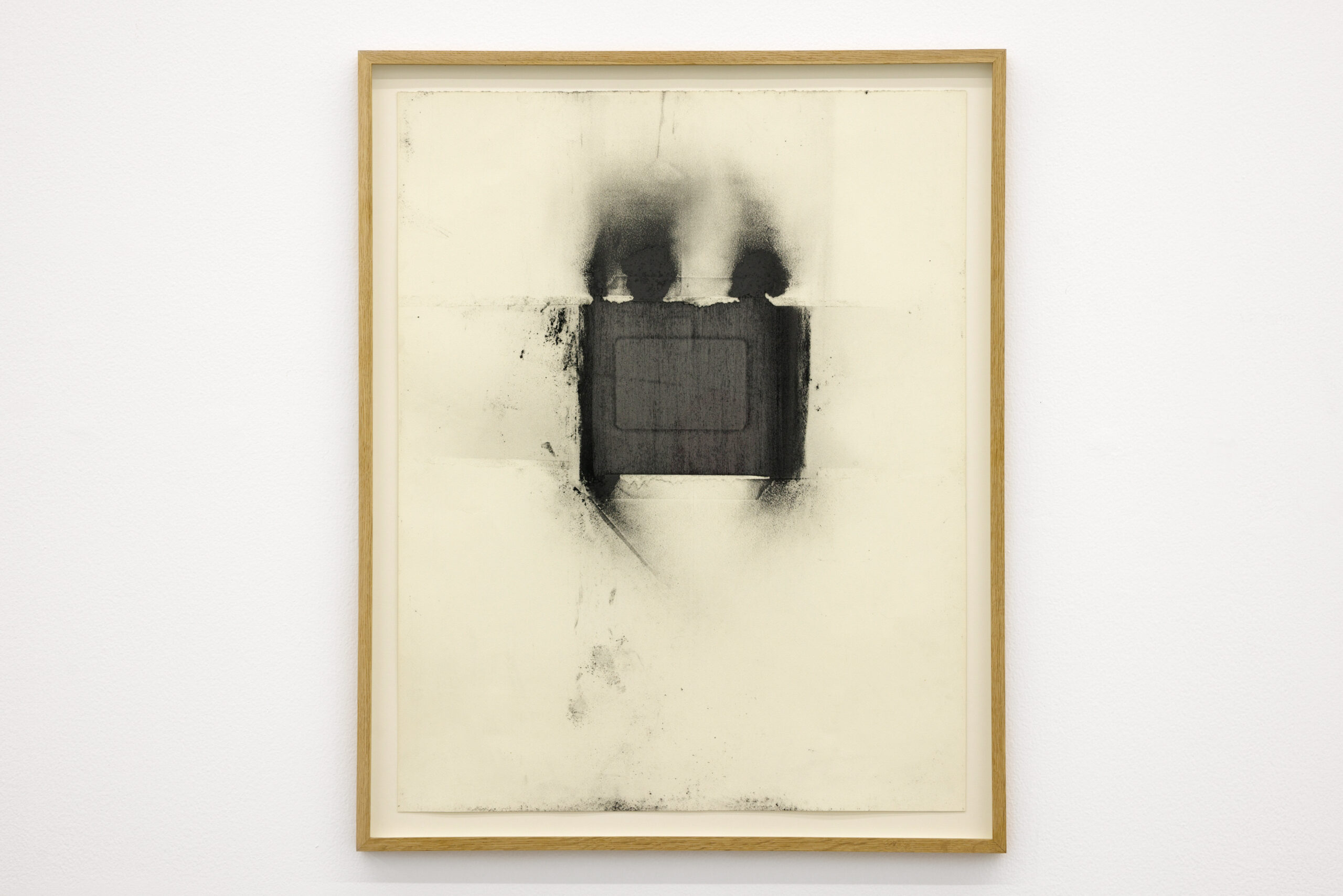
“Fatima Haider’s The Genesis of Emptiness delves into the philosophical depths of absence, presence, and the meaning we construct around them.
Fatima Haider’s foundational years at Beaconhouse National University (BNU) were a profoundly formative period, not merely a time of technical acquisition. Before her rigorous postgraduate studies at the School of the Art Institute of Chicago, she honed her skills in painting and drawing while embarking on an expansive journey of expression. It was here that her philosophical curiosity began to entwine with her craft. Her art transcended mere depiction, delving into the intricate interplay between space, dimensionality, and philosophical inquiry. This wasn’t about mastering brushstrokes or anatomical precision; it was about grappling with how the tangible—the canvas, pigment, and line—could serve as a conduit for the intangible. How dimensions evoke a sense of profound depth on a flat surface, mirroring the complexities of thought itself? How could the arrangement of forms within a defined space articulate an idea, a question, or a perspective on existence?
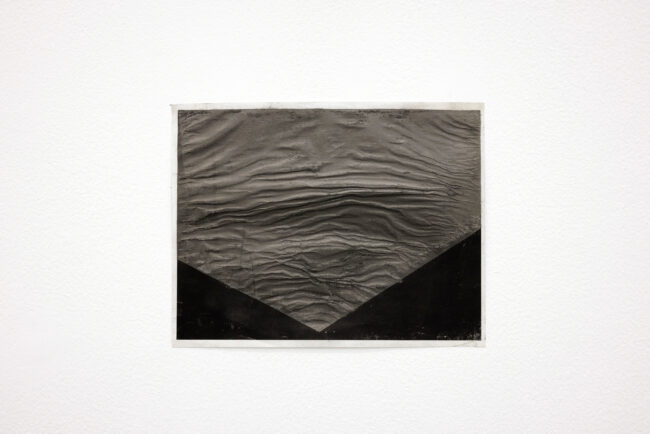
Courtesy: the artist and Grey Noise, Dubai. Photo: Daniella Baptista
Fatima recounts her time at BNU, “I went to BNU at a time when Sophie Ernst and Huma Mulji had just started a drawing course. I was part of the first batch at BNU. Ms. Salima Hashmi was the Dean and there was a very diverse faculty. This exposed me to varied opinions, thoughts, and practice styles.’ After graduating, her Master’s studies at The School of the Art Institute of Chicago presented a stark contrast. ‘The School of the Art Institute of Chicago is very much grounded in abstraction, especially in the language of painting. When I went there, I realized that there painting is thought, understood and perceived very differently,” she shares. This transition unveiled a profound truth: the ‘language of painting’ is not monolithic. Instead, it’s a fluid, multifaceted construct, perceived through myriad lenses. This realization of art’s protean nature sparked Fatima’s interest in space, a curiosity further deepened by Umberto Eco’s seminal work, ‘Faith in Fakes’. Eco’s exploration of the modern world’s obsession with simulacra and counterfeit reality left an indelible impression, informing her burgeoning understanding of how painting navigates and challenges perceptions of authenticity and representation—an interplay between the real and its manufactured echo.
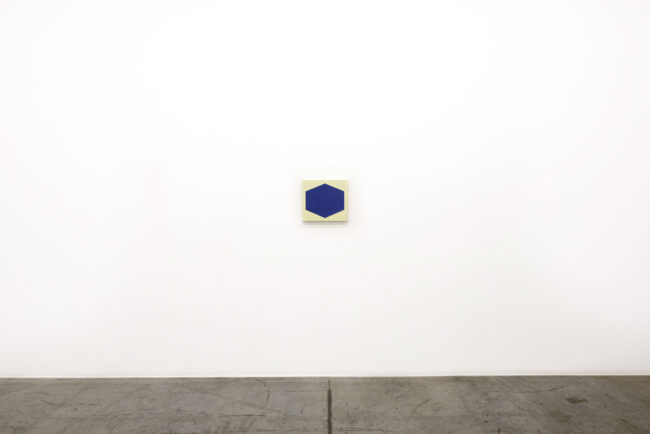
Courtesy: the artist and Grey Noise, Dubai. Photo: Daniella Baptista
“As an artist progresses in their practice, one realizes the importance of discovering a unique conceptual language,” Fatima reflects. “My work changed a lot during my Masters. I was doing large painterly works, which also included collage.” It was in Chicago that she discovered ‘Horror Vacui’—a concept meaning ‘fear of empty spaces,’ where an entire surface is filled with detail, leaving no voids, akin to nature’s abhorrence of a vacuum. Paradoxically, she notes, “Over time my work became quite reductive, simplified and distilled.”
“I have always been involved with Academia. After graduation I did a 2-year post graduate residency, which is called the Core Program, for the Museum of Fine Arts in Houston. Rice University, which is a research university in Houston, also has a teaching component so I started teaching there. Later I moved to New York and taught there for a while. When I moved back to Lahore, I joined NCA as a visiting faculty for a year and since 2018 I have been with NCA as permanent faculty member.” Fatima feels that her studio practice and her teaching have been closely connected. “My own practice informs the way I look at work and the way I frame my teaching methodology and pedagogy,” Fatima shares.
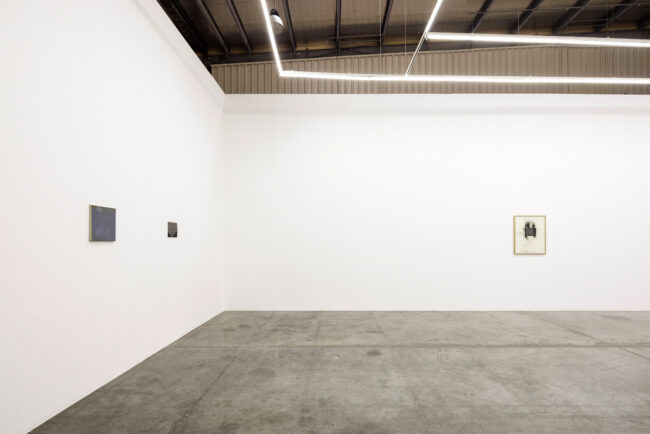
Courtesy: the artist and Grey Noise, Dubai. Photo: Daniella Baptista
For years, Fatima showed very little of her work. “Teaching can be quite consuming and I had very young kids. I also felt that my practice was very private in nature; I think that is also my temperament. I also believed that I wanted to find a space that was well suited for my work, both in terms of thought and physically. Last year, I decided that I was ready to see my work outside my own studio. I kept thinking for quite some time about where should I show my work, especially in Lahore. It was important because my students, colleagues, and the conversations are here.” In 2024, her solo show ‘Eighteen Degrees Below the Horizon’ at Rohtas Gallery was a collateral event of the Lahore Biennale 03. Currently her work is on display at Grey Noise, a contemporary art gallery in Dubai that provides artists from South Asia, the Middle East, and Europe, a platform for their projects while engaging in dialogue with the international art community. Her exhibition ‘Figure, Ground’ (June 15 – August 9, 2025) has been defined as an interplay between camouflage and nature, the organic and the industrial. “These seemingly opposed forces are folded into one another, generating both visual and conceptual tension. The horizontal line functions as a foundational element. Establishing orientation, marking a horizon, and suggesting both a beginning and a boundary. From this point, resistant spaces emerge: spaces that are confrontational, unyielding, and deliberately withholding.” The official press release of the gallery cites.
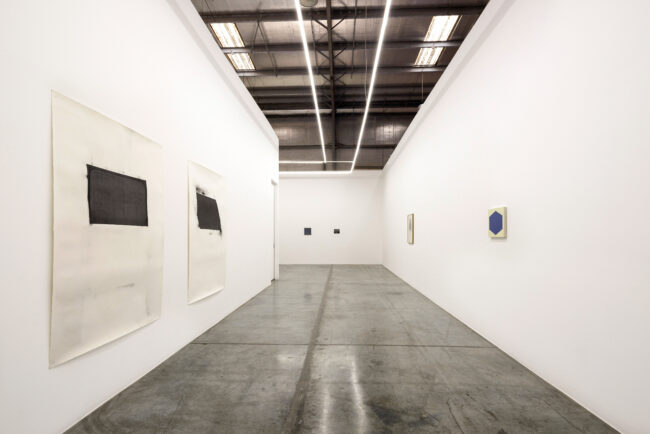
Courtesy: the artist and Grey Noise, Dubai. Photo: Daniella Baptista
When delving into her own creative genesis, Fatima shares that there are many that she has seen, studied with, or worked with that affected her in different ways. “There are some artists that affect you in the moment and then there are others that stay with you or linger; you think about them time and again, sometimes in your studio and sometimes in your conversations. Lately I have been thinking of Casper David Freidrich. There’s this one specific painting of his, ‘Monk by the Sea’, and I think about it quite a lot. Mark Rothko is also a painter that I keep going back to. Nasreen Mohamedi is an artist whose work I am extremely drawn to. Lala Rukh is another artist who taught at NCA and spent her life in Lahore. These are the artists that have been on my mind lately.”
When quizzed if her artistic curiosity with space and dimensions would ever take her in the direction of ceramics, sculpture or multi-media arts, Fatima finds that idea amusing. “Currently, I am too invested in the two-dimensional. I think in the space of flatness and there’s so much that I haven’t yet delved into.”
Fatima’s flat and still canvases continue to transcend with an almost sentient quality, alternately absorbing and reflecting, denying the simplistic binary of presence and absence—interplaying inherent challenges of the viewer and subverting traditional spatial constructs. By invoking flatness and negating one-point perspective, for as long as Fatima continues to dismantles the illusion of fixed reality and fleeting nature of perceptions, there are many questions that remain to be answered.