
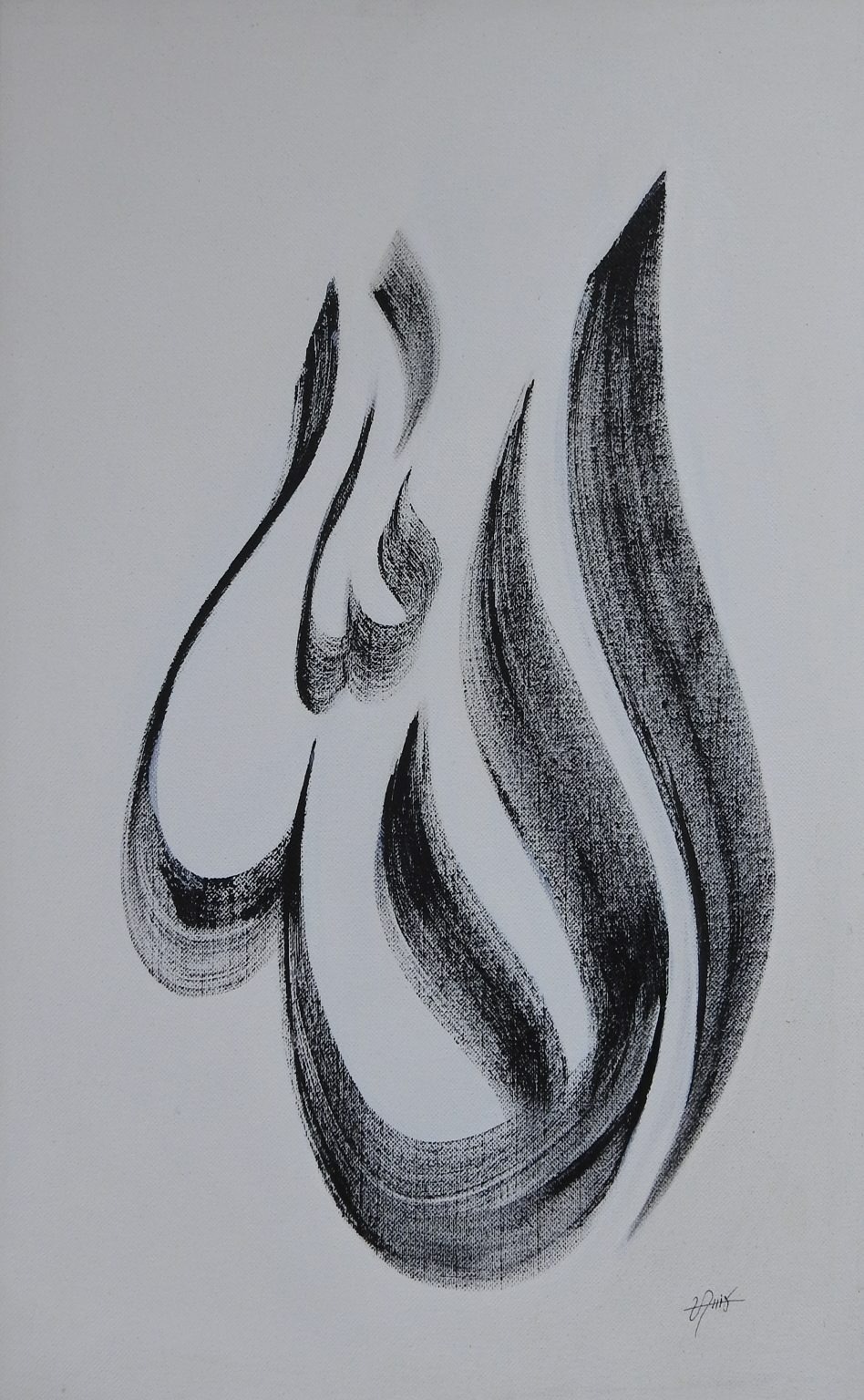
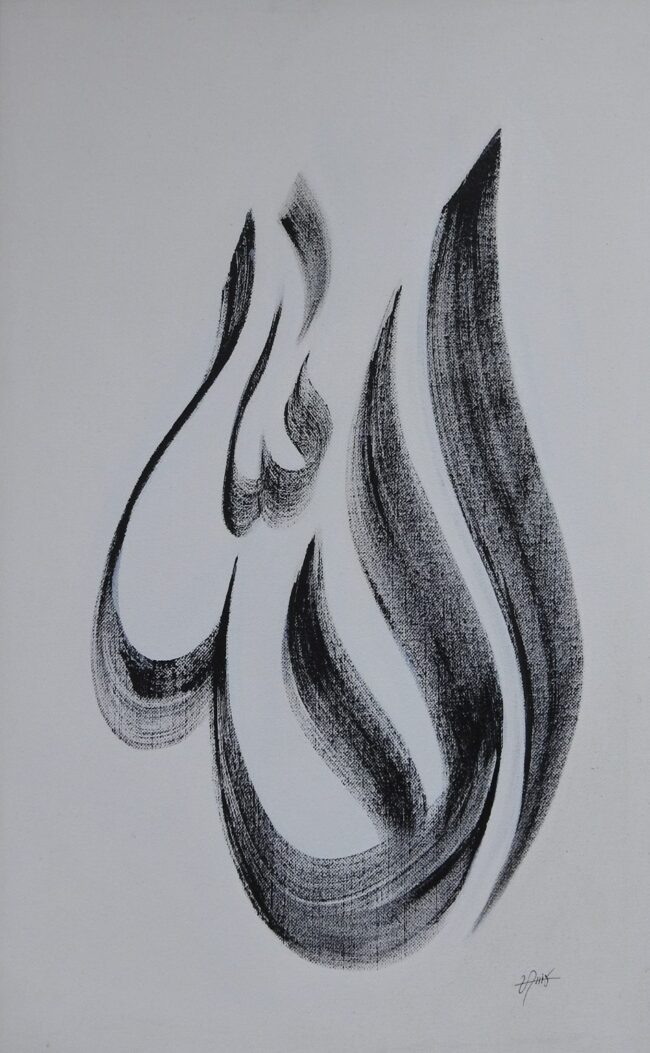
Tahir, 20 X 24, Oil On Canvas
Contemporary calligraphy expands the traditional practice of writing into a broader visual language. While rooted in classical scripts and techniques, many artists experiment with scale, composition, materials, and abstraction, allowing text to move beyond legibility and function as form, rhythm, and gesture. In this way, contemporary calligraphy bridges heritage and innovation, reimagining the written word as both a cultural marker and a dynamic visual expression within today’s art practices.
Ahmed Khan, 13×13, Mix Medium on Board
Contemporary calligraphy reinterprets the long tradition of script-based art by merging classical techniques with modern artistic experimentation. While it remains rooted in the disciplined practice of writing, many artists today approach calligraphy as a visual and conceptual medium rather than purely a textual one. Letters and words are stretched, layered, fragmented, or abstracted, transforming language into dynamic compositions of line, movement, and space.
Hafiz Saeed, 22 x 28, Pen On Paper
In many contemporary practices, calligraphy becomes a way to negotiate between past and present. Artists draw from historical scripts and cultural memory while introducing new materials, scales, and painterly approaches. This shift allows calligraphy to move beyond strict conventions, engaging with themes of identity, spirituality, and visual expression. As a result, contemporary calligraphy exists not only as a continuation of tradition but also as an evolving form of artistic exploration within modern art.