
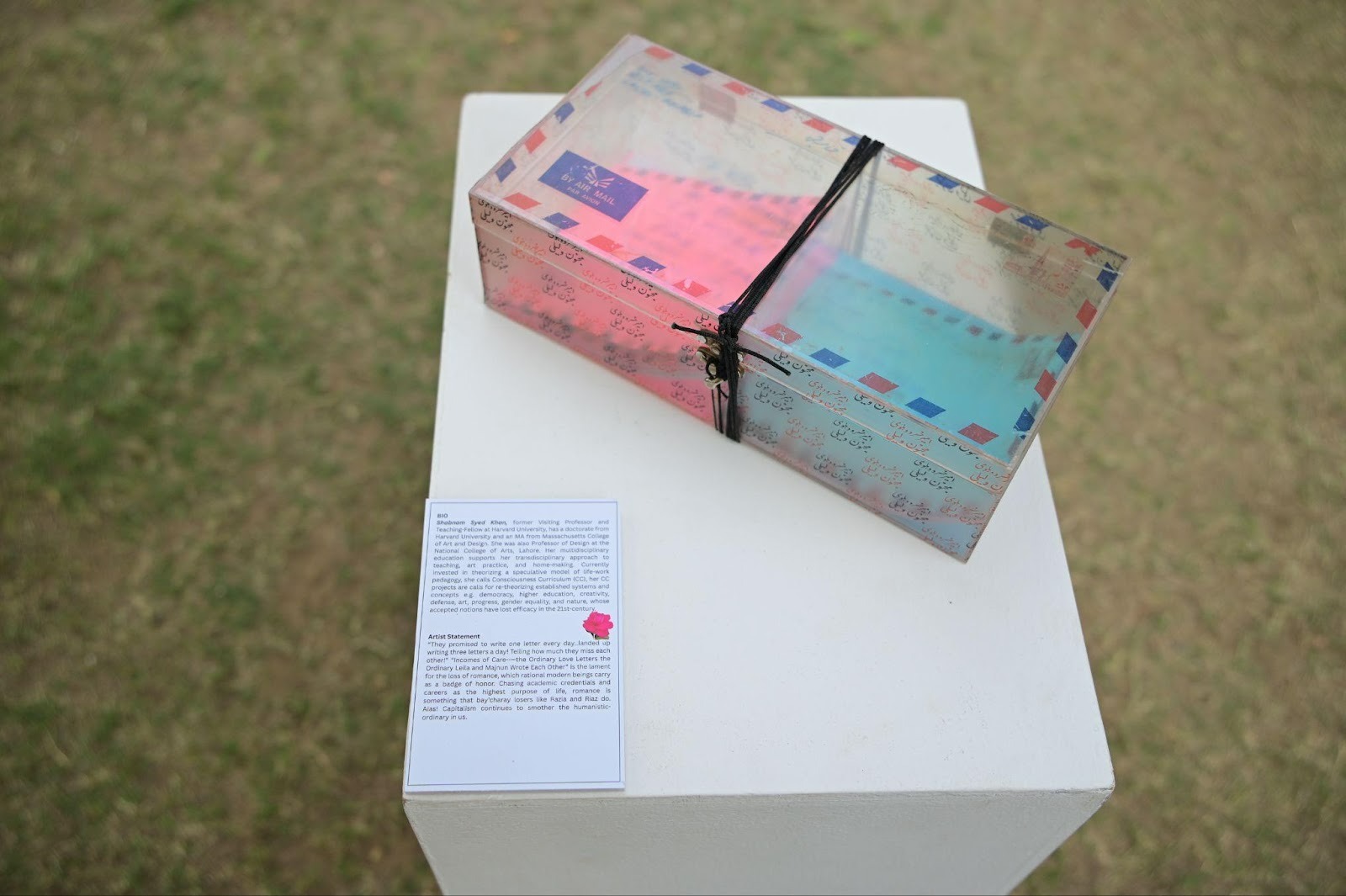
Romantic Provocations was an exhibition that traveled to different cities, starting in Karachi and culminating in Lahore at the LLF early this year. This project connected art, science, politics, and shared stories. Rohma Khan, an artist known for her innovative ideas, curated the exhibition, which explored and created discussions between various disciplines and audiences. The show used the theme of romance, focusing on relationships between people, cities, and time, welcoming uncertainty and chance as valuable parts of the experience, turning differences into opportunities for discovery and ongoing conversations. Each location offered its own take on romance based on its unique history and social conditions and gathered new meanings along the way.
The exhibition provided a platform for artists to explore and express their interpretations of romance through a diverse range of mediums, emphasizing the complexities of love in contemporary society. Each contributor reflected on their individual experiences, allowing for a rich tapestry of artistic views, all tied to the central theme of how romance intertwines with various facets of life, including bodies, technology, environment, migration, memory, work, and power. One of the themes examined the nature of love in the digital age, inviting artists to probe whether we can truly form connections with machines and where the line between belief and automation blurs. This exploration revealed the inherent contradictions of love, celebrating the ambiguity that challenges societal norms and defies the pressure of certainty. Additionally, the exhibition delved into how desire transcends borders, whether physical, digital, or political, posing profound questions about mobility, belonging, and identity in an interconnected world. Amidst unstable climates, contributors reflected on romance through the lenses of care, interdependence, and the beauty of uncertainty. They engaged with the notion that love, much like a virus, spreads through language, storytelling, and social resistance, transforming individuals and communities in the process. The reshaping of experiences of touch and connection was also a focal point, prompting inquiries into how technology co-creates desire and interaction in modern relationships. Furthermore, the significance of stillness and reflection in love was highlighted, showcasing how moments of pause can deepen our appreciation for time and connection. The exhibition embraced the notion that acts of rebellion in love are powerful statements of passion, encouraging creativity that challenges norms and advocates for the reshaping of systems of power.
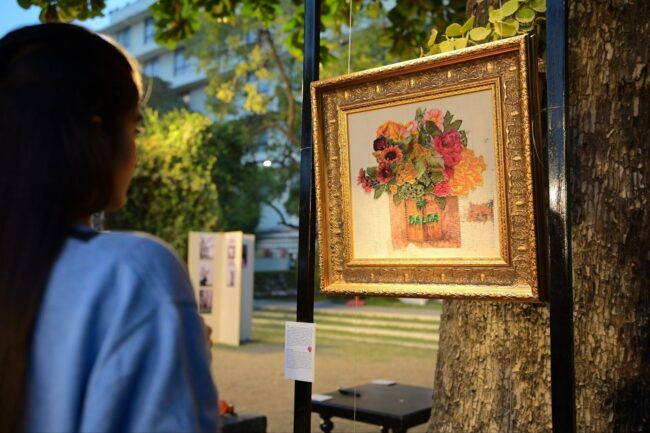
Aima Abbas’s work examines the lotus flower and its symbolism within South Asian culture, detailing how its meanings have evolved. Originally regarded as a sacred symbol of divine presence, it has shifted into a broader cultural icon, now associated with resilience, beauty, and identity in contemporary South Asia. Whereas Jawwad Hussain examines the fading of color, particularly red, which traditionally represents passion, longing, and love in the rose flower. The discussion highlights that what remains is evidence of loss and evolving desires. The imagery of a wilting rose symbolizes the decline of love, suggesting an inability to feel this emotion due to life’s experiences. The transition from passion to indifference is presented as influenced by both nature and nurture, questioning whether love is innate or learned. This fading color metaphor indicates that as experiences accumulate, the vibrancy of initial feelings diminishes. Still, like the rose, the human heart retains a memory of its original color even as it fades.
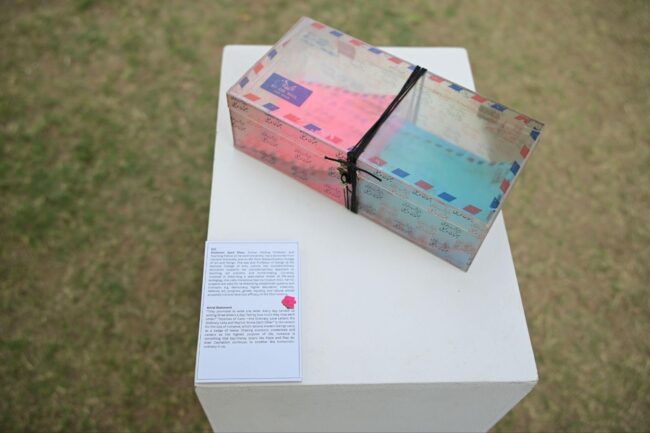
Shabnam Syed Khan notes that there was a commitment to writing one letter each day, but the reality was that three letters were often written daily, reflecting a strong longing between the correspondents. The reference to “ordinary love letters” exchanged by Leila and Majnun illustrates a sentiment regarding the decline of romantic expression in contemporary society. In a modern context, the pursuit of academic credentials and careers is often regarded as the primary purpose of life, while romance is sometimes perceived as a pursuit reserved for those deemed less successful, represented by the characters Razia and Riaz. This perspective suggests that capitalism may overshadow humanistic and ordinary expressions of affection.
Rabbiya Farooq’s work presents a dialogue between a daughter and a mother, depicting a daughter who reflects her mother’s emotions while often being instructed to suppress them. This exchange illustrates how cycles of emotional suppression can be passed down through generations, influencing emotional expression and self-understanding. Moreover, Aroosa Naz Rana examines the intersection of desire, power, and identity within the framework of intimate relationships. This analysis investigates the cultural narratives that influence perceptions of love, resistance, and self-conception. By positioning the body as a site of resistance, the work deconstructs the power dynamics inherent in romantic relationships, emphasizing the tensions between desire and domination.
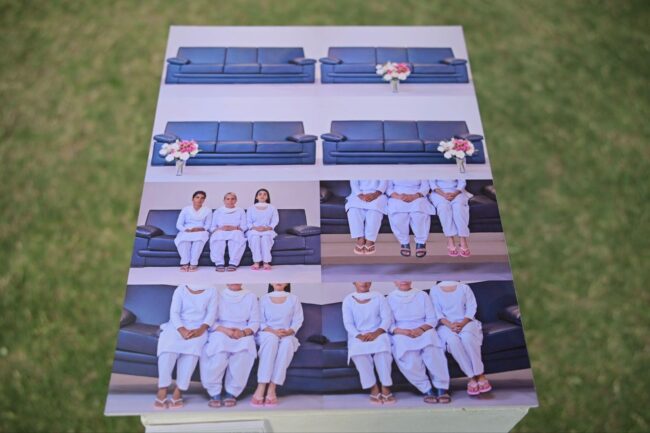
Shahvar Ali Khan, Zahra Mirza, and Jahan Noor Fatima Ali Khan have engaged in a collaborative work that explores the concept of agency within a poetic exchange of borrowed voices. The work reflects on the possibilities of identity across different times and spaces, addressing the question of what an individual could have become under different circumstances. The piece examined how the context around this question has changed over time and considered the challenges faced in pursuing self-realization.
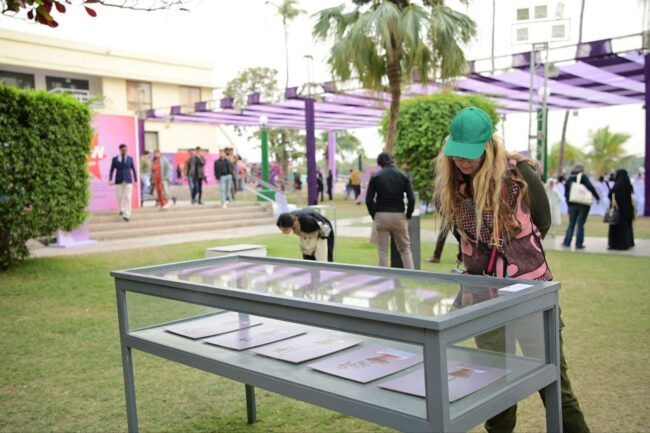
Works were displayed across various outdoor and improvised architectural sites. Installations were positioned in trees, wrapped around lamp posts, placed in shrubs, stretched across open lawns, and situated along pathways. Viewers experienced the exhibition by moving through the space, allowing for moments of pause and reflection. Attention was drawn through proximity, chance encounters, and shared presence.
The exhibition incorporated sound, textile, film, drawing, installation, performance, and participatory gestures to explore interconnected themes. Personal memories were linked to collective history, while domestic actions were presented as political metaphors. Ecological concerns were intertwined with ritualistic elements. Archival objects contained signs of intimacy, and language expressed emotional inheritance. Everyday materials were used to represent acts of care and devotion, and themes of romance emerged as connections between longing, vulnerability, resistance, and tenderness.
As Romantic Provocations progressed to new cities, each location added new layers of meaning. Local contexts, cultural characteristics, and public interactions influenced the exhibition’s evolving narrative. The project acted as an ongoing exploration of relational dynamics across distance and time.
At that juncture of global change, Romantic Provocations sought to encourage sustained attention. It positioned romance as a means of engaging with complexity and fostering collective imagination through art, dialogue, and shared experiences.