
Performance is not (and never was) a medium, not something that an artwork can be but rather a set of questions and concerns about how art relates to people and the wider social world’, describes theorist Jonah Westerman. To fully understand performance art, he says, we must look at where it happens, what it brings and how the spatial situation aids in questioning and understanding our own perspective of the fusion of art and life.
Kal (Yesterday/Tomorrow), co-curated by Amin Gulgee and Noor Ahmed, took place on 13th Februrary 2026 as a 1-day performance and new media-based event at the Gulgee Museum, Karachi. It was presented as a precursor to KB27, bringing perspectives of over 70 artists, both local and international, responding to ephemeral nature of existence. Interestingly so, our native language supports this idea, where yesterday and tomorrow occupy a singular word, pointing to the ephemerality present in the medium of performance art. I don’t see a better way to celebrate time, timelessness and presence than the medium chosen for the event as well as the space that holds both artistic history and contemporary thought.
Connecting to the theme of KB27, Aaj aur Kal, with history and future of Karachi at its core, I saw the performances as various concerns and questions of the people and land of Karachi city. The performative endurance, ritual and repetition represented, faintly or aggressively, the dynamics of the city and its tangible and social world.
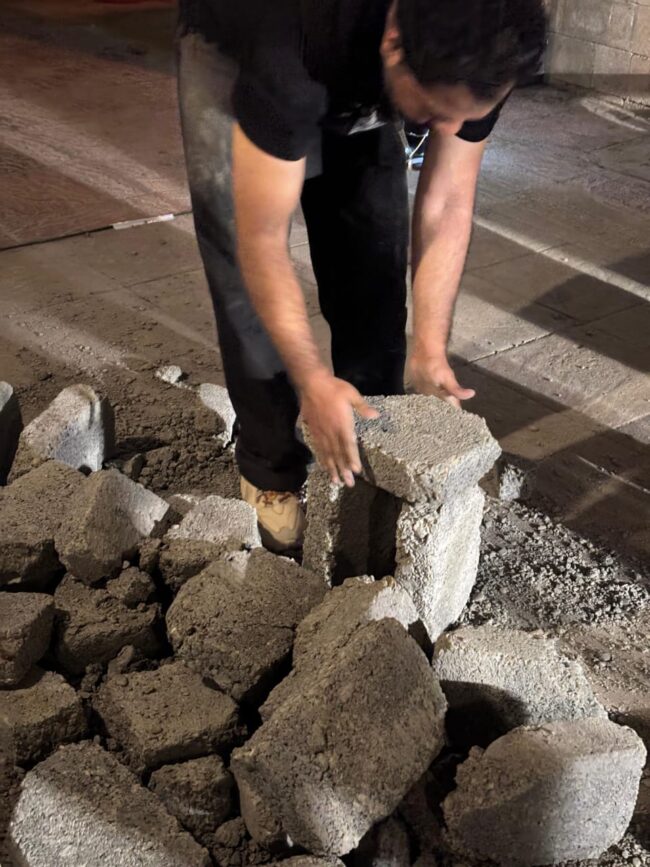
What I noticed immediately was the use of ceramic, brick and clay across several works; materials that have lately become symbols for Karachi city. In Building and Breaking, a silent performance, Farrukh Shahab and Jamal Ashiqain repeated gestures of construction only to dismantle them. They used the table placed between them as a moment of stability. Meanwhile, Mudasir Chandio’s Probability of Possibility, fully engaged the artist’s body and used discarded bricks from Karachi’s streets to build structures destined to fall. The work has been done in continuation with the artist’s practice, where he sees bricks as bodies, displaced and abandoned. Construction of the new leads to displacement of the old; in an urban city we call this progress, but is it really? Both works show construction as a recurring cycle, one that has drastically occupied the city’s landscape.
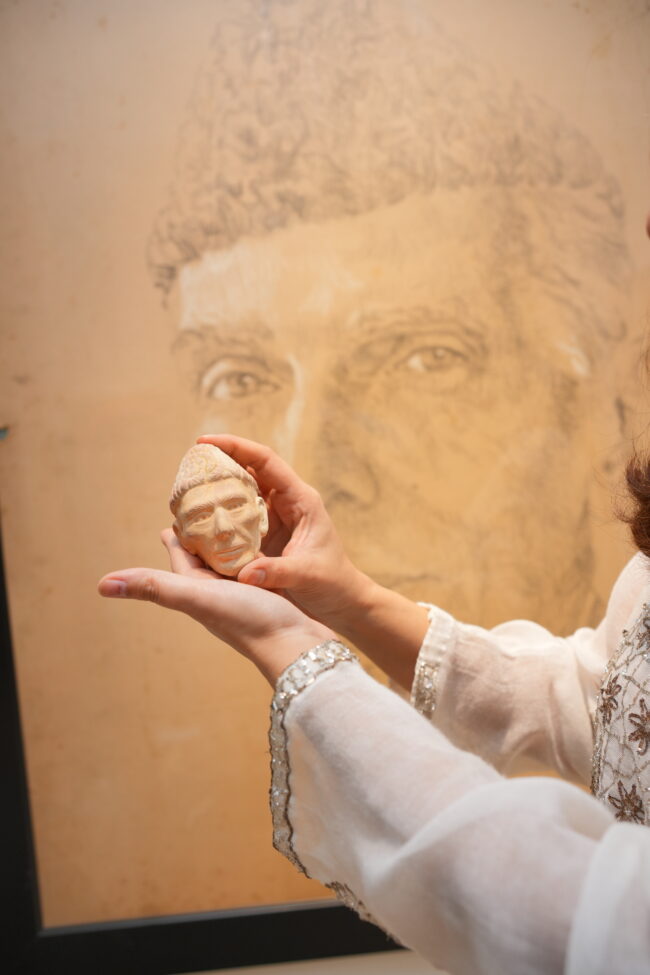
Amidst this iteration of collapse and restructure of the city, there remains the anxiety of saving ideology and identity. Sheema Khan performed with ceramic busts of the Quaid in The Last Principle (Seventy Years of Dust). By positioning herself in front of Gulgee’s drawing of Quaid, Sheema’s performance truly activated the space, not only touching at the fracture of national identity and leadership but bridging the gap between art and life.
The fracture and collapse, as highlighted by the artists mentioned earlier, does carry an alternative perspective, one that embraces the spirit of the land. Sobia Zaidi’s Kal ki Mitti positioned clay as a return to origin or a final resting place rather than a state of ruin. Like Mudassir Chandio collects bricks from the city, for Sobia Zaidi Earth-collecting is central to her artistic methodology. She sees land not only as a physical site but for what it gathers, endures and shares over time.
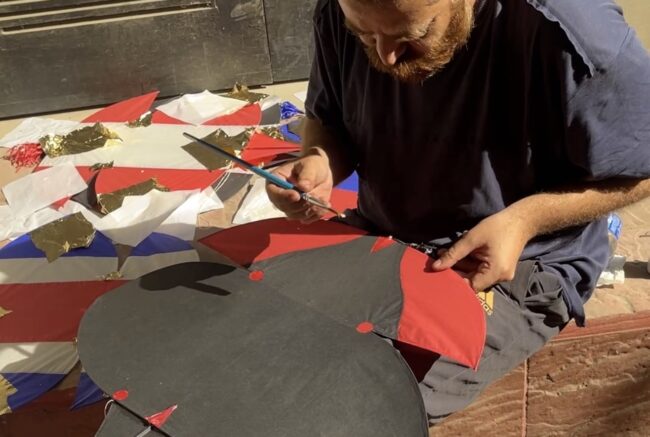
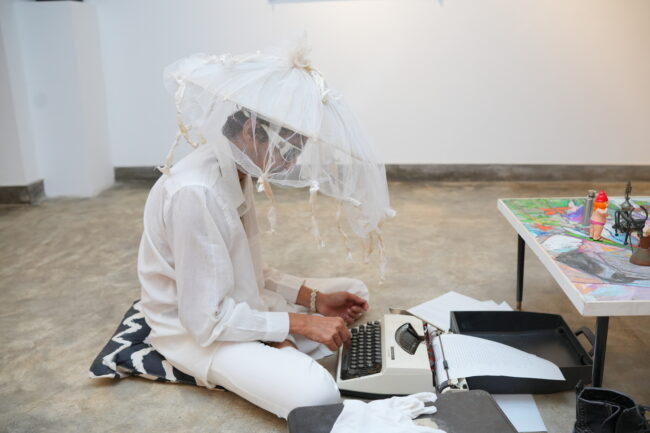
What is the land witnessing and gathering? Apart from dust, noise and horrific accidents associated with, what seems like, the never-ending construction in the city. S.M. Raza and Abrar Ahmed remind us of memory and play and Yumna focused on intimacy; the exact opposites of utilitarian aims. Memoryscape by S.M. Raza used the rooftop life, rain, balconies, and bicycles as references to lost times. Abrar Ahmed’s Basant Notes (Karachi) established kite-making as a labour of care, bringing sentiments and craft from Lahore to Karachi. The durational performance used attentive cutting, tying, and testing required for the craft as acts occupying time, slowly and carefully. In the rushed lifestyles of Karachi, Abrar and S.M. Raza bring forth meditative time and almost makes one wonder, where did time fly?
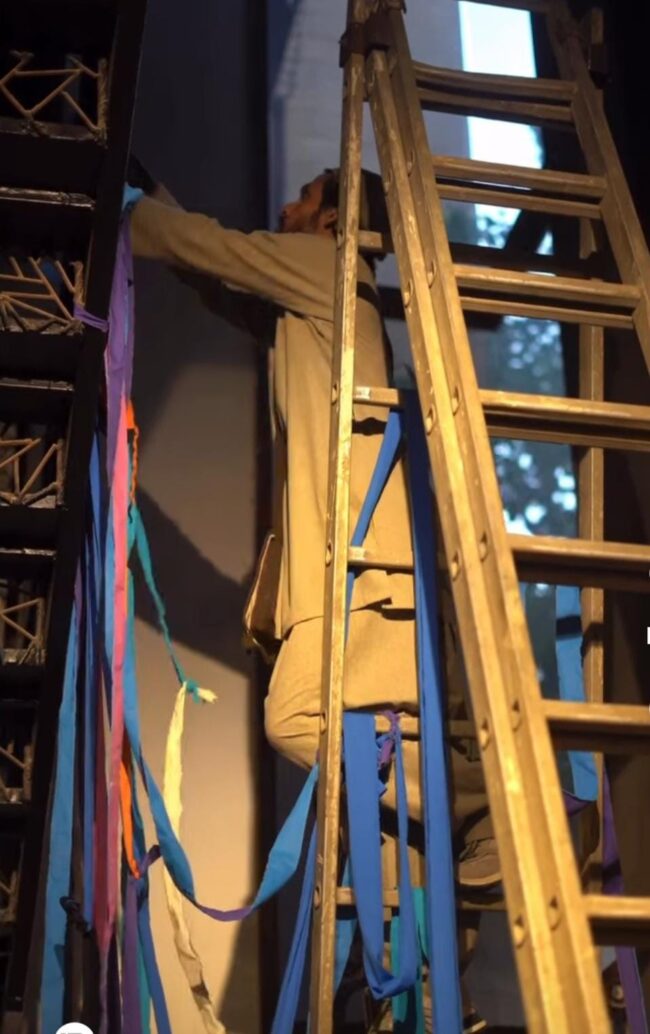
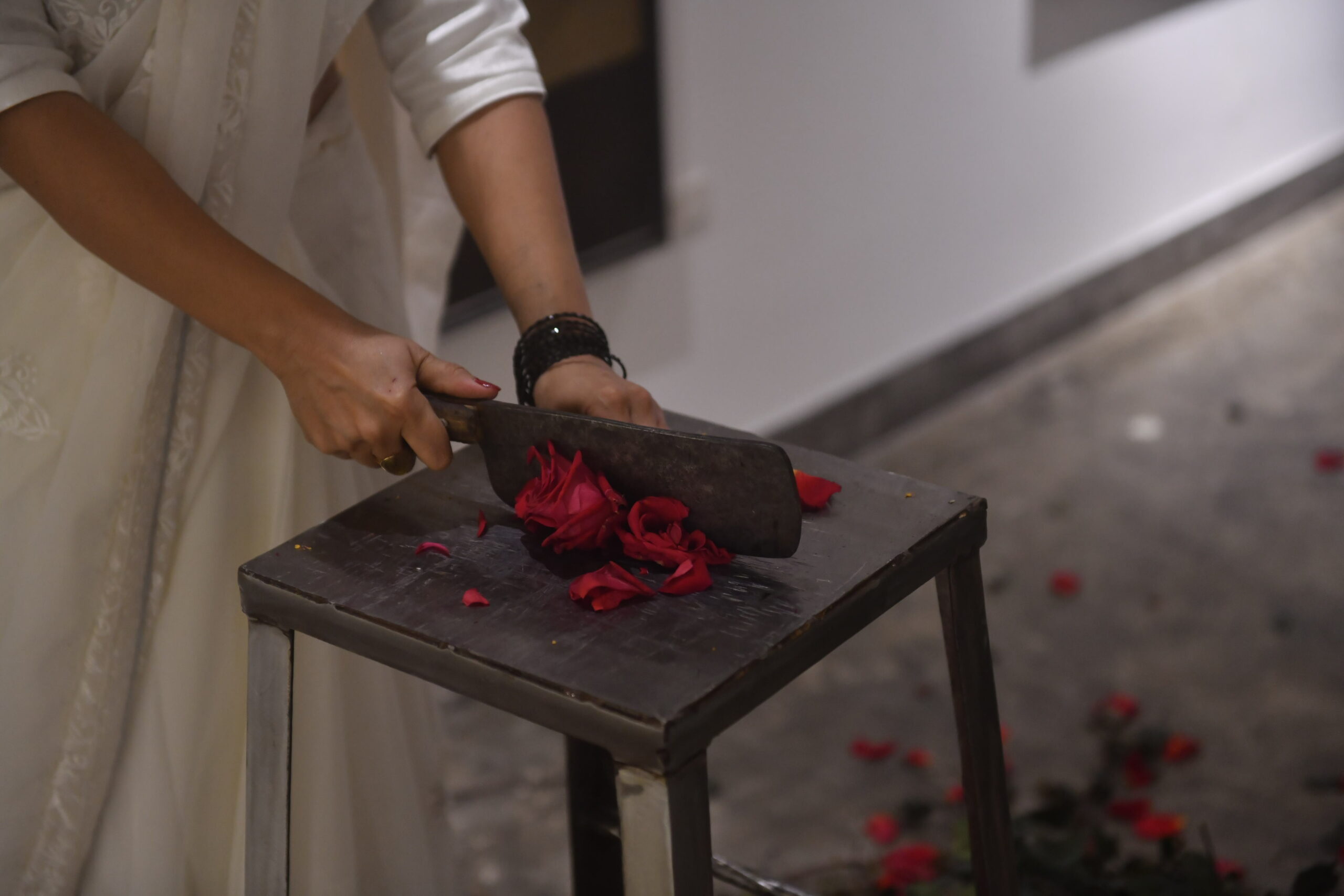
Yumna’s In the Name of Love, I Cut ties the core of ourselves, love, within performance art’s ritualized repetition. The repeated cutting of rose stems with a butcher’s knife showed the duality of love and pain as well as signaled at slow erasure and transformation. The rose has been used profusely across art history and religious iconography. Yumna’s performance, if seen situated in the Gulgee Museum and focused on the roses, seems to emerge from a pre-modern painting and adds a sacred sensibility to the evening, while the presence of the butcher’s knife creates an opposing, unsettling tension.
The exhibition displayed Karachi as an active site with bricks, clay, craft, memory, bodies, and emotional tensions being used as material. The performances showcased how time is lived through the ongoing construction and fracture. There is a presence of continuity despite the rupture and pain. It is most interesting to witness that the artists are adapting their practice to the city’s transformation.
Image credits: Photographs provided courtesy of the artists and Gulgee Museum