
“Art evokes the mystery without which the world would not exist.” Rene Magritte
Kaiser Irfan’s work exists in the liminal space between presence and absence, between language and silence. An Irish-Pakistani artist based in Lahore, his practice unfolds like a process of excavation, and the need to unearth lost archives, cryptic scripts, and erased narratives. Drawing from ancient philosophies, buried texts, and imagined manuscripts, Irfan’s art resists easy interpretation. It leaves the spectator in a trance, wondering what symbolism could be attached to what’s in front of them. Likewise, it invites the viewer to enter a space where meaning is fragmented, partially erased, or entirely unknowable.
On exploring the forgotten history, Irfan’s “Notes on Pythagoreanism” series sets the tone for his wider body of work. These paper-based compositions resemble folios from a forgotten manuscript, deeply inspired by palimpsests discovered across ancient Arabian and Mediterranean regions. Using an intuitive mark-making process, Irfan explores the esoteric teachings of Pythagoras, not by illustrating them directly, but by echoing their cryptic essence. The visual language he employs resembles scripts that are on the verge of legibility, hinting at something once understood and now lost to time.
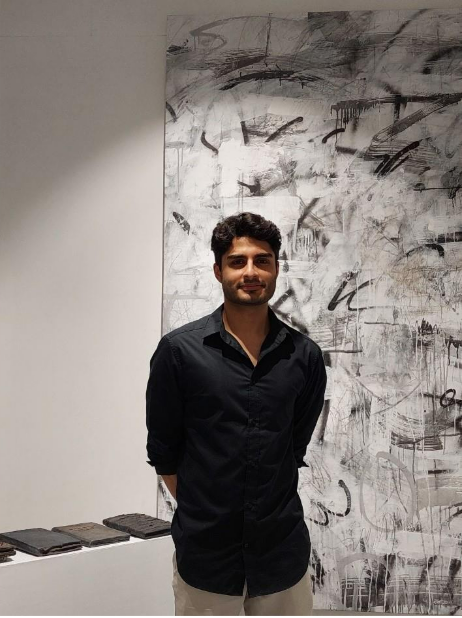
The idea of erasure and degradation continues in his thesis work at the National College of Arts (NCA). In the diptych titled “Obscured Narratives”, he interrogates how history is recorded, manipulated, and eventually forgotten. Charcoal-written text appears across dark, ashen grey backgrounds, surrounded by scuffs, scratches, and textures in shades of black. The script is indecipherable, slowly fading or being buried under visual noise. What remains is not a message, but the haunting suggestion of one, a visual meditation on the fragility of memory and the erosion of language.
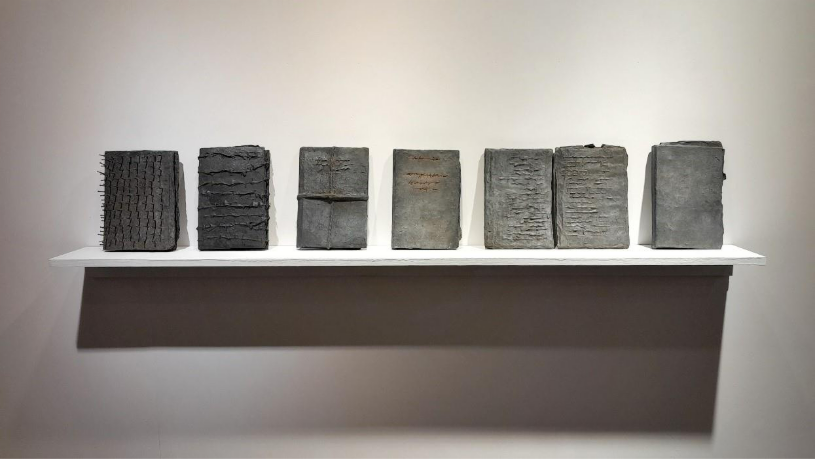
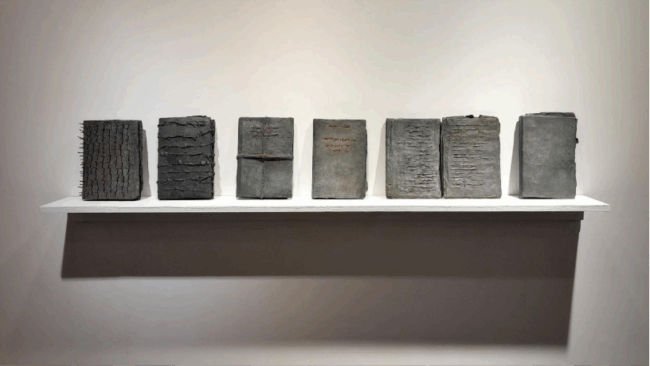
Irfan’s sculptural books, at first glance, resemble sacred relics, echoing the form of ancient Bibles or religious codices. Their upright, sealed bodies invite a curiosity as to what is within, obstructed from touch, appealing to view. One book pierced by nails subtly referencing the crucified Christ or perhaps the African fetish totems, the power figure – the Nkisi Nkondi. Yet, these objects do not reveal, they resist. Made with papier-mâché and ash-toned textures, the books appear fossilized like stone, unreadable, and incised with rusted, cuneiform-like marks. By sealing them shut, Irfan transforms the book from a source of knowledge into a monument of loss, reflecting on forgotten histories, erased languages, and the limits of access.
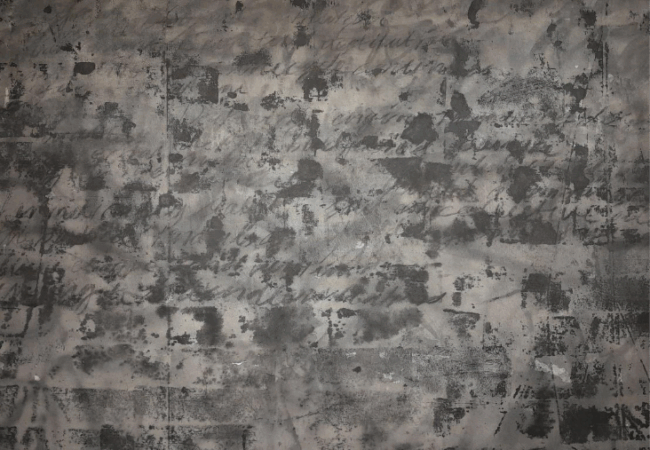
Much like the Pandora Box, once opened, Irfan’s work contains a multitude of layers within layers. Currently Irfan is working with writing and language directly and is exploring a relatively new form of art known as Asemic writing. Here he blurs the line between writing and mark-making, he accomplishes this through a daily journaling practice which is unrestricted and sporadic relying on bouts of inspiration a method of which he draws from one of his favourite writers, James Joyce, a writer known for his stream of consciousness style.

It’s hard to place Irfan’s work in a box. Despite most of his inspirations being drawn from forgotten ancient relics, texts, languages, or even misconstrued history, there’s an unpredictability to his work which sets him apart from his contemporaries. Relying on a heavily experimental approach to art making Irfan’s practice goes into many territories covering paintings, sculptures, video installations and more recently new media art works. This fluctuating and dynamic approach keeps us guessing and much like turning the pages of a book you have never read – you never know what may come next.