
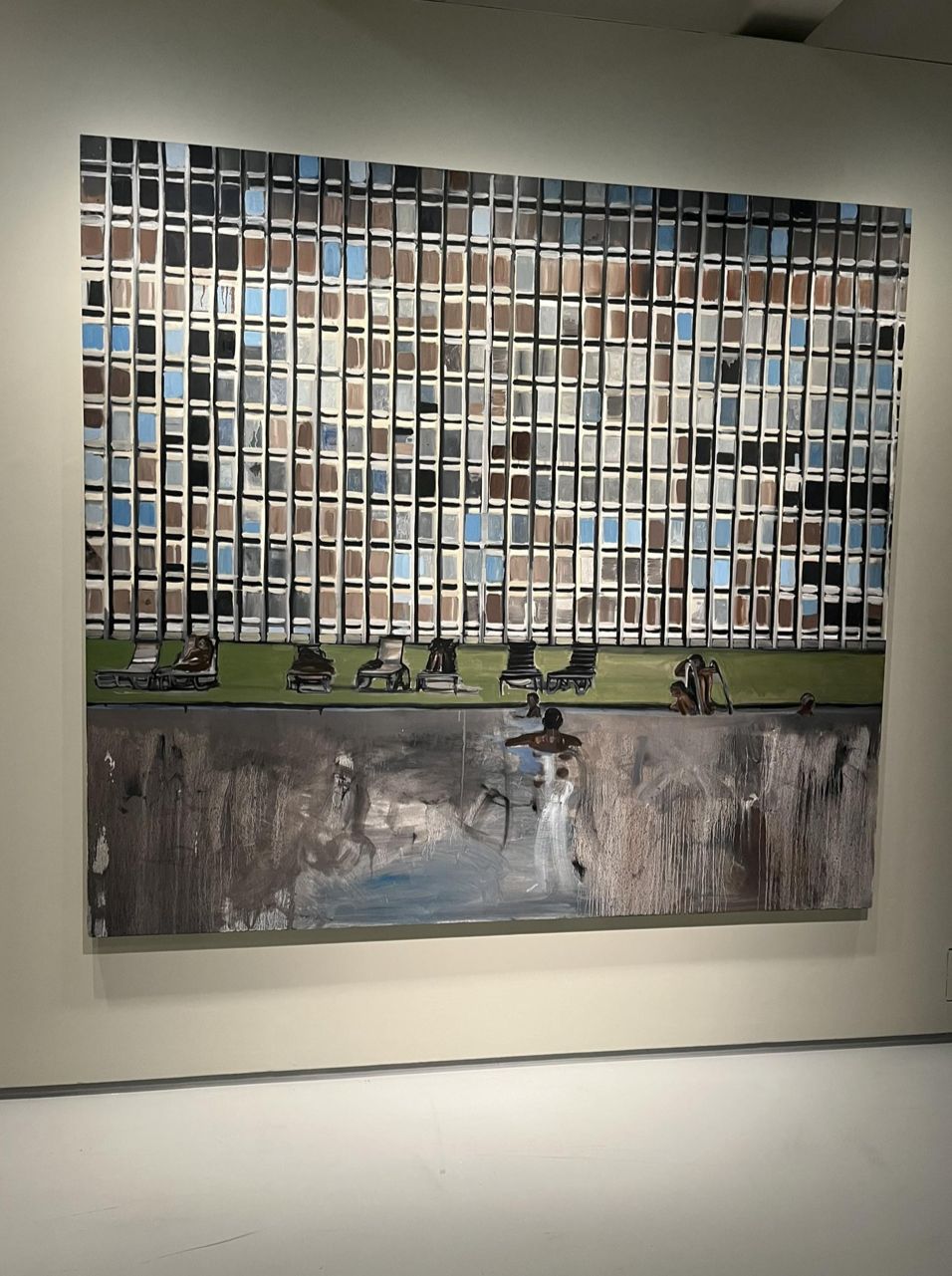
When exiting the Noah Davis retrospective, a video recording of the artist plays: “I would rather fail at being an artist than be successful at anything else.”
While the exhibition is a clear testament to Davis’s identity as an artist, the show unfolds simultaneously as personal and political. It is both intellectually rigorous and emotionally charged, presenting the exploration of delineations in an artistic and ideological context.
Davis’s career was marked by a unique transcendence,his work directly responding to the complexities of navigating an art world that often preferred artists to be classified by their race. Rather than capitulate to these expectations, Davis sought to create a practice that was expansive and fluid. This refusal to be pigeonholed is clear in the curation: The Barbican kicks off with the theme of identity through allegorical references in the mode of figurative painting, but pivots to an unexpected Rothko-esque abstraction depicting the 2008 political election. The painting itself is fascinating in its color choice; Davis selects purple as a sole color in a work titled Nobody (2008), melding together political opposition relating to blue Democrats and red Republicans.
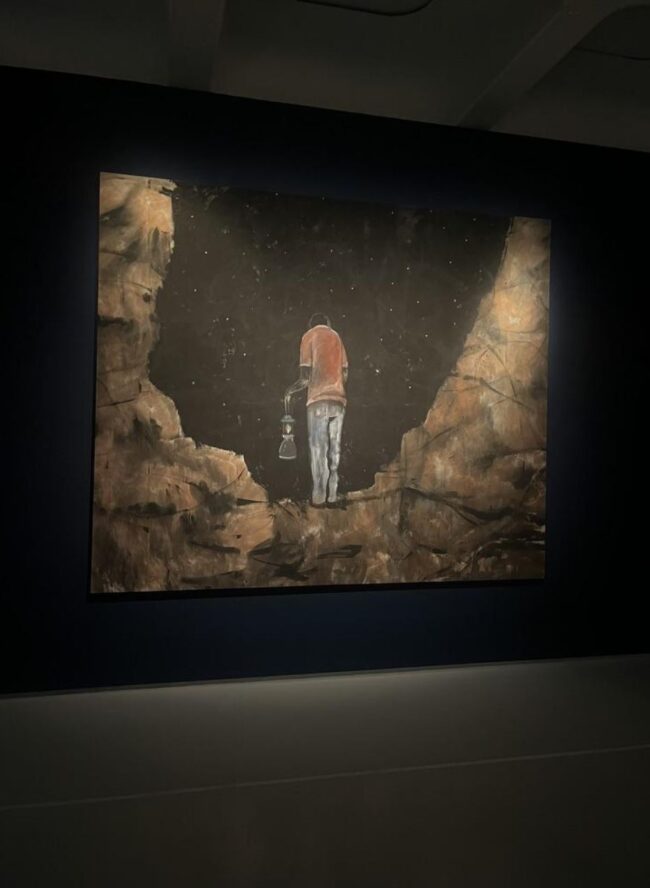
There is a certain ubiquity in the range of emotion presented in this retrospective, through the diverse array of themes and mediums. Photographs of Los Angeles are embedded within a slideshow. Davis later uploaded these to his personal website: bestpainteralive.com
In addition to his contributions as a painter, Davis’s vision extended into the realm of institutional critique. In 2012, he co-founded the Underground Museum in Los Angeles—a space aiming to highlight artists outside a hierarchical canon. With no one to lend him work within the space, Davis improvised, manufacturing makeshift items including a bottle rack to stand in for DuChamp, a hoover in place of Jeff Koons and strip lights as an ode to Dan Flavin.

Diagnosed with cancer in 2015, Davis’s illness became an unspoken presence in his later work. Paintings depicting certain visions of imagined communities relating to African-American neighborhoods, explore the idea of ‘what if’ on a collective scale. Simultaneously, the personal is dealt with as Davis grapples with the imminence of his own death. A series of smaller photo collages place you directly in Davis’s hospital bed, where he pieced them together and painted.
What is particularly striking about the Barbican’s retrospective is how it balances the weight of Davis’s personal and political struggles with a sense of connection to the work at hand. The presentation is dynamic, accessible, and yet undeniably profound and after leaving it is difficult not to resonate with Davis’s own life, as both an artist and human.