
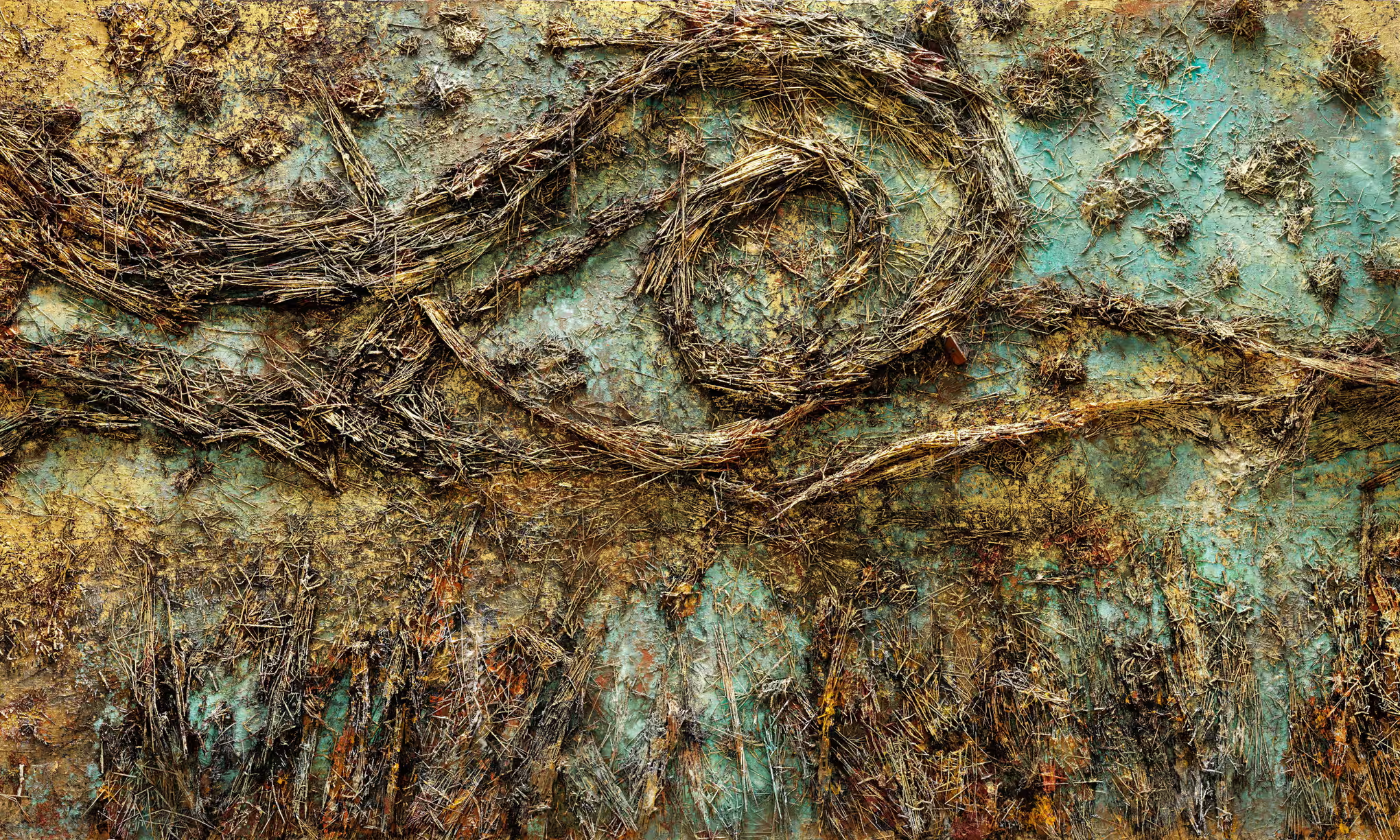
The Royal Academy’s Kiefer / Van Gogh exhibition presents the contemporary artist Anselm Kiefer alongside Vincent van Gogh, whose work was Kiefer’s first profound artistic inspiration. In 1963, at the age of eighteen, Kiefer retraced Van Gogh’s journey through the Netherlands, Belgium, and France, beginning in Paris and ending in Arles. This formative act of pilgrimage marked the start of a lifelong engagement with Van Gogh’s art.
While Kiefer acknowledges Van Gogh as an artistic predecessor, their approaches could not be more different in terms of medium and technique. Kiefer’s mature works are monumental and materially complex, incorporating oil, acrylic, watercolour, photography, lead, straw, sunflower seeds, and gold leaf. These layered surfaces are burnt or scorched, creating a tangible sense of destruction and inscription. The resulting works carry both physical weight and symbolic depth.
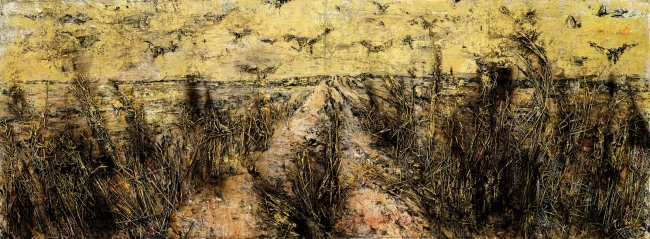
Despite their radically different methods, the two artists share recurring subjects. Earth, wheatfields, sunflowers, and crows appear throughout their oeuvres. Van Gogh employed these natural motifs to explore emotion and inner experience. For Kiefer, however, the landscape functions as a site of memory, trauma, and cultural reckoning. Nature becomes a terrain for historical reflection.
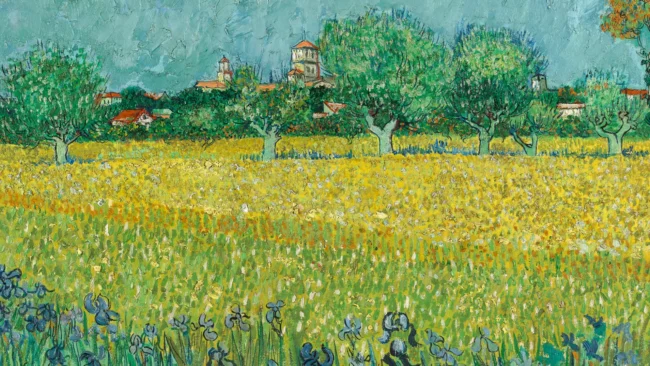
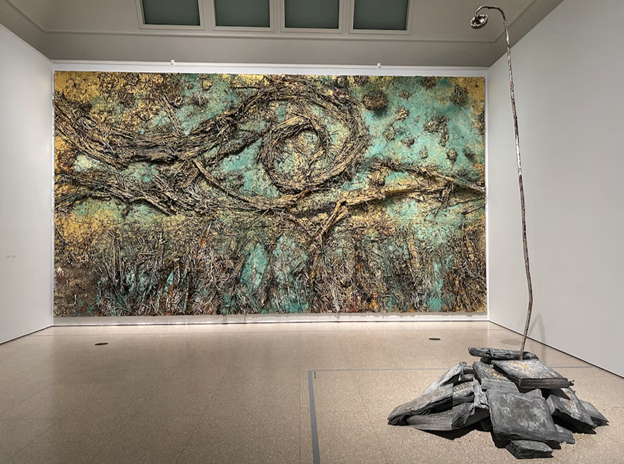
The exhibition unfolds across three rooms. Visitors are first immersed in Kiefer’s monumental paintings, which respond directly to Van Gogh’s visual language of wheatfields and crows. Rather than emulating Van Gogh’s technique, Kiefer absorbs his themes and refracts them through a distinctly postwar consciousness. His paintings are constructed with materials that carry metaphorical and physical weight; their burnt and scarred surfaces reflect trauma and texture, engaging the viewer with a raw physicality and aura.
The second room offers a change of pace. The room displays eleven works by Van Gogh, including drawings and paintings from his time in Arles, alongside Kiefer’s early travel sketches and diary fragments from his Van Gogh pilgrimage. These intimate documents offer insight into Kiefer before his usage of fire and ash, revealing the beginnings of his relationship to art as inheritance.
In the final room, Kiefer offers his own interpretation of The Starry Night. Whereas Van Gogh’s version uses deep blue paint to evoke the vastness of the cosmos, Kiefer replaces the night sky with golden wheat. The universe is re-imagined as the material earth itself. Night represents an entry point into a larger cycle of life and death.
For Kiefer, the appeal of Van Gogh’s work lay beyond the emotional intensity, with his teenage self drawn to the rational, confident construction of Van Gogh’s compositions. This distinction speaks to the crux of the exhibition, which seeks to illuminate Van Gogh’s work through Kiefer’s perspective, while simultaneously allowing Kiefer’s paintings and drawings to be experienced as a meditation on his artistic forebearer.