
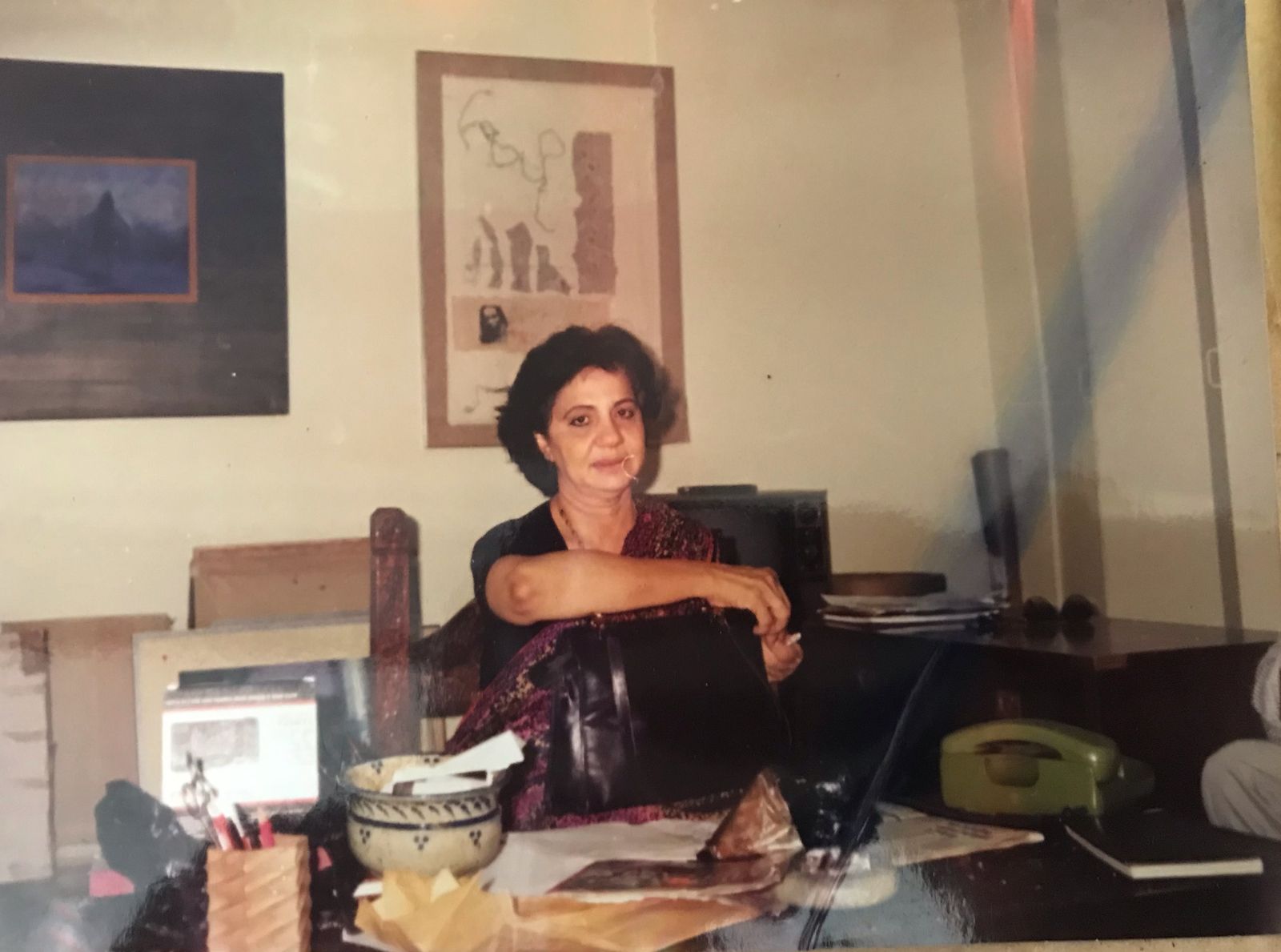
We sat down with Zohra Husain at Chawkandi Art Gallery, the space she built from the ground up and that now stands as one of Karachi’s most resilient homes for contemporary art. Zohra is known for many years as a mentor and a friend, and it felt like the right moment to record her story in her voice. We spoke in the main room, surrounded by works from past and present — a quiet reminder of the gallery’s enduring legacy. Our conversation flowed across decades, from her formative years in London and time at BBC Urdu, to her early work with PTV, and the eventual founding of Chawkandi in 1985. What follows is Zohra’s story: candid, thoughtful, and gently revealing the personal journey behind a public institution.
She shared that her journey began in the late 1970s when she moved to London, where she was involved in various creative pursuits. She had been deeply engaged with the arts and broadcasting, including working with BBC Urdu. During this time, she had the opportunity to interact with renowned figures in the art world, which broadened her perspective and ignited her passion for art.
Returning to Pakistan in the mid-1980s, she noticed that the local art scene was in a state of transition. Karachi, where she moved back to, had a burgeoning art community, but there was a lack of formalized spaces for artists to exhibit their work. This realization led her to establish Chawkandi Art Gallery in 1985.
She explained that the name of the gallery, Chawkandi, was inspired by the Chawkandi tombs, which are located in the outskirts of Karachi and are known for their distinctive architectural style. She believed that the name connected the gallery to the rich cultural history of the region.
Initially, she faced several challenges, such as finding the right artists to exhibit and building a clientele. However, her deep understanding of both the local and international art scenes, combined with her broadcasting experience, helped her navigate these hurdles. She mentioned that establishing a network and gaining trust was key in attracting both artists and collectors to the gallery.
In the early years, Chawkandi showcased both Pakistani and international artists. She noted that her gallery’s mission was to support emerging artists and offer them a platform to present their work to a larger audience. Over time, the gallery gained recognition, becoming a pivotal space for contemporary art in Karachi.
She also reflected on the significant role of Chawkandi in the cultural landscape of Karachi, emphasizing how the gallery contributed to creating a dialogue between different art practices and fostering an understanding of global art trends while staying true to local heritage.
The rest of her story and a detailed walk-through of her life can be found in our exclusive video interview, available now on our website. Don’t miss this engaging conversation where Zohra Hussain reflects on the past and shares her thoughts on the present.